
What Determines Your Water Damage Restoration Timeline
Water damage restoration typically takes between three to seven days for most residential properties. The exact restoration timeline depends on several factors that professionals assess during the initial inspection.
The severity of water damage creates the biggest impact on timing. Clean water from a burst pipe requires less time than contaminated water from sewage backups or flooding.
Property size and affected materials also influence duration. A small bathroom with tile floors restores faster than a basement with carpeting, drywall, and wooden furniture.
The Four Phases of Water Damage Recovery
Professional water damage recovery follows a structured approach. Each phase builds on the previous step and cannot be rushed without compromising results.
Phase 1: Emergency Response and Assessment (Day 1)
Restoration teams arrive within hours of your call. They immediately stop the water source and assess the damage extent.
This initial phase includes:
- Water source identification and shutdown
- Safety hazard evaluation
- Damage documentation with photos and moisture readings
- Category classification (clean, gray, or black water)
- Restoration plan development
Emergency response typically takes four to eight hours. Teams work quickly to prevent additional damage and begin water extraction immediately.
Phase 2: Water Extraction and Removal (Days 1-2)
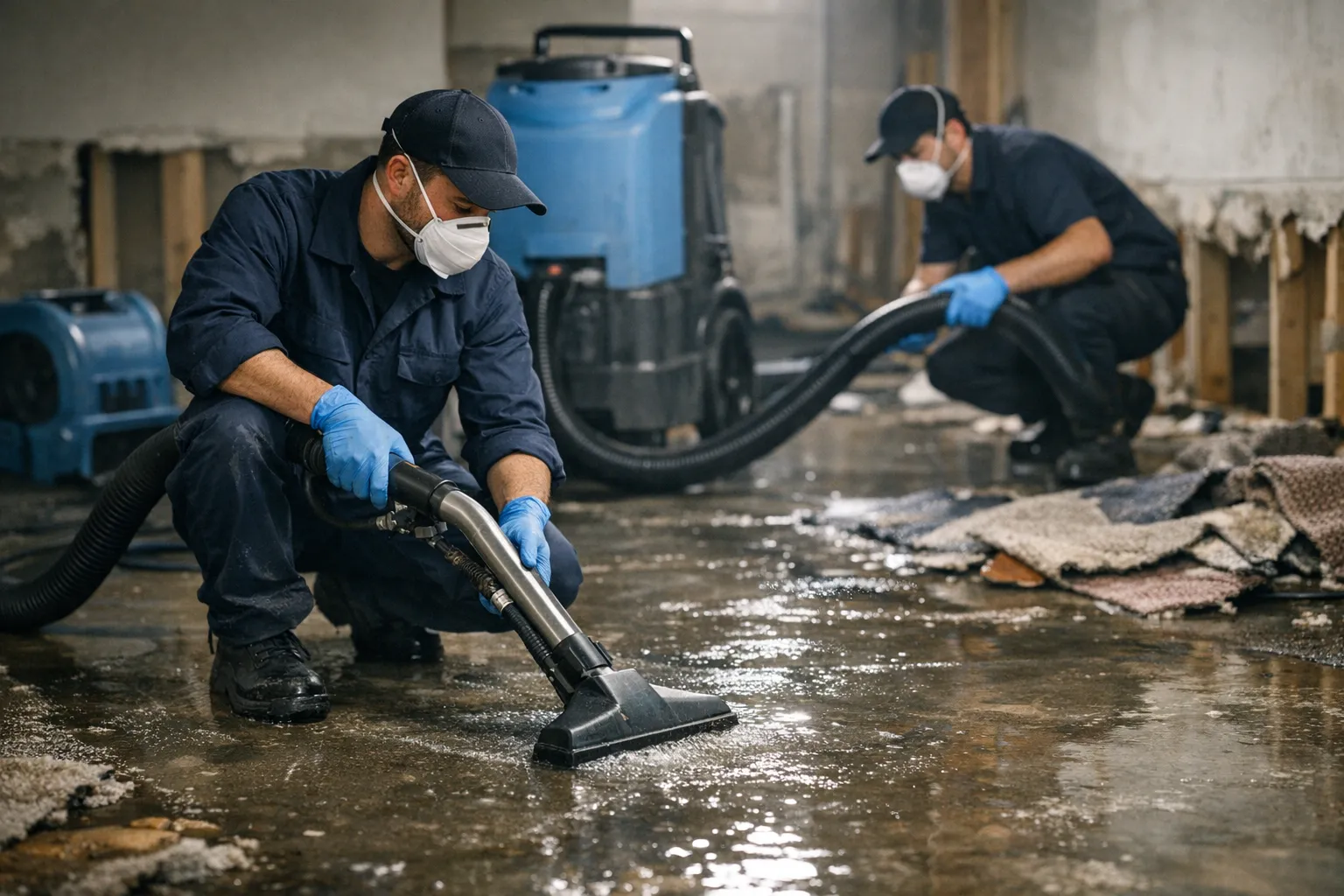
Professional-grade pumps and vacuums remove standing water from all affected areas. This phase must happen quickly to prevent mold growth and structural damage.
Extraction speed varies by water volume and access. Basement flooding takes longer than a single-room incident due to gravity and drainage challenges.
Teams also remove damaged materials during this phase. Soaked carpeting, insulation, and drywall often require immediate disposal to prevent contamination.
Phase 3: Drying and Dehumidification (Days 2-5)
Industrial fans and dehumidifiers run continuously to remove moisture from materials and air. This phase represents the longest portion of most restoration timelines.
Drying times depend on humidity levels, temperature, and air circulation. Professionals monitor moisture levels daily using specialized meters.
Hidden moisture in wall cavities or subfloors requires additional time. Teams may need to remove drywall or flooring to access these areas.
Phase 4: Cleaning and Restoration (Days 4-7+)
Final cleaning removes contaminants and prepares surfaces for repairs. This phase includes antimicrobial treatments to prevent mold and bacterial growth.
Minor repairs like drywall patching happen during this phase. Major reconstruction projects extend the timeline significantly and may require separate contractors.
Factors That Extend Water Damage Restoration Timeline
Several conditions can push your project beyond the typical seven-day window. Understanding these factors helps set realistic expectations.
Water Category and Contamination Level
Category 1 (clean water) from supply lines or appliances restores fastest. Category 2 (gray water) from washing machines or dishwashers requires additional cleaning steps.
Category 3 (black water) from sewage or flooding demands extensive decontamination. These projects often take two to three weeks due to safety protocols.
Structural Damage Severity
Water damage affecting structural elements like floor joists or wall studs requires engineering assessment. These evaluations can add days to your timeline.
Flooring removal and replacement extends projects significantly. Hardwood floors may need weeks to dry properly before refinishing becomes possible.
Mold Growth Discovery
Mold appears within 24-48 hours in ideal conditions. Extensive growth requires specialized remediation that adds one to two weeks to projects.
Professional mold testing and clearance inspections create additional timeline requirements. Safety regulations prohibit shortcuts in these situations.
How Insurance Claims Affect Your Restoration Timeline
Insurance adjusters must inspect damage before major work begins. This requirement can delay projects by several days depending on adjuster availability.
Pre-approved emergency services like water extraction typically proceed immediately. Restoration companies coordinate with insurance providers to minimize delays.
Documentation requirements slow the initial process but protect your interests long-term. Professional teams handle most paperwork to reduce your burden.
Steps to Accelerate Your Water Damage Recovery
Quick action on your part significantly impacts the overall restoration timeline. Every hour matters when dealing with water damage.
Contact restoration professionals immediately after discovering damage. Many companies offer 24/7 emergency response to begin work quickly.
Remove valuable items from affected areas if safely possible. This prevents additional damage and gives crews better access.
- Document everything with photos before moving items
- Turn off electricity to affected areas if water threatens outlets
- Contact your insurance company within 24 hours of discovery
- Avoid DIY cleanup with contaminated water situations
- Keep receipts for temporary housing or emergency expenses
Choosing the Right Restoration Company for Faster Results
Experienced restoration companies complete projects more efficiently than inexperienced teams. Look for certifications from the Institute of Inspection, Cleaning and Restoration Certification (IICRC).
Local companies often respond faster than national chains. They understand regional challenges like humidity levels and building codes.
Equipment availability affects timelines significantly. Companies with larger fleets can deploy more resources to your project immediately.
What to Expect During Extended Restoration Projects
Large-scale damage may require temporary relocation during restoration. Insurance policies often cover additional living expenses during this period.
Daily progress updates help you understand timeline changes. Professional teams communicate delays promptly and explain their causes.
Reconstruction phases follow different timelines than initial restoration. These projects may take weeks or months depending on the scope.
Red Flags That Indicate Timeline Problems
Certain warning signs suggest your restoration timeline may extend beyond normal ranges. Watch for these issues during your project.
Persistent musty odors indicate incomplete drying or hidden moisture. These problems require additional investigation and treatment.
Teams should provide regular moisture readings and progress reports. Lack of documentation suggests unprofessional practices.
Planning for Life During Water Damage Restoration
Most families can remain in their homes during minor restoration projects. Kitchen and bathroom access typically remains available.
p>Noise from fans and dehumidifiers runs continuously during drying phases. Plan for disrupted sleep and daily routines during this period.
Pet safety requires special consideration during restoration. Some cleaning chemicals and equipment pose risks to animals.
Understanding realistic timelines helps you make informed decisions about water damage restoration. Most projects complete within one week, but complex situations require additional time for proper recovery.
Professional restoration teams provide detailed timelines after assessing your specific situation. Their expertise ensures efficient completion while maintaining safety standards.
Find qualified restoration professionals in your area through https://restorationlocator.com to begin your recovery process immediately.