
Spring brings heavy rains and snowmelt that can cause serious water damage to homes lacking proper exterior maintenance. Proactive home maintenance during this season protects your property from costly water intrusion problems. This guide covers the most important exterior maintenance tasks that prevent spring water damage.
Water damage from spring storms and runoff causes billions in property damage annually. The right maintenance steps taken before peak spring weather arrives can save thousands in restoration costs.
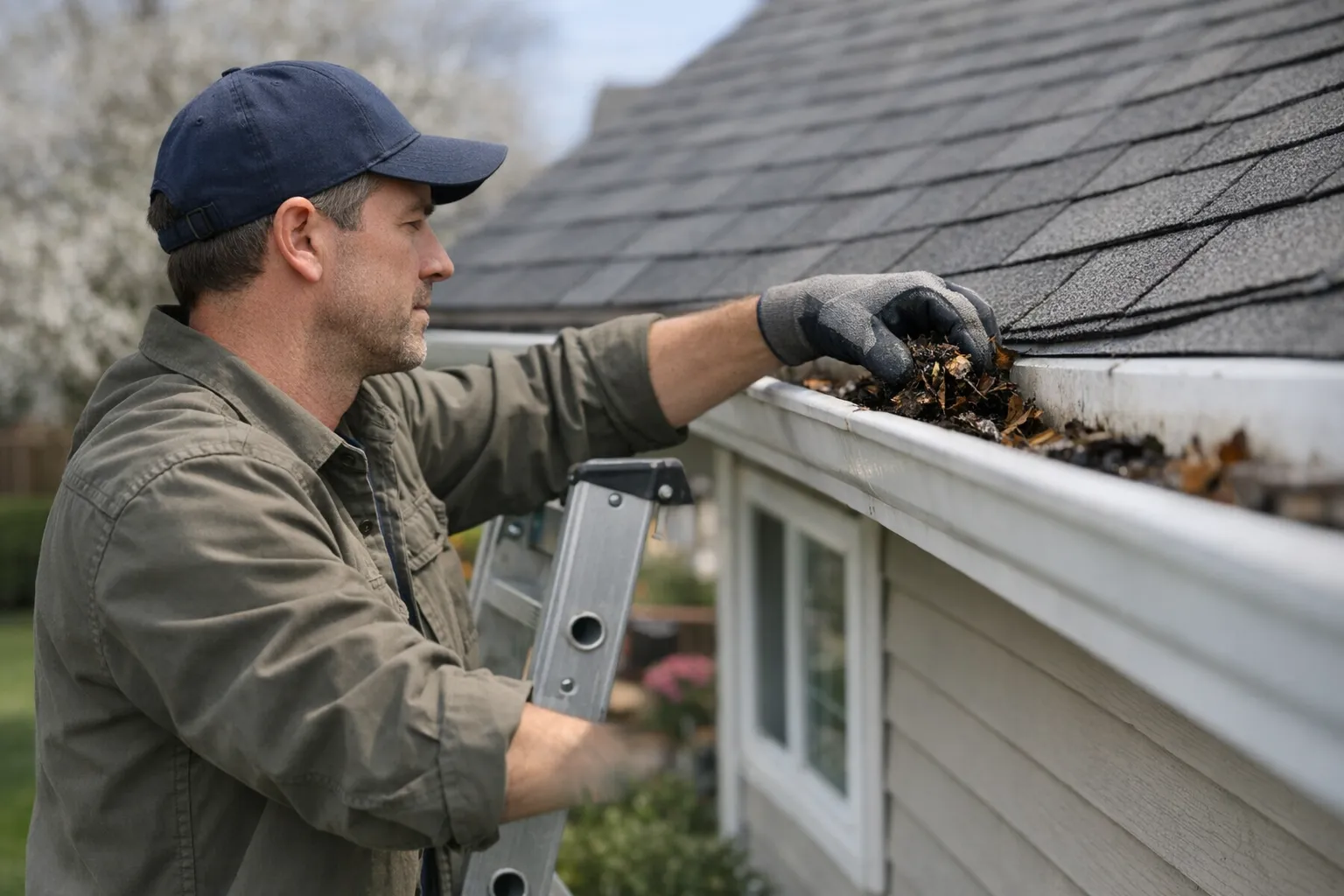
Inspect and Clean Your Gutters and Downspouts
Clogged gutters are the leading cause of spring water damage to home exteriors. Debris from fall and winter blocks water flow, causing overflow that damages foundations, siding, and landscaping.
Remove all leaves, twigs, and sediment from gutters before spring rains begin. Check that water flows freely through downspouts by running a garden hose through the system.
Look for these common gutter problems during your inspection:
- Sagging sections that indicate loose or damaged hangers
- Rust spots or holes that allow water to leak through
- Separated joints where gutter sections have pulled apart
- Missing or damaged downspout extensions that direct water away from foundations
Downspouts should extend at least six feet from your foundation. Add extensions or splash blocks to direct water flow away from the house if needed.
Professional Gutter Maintenance
Complex gutter repairs or cleaning multi-story homes requires professional help. Water damage restoration specialists often provide preventive maintenance services alongside their emergency response capabilities.
Check Your Roof for Winter Damage
Winter weather creates roof damage that becomes major water intrusion points during spring storms. Ice dams, wind damage, and thermal cycling can compromise your roof’s integrity.
Examine your roof from the ground using binoculars to spot obvious damage. Look for missing or damaged shingles, bent or loose flashing, and debris in valleys or around chimneys.
Key areas that need attention include:
- Flashing around chimneys, vents, and skylights – these are prime leak locations
- Shingle edges and corners where wind damage typically occurs
- Roof valleys where water concentrates and debris collects
- Gutters attachment points where ice dams may have caused pulling
Never attempt roof repairs yourself. Professional roofers have the safety equipment and expertise to make repairs correctly.
Interior Signs of Roof Problems
Check your attic and ceilings for water stains, damp insulation, or visible daylight through the roof structure. These signs indicate immediate repair needs before spring weather arrives.
Seal Foundation Cracks and Improve Drainage
Foundation problems account for a significant portion of spring water damage claims. Small cracks allow water penetration that can lead to basement flooding and structural issues.
Walk around your home’s perimeter to identify cracks in foundation walls, gaps where utilities enter, and areas where soil has settled away from the foundation. Mark problem areas with spray paint for easy identification.
Address these foundation maintenance tasks:
- Fill small cracks with hydraulic cement or polyurethane sealant
- Regrade soil to slope away from the foundation at least six inches over the first ten feet
- Clear window wells of debris and check that drains function properly
- Test sump pumps if your home has a basement drainage system
Large foundation cracks or signs of structural movement require professional evaluation. These problems often indicate serious drainage issues that need immediate attention.
Maintain Exterior Doors and Windows
Damaged weatherstripping and caulk around doors and windows create entry points for wind-driven rain during spring storms. This type of home maintenance prevents both water damage and energy loss.
Test door and window seals by running your hand around the perimeter on a windy day. Replace weatherstripping that has gaps, cracks, or missing sections.
Re-caulk areas where old caulk has shrunk or pulled away from surfaces. Remove old caulk completely before applying new material for proper adhesion.
Storm Door and Window Maintenance
Clean and lubricate storm door hinges and closers before spring weather arrives. Replace torn screens and cracked glass that could allow water penetration during storms.
Trim Trees and Remove Debris
Overhanging branches pose risks during spring windstorms and can damage roofs, gutters, and siding. Dead or damaged limbs are particularly dangerous and should be removed immediately.
Trim branches that hang within ten feet of your roof or touch your home’s exterior. Remove dead trees and large limbs that could fall on your property during storms.
Clear your yard of winter debris including fallen branches, damaged outdoor furniture, and loose materials that could become projectiles in high winds. Store or secure items that cannot be moved indoors.
Test and Maintain Drainage Systems
Proper drainage prevents water from pooling around your foundation and creating hydrostatic pressure that can cause basement leaks. Spring maintenance ensures these systems function when needed most.
Test your sump pump by pouring water into the pit until the float activates the pump. The pump should start quickly and remove water efficiently.
Check that foundation drains and yard drainage systems are clear of debris. Remove leaves and sediment from catch basins and ensure water flows freely through drainage pipes.
Basement Waterproofing Maintenance
Inspect basement walls for new cracks or signs of water penetration. Test any existing waterproofing systems and verify that drainage tiles function properly.
When to Call Water Damage Prevention Professionals
Some home maintenance tasks require professional expertise to complete safely and effectively. Structural repairs, electrical work near water sources, and complex drainage issues need specialized knowledge.
Contact professionals for these situations:
- Large foundation cracks or signs of structural movement
- Extensive roof damage or repairs involving flashing and valleys
- Basement flooding or recurring moisture problems
- Complex drainage issues requiring excavation or pipe replacement
Water damage restoration companies often provide preventive maintenance services and can identify problems before they cause major damage. Many also offer emergency response services when prevention efforts are not enough.
Create a Spring Maintenance Schedule
Successful water damage prevention requires consistent attention to exterior home maintenance throughout the spring season. Create a schedule that addresses the most critical tasks first.
Complete high-priority tasks like gutter cleaning and roof inspection before the first major spring storms. Schedule less urgent projects like tree trimming and minor caulking repairs during dry weather periods.
Keep records of completed maintenance and any problems discovered. This documentation helps track recurring issues and provides valuable information for insurance claims if damage occurs despite prevention efforts.
Spring water damage prevention starts with proactive exterior home maintenance that addresses your property’s most vulnerable points. Regular gutter cleaning, roof inspections, foundation sealing, and drainage maintenance significantly reduce your risk of costly water damage. When problems exceed your abilities, professional help ensures repairs are completed correctly and your home stays protected.
Find qualified water damage restoration and prevention specialists in your area. Browse Disaster Cleanup & Restoration listings now to connect with professionals who can help protect your home.