
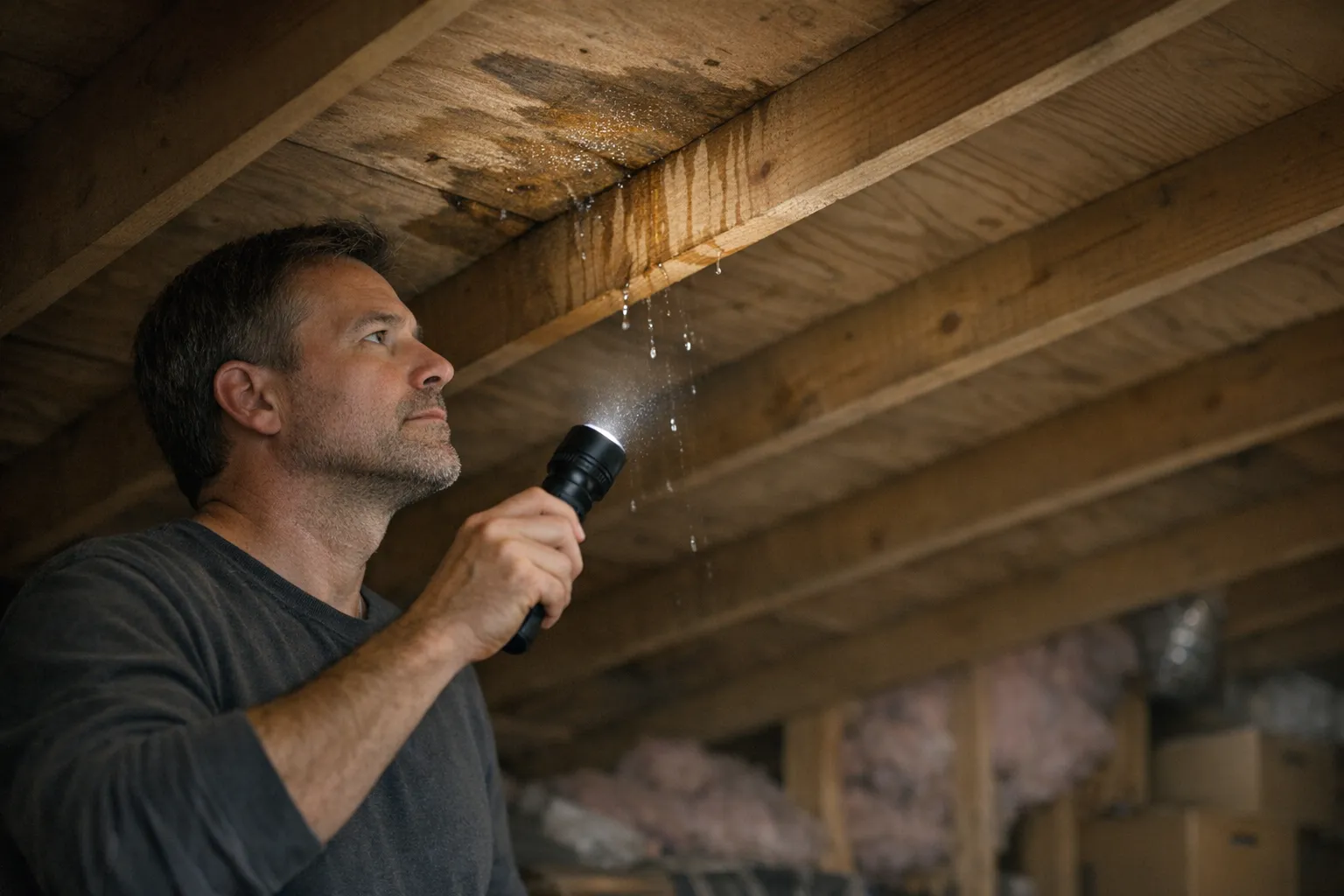
Spring rains can transform minor leaks into expensive disasters within hours. Effective leak identification before the wet season arrives saves homeowners thousands in water damage repairs.
This guide covers systematic methods to spot hidden leaks throughout your property. You’ll learn which areas need immediate attention and when to call professionals.
Start with Your Roof for Complete Leak Identification
Your roof faces the greatest exposure to spring rains prevention challenges. Most homeowners only discover roof leaks after water stains appear on ceilings.
Visual inspection from the ground reveals obvious problems. Use binoculars to examine shingles for cracks, missing pieces, or lifted edges.
Check these specific roof areas:
- Flashing around chimneys – Look for rust, gaps, or loose sections
- Vent penetrations – Inspect rubber boots and metal collars for deterioration
- Shingle overlap zones – Watch for exposed nail heads or separated joints
- Gutters and downspouts – Clear debris and test water flow
Attic inspections during dry weather show leak evidence better than exterior views. Water stains, mold growth, or damp insulation indicate active problems.
Professional Roof Assessment Benefits
Some roof damage requires expert eyes to identify properly. Licensed contractors spot structural issues that untrained observers miss.
Schedule professional inspections every three years or after severe storms. Browse qualified providers on https://restorationlocator.com using location filters to find local roof specialists.
Window and Door Leak Detection Methods
Windows and doors develop leaks gradually through normal settling and weather exposure. These entry points often go unnoticed until heavy rains test their integrity.
The tissue paper test reveals air gaps around frames. Hold lightweight tissue near window edges on windy days – movement indicates potential water entry points.
Check window components systematically:
- Caulk lines – Press along edges to find soft or missing sections
- Weatherstripping – Look for compressed, cracked, or loose strips
- Window wells – Clear drainage and check for standing water
- Frame corners – Inspect joints where water typically collects
Door thresholds need special attention during leak identification inspections. Water damage around door frames spreads quickly to flooring and wall materials.
Basement Window Vulnerabilities
Below-grade windows face unique challenges from ground moisture and poor drainage. Spring snowmelt compounds these issues significantly.
Clean window wells before spring arrives and ensure proper grading. Install or repair well covers to prevent water accumulation.
Plumbing System Leak Prevention
Indoor plumbing leaks cause more damage than roof leaks because they often remain hidden for months. Water flows continuously until pipes freeze or pressure changes reveal the problem.
Water meter monitoring provides the most accurate leak detection method. Record readings before and after two hours of no water usage – any change indicates active leaks.
Inspect these high-risk plumbing areas:
- Supply line connections under sinks and toilets
- Water heater tanks and inlet/outlet fittings
- Washing machine hoses – Replace every five years
- Toilet base seals – Check for movement or soft flooring
Frozen pipe prevention protects against spring thaw disasters. Insulate exposed pipes in crawl spaces, basements, and exterior walls.
Signs of Hidden Water Leaks
Water damage spreads silently behind walls and under floors. Early detection prevents extensive structural repairs and mold growth.
Watch for these leak indicators: unexplained water bill increases, musty odors, wall discoloration, or soft flooring. Professional leak detection services use thermal imaging and moisture meters for precise location.
Foundation and Basement Waterproofing
Foundation leaks worsen dramatically during spring rains when ground saturation increases hydrostatic pressure. Small cracks expand into major structural problems without proper attention.
Interior basement walls show moisture problems through efflorescence – white, chalky deposits left by evaporating water.
Foundation leak identification covers these areas:
- Wall-floor joints – Check for active seepage or mineral deposits
- Concrete cracks – Mark hairline cracks to monitor expansion
- Mortar joints in block walls – Probe soft areas with a screwdriver
- Basement windows – Test sill drainage and frame sealing
Exterior drainage improvements prevent most foundation moisture issues. Clean gutters, extend downspouts away from walls, and maintain proper grading around the foundation.
Sump Pump Maintenance
Spring rains overwhelm neglected sump pumps when homes need protection most. Test pump operation monthly during wet seasons.
Pour water into the sump pit until the float activates. Replace backup batteries annually and consider battery backup systems for power outage protection.
Professional Water Damage Prevention Services
Some leak identification requires specialized equipment and training beyond typical homeowner capabilities. Professional assessment provides comprehensive property protection.
Thermal imaging cameras reveal temperature differences caused by moisture infiltration. These tools locate problems before visible damage appears.
Professional services include:
- Moisture mapping with electronic sensors
- Pressure testing for plumbing systems
- Infrared scanning of building envelopes
- Drainage system evaluation and improvement recommendations
Schedule professional inspections before peak spring weather arrives. Use https://restorationlocator.com review filters to compare local water damage prevention specialists.
Creating Your Spring Leak Prevention Schedule
Systematic leak identification prevents emergency repairs during peak storm seasons. Create a maintenance calendar to address problems before they escalate.
February tasks focus on interior systems – plumbing connections, water heater inspection, and basement moisture checks.
March preparation includes:
- Roof inspection after final winter storms pass
- Gutter cleaning and downspout testing
- Window and door caulking repairs
- Foundation grading improvements
Document findings with photos and repair dates. This record helps track recurring problems and provides valuable information for insurance claims.
Emergency Preparedness Planning
Even thorough prevention sometimes fails during extreme weather events. Prepare emergency response plans and contact information before problems occur.
Keep tarps, buckets, and basic repair materials accessible. Research local emergency restoration services in advance through https://restorationlocator.com provider listings.
When to Call Water Damage Professionals
Some situations require immediate professional intervention to prevent structural damage or health hazards. Recognize these warning signs early.
Active water intrusion during storms needs urgent attention. Don’t wait for weather to clear – water damage spreads rapidly through building materials.
Call professionals immediately for:
- Ceiling sagging from accumulated water weight
- Electrical hazards near water entry points
- Mold growth or strong musty odors
- Structural movement in foundations or framing
Professional restoration teams have specialized equipment for water extraction, structural drying, and damage assessment. Quick response prevents secondary damage and reduces overall repair costs.
Effective leak identification protects your property investment and family safety. Regular inspections catch problems early when repairs remain manageable and affordable.
Start your spring preparation today by implementing these systematic detection methods. Browse qualified water damage professionals at https://restorationlocator.com to connect with local experts who can help protect your property.