
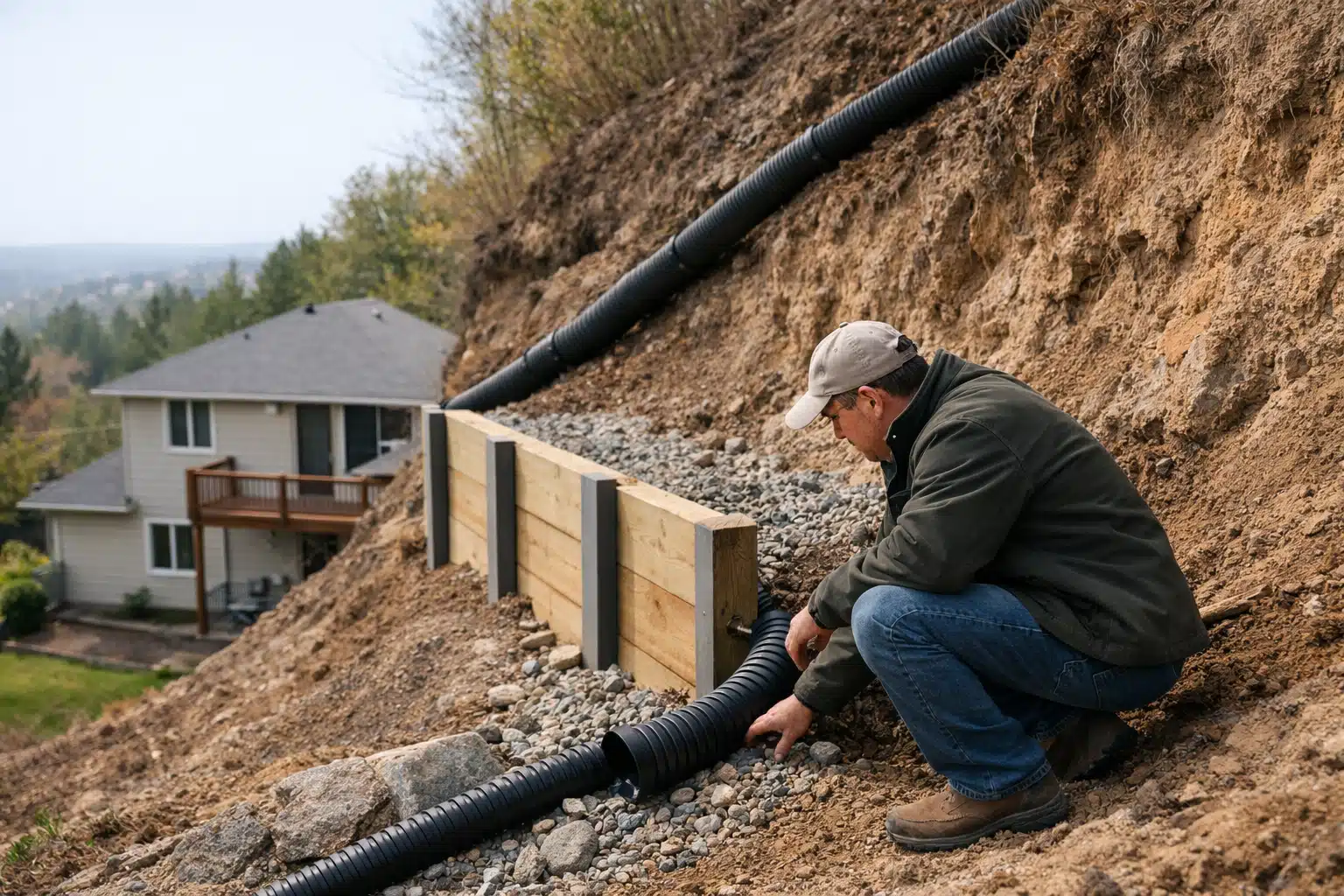
A hillside lot that drained fine for a decade can fail in one wet weekend. Landslide home preparation means spotting the warning signs before the ground moves, then fixing drainage, slopes, and structural weak points. This article covers the physical work, the paperwork, and how to line up recovery help in advance.
Slope failures rarely announce themselves. By the time cracks widen or trees tilt, you have hours, not days. Good disaster readiness means acting during dry months, not during the storm.
Know Whether Your Property Sits in a Landslide Zone
Landslide risk concentrates on steep slopes, old slide scars, and areas burned by recent wildfire. Soil loosened by fire can slide with half the rainfall it once absorbed.
Check your actual parcel, not just your county. The USGS maintains a national landslide inventory map with historical slide locations.
- Slopes steeper than 15 degrees carry elevated risk, and anything above 30 degrees is high risk.
- Burn scars from the past two years shed debris flows during the first heavy rains.
- Homes below a slope face runout risk even if their own lot is flat.
- Old fill dirt on hillside lots settles and shifts more than undisturbed ground.
Ask your county geologist for the slope stability report on your address. Many hillside subdivisions have one on file from the original permit.
Warning Signs the Ground Is Moving
Early movement leaves marks. Learn to read them during your monthly walk around the property.
- New cracks in foundations, driveways, or retaining walls
- Doors or windows that suddenly stick or jam
- Tilting trees, fences, or utility poles
- Water breaking out of the ground in new spots
- A faint rumbling sound that grows louder
If you hear rumbling and see trees cracking, leave immediately. Movement at that stage accelerates within minutes.
Landslide Home Preparation: Fix Water Before You Fix Anything Else
Water drives most slope failures. Saturated soil loses friction and slides. Controlling where water goes does more for stability than any single structural repair.
Redirect Surface Water Away From Slopes
- Extend downspouts at least 10 feet from the house, and discharge onto stable ground, never onto a slope face.
- Install a French drain uphill of the house to intercept groundwater before it reaches the foundation.
- Build a swale or shallow ditch to route runoff around the structure, not across the slope.
- Seal cracks in driveways and patios where water seeps underground.
- Fix leaking pipes and pools that silently saturate hillside soil for months.
A homeowner in the Oso, Washington region learned that chronic septic overflow had soaked a slope for years before it gave. Hidden water sources matter as much as rainfall.
Avoid Over-Watering Hillside Landscaping
Irrigation on a slope quietly adds the same load as a storm. Set sprinklers to short, infrequent cycles that let soil drain.
Replace lawn on steep ground with deep-rooted native plants. Their roots bind soil far better than turf.
Reinforce the Slope and Structure
Once water is controlled, strengthen the ground and the building. Each measure buys margin during a saturated soil event.
Slope Stabilization Methods
- Retaining walls with proper weep holes and drainage gravel hold cut slopes in place.
- Riprap (large rock) armors the toe of a slope against erosion.
- Erosion-control matting protects bare soil after grading or fire.
- Terracing breaks a long slope into shorter, more stable sections.
An engineered retaining wall over four feet usually requires a permit and a geotechnical review. Skipping that step voids most insurance claims if the wall fails.
Protect the Building Itself
Deflection walls or sturdy barriers uphill can divert small debris flows around a house. Position them to channel flow toward an open area.
Anchor fuel tanks and propane cylinders. A tank torn loose by moving soil becomes a fire and contamination hazard.
Build Your Landslide Emergency Plan
Preparation means nothing without a plan your household can run in the dark. Landslides frequently strike at night during storms.
- Map two evacuation routes that avoid the slope path, since one road may be blocked.
- Assemble a go-bag with documents, medications, water, and a flashlight near the exit door.
- Set a family meeting point on high, stable ground away from drainages.
- Keep NOAA weather alerts on during the wet season and heed debris flow warnings.
- Know your utility shutoffs for gas, water, and power.
During heavy rain in a known risk zone, sleep on the uphill side of the house. That choice has saved lives when a slope failed overnight.
Insurance and Documentation
Standard homeowner policies exclude earth movement. Landslide and debris flow coverage usually requires a separate policy or a difference-in-conditions rider.
Photograph your property from several angles twice a year. Dated images speed claims and prove pre-existing condition after a slide.
Line Up Recovery Help Before Disaster Strikes
After a slide, demand for cleanup crews spikes across the whole region at once. Identifying qualified contractors early puts you ahead of that rush.
Restoration Locator lets you find Disaster Cleanup & Restoration providers near your property and compare them now, not during the chaos.
- Filter listings by location to find crews that reach your hillside area quickly.
- Check reviews for experience with mud, debris, and structural damage.
- Sort by service type to match water extraction, debris removal, and foundation work.
- Save two or three providers so you have backups if one is already dispatched.
Mud and groundwater intrusion also breed mold within 48 hours. A crew that handles both earth debris and water damage saves you a second round of calls.
Key Takeaways
Landslide home preparation comes down to controlling water, strengthening slopes, and planning a fast exit. Do the physical work in dry months and document everything for insurance. Disaster readiness also means knowing who to call before the ground moves.
Start building your recovery shortlist now. Browse Disaster Cleanup & Restoration listings at https://restorationlocator.com and find crews near your property today.