
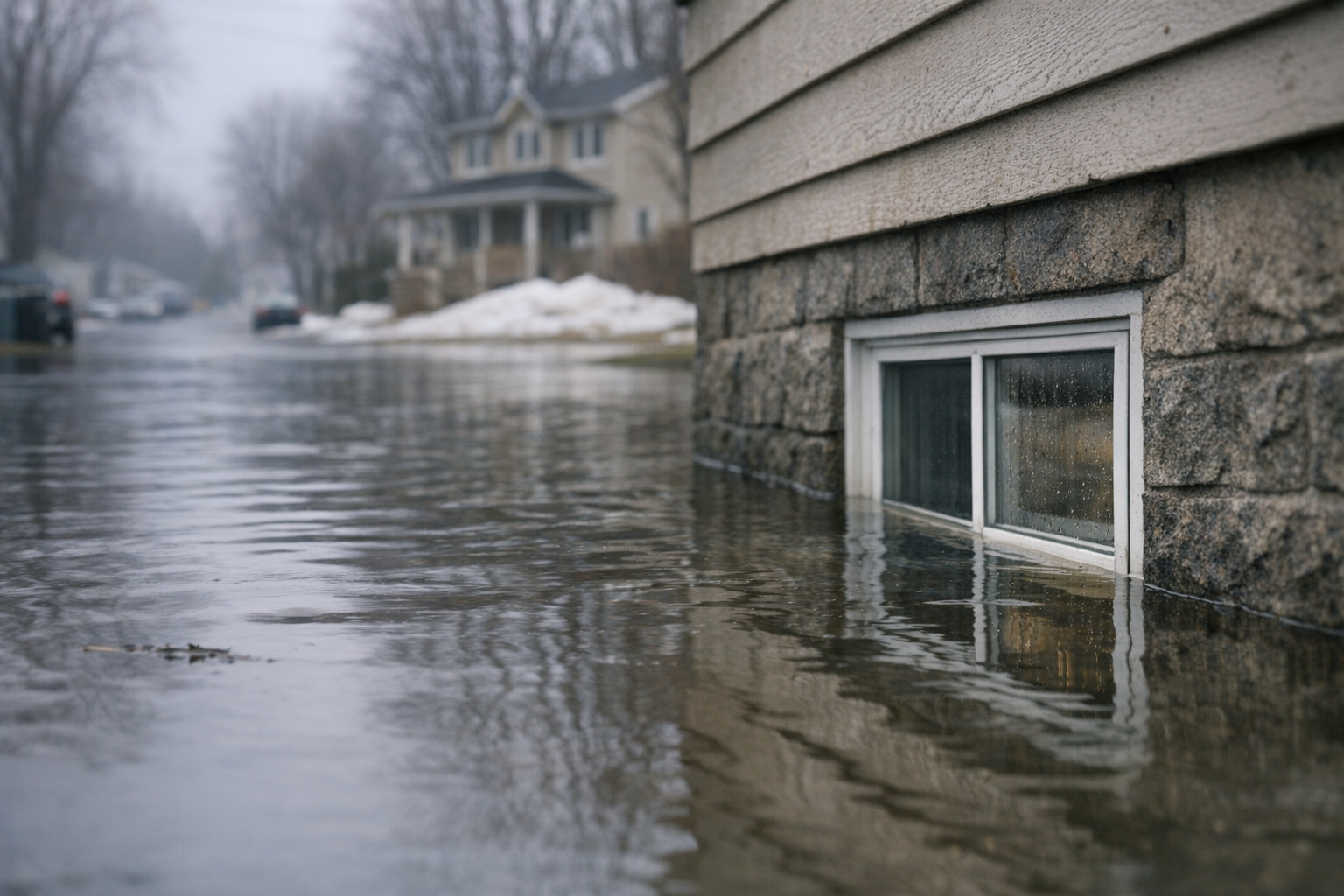
Spring thaw creates the most dangerous conditions for basement flooding throughout the entire year. The combination of melting snow, frozen ground, and ice blockages forces water into foundations at volumes that overwhelm most home drainage systems.
The **spring thaw impact** on basement flooding stems from three simultaneous water sources: surface snowmelt, ice dam failures, and groundwater saturation. Understanding these mechanisms helps homeowners prepare for flood risks and recognize when professional restoration becomes necessary.
How Spring Thaw Multiplies Basement Flooding Risks
Spring thaw creates a perfect storm of flooding conditions that rarely occur during other seasons. **Frozen ground acts like concrete**, preventing normal water absorption and forcing all melted snow to flow along the surface toward foundations.
Temperature fluctuations during spring create the most problematic water patterns. Daytime warming melts accumulated snow while nighttime freezing creates ice barriers in gutters, storm drains, and foundation perimeters.
The volume of water released during major thaw events often exceeds the capacity of municipal storm systems. A single inch of snow contains approximately 0.1 inches of water, meaning a two-foot snowpack releases 2.4 inches of water when it melts rapidly.
Frozen Ground Amplifies Surface Water Problems
Soil frozen to depths of 12-18 inches cannot absorb melting snow, creating surface runoff volumes that exceed summer rainfall by 300-500%. This water pools against foundation walls and seeks entry through basement windows, cracks, and floor joints.
**Frost penetration varies significantly by region**, with northern climates experiencing frozen ground through April or May. Foundation drainage systems designed for normal soil absorption fail when ground remains impermeable.
Ice Dam Formation Redirects Water Flow
Ice accumulation in gutters and downspouts during winter creates dams that redirect melting snow toward foundations. These ice barriers force water to overflow gutters and pool directly against basement walls.
Downspout ice blockages create particular problems for basement flooding. Water backing up from frozen discharge points saturates soil immediately adjacent to foundations, increasing hydrostatic pressure on basement walls.
Identifying Spring Thaw Basement Flooding Warning Signs
**Early detection of spring thaw flooding** prevents minor water intrusion from becoming major structural damage. Basement flooding often begins with subtle signs that homeowners can miss during rapid spring weather changes.
Water marks on basement walls, musty odors, and condensation patterns indicate elevated moisture levels before visible flooding occurs. These warning signs typically appear 24-48 hours before significant water accumulation.
Physical Indicators of Impending Basement Flooding
- Water staining: Dark lines or discoloration along basement wall bases
- Efflorescence: White mineral deposits on concrete surfaces from water evaporation
- Foundation cracks: New or widening cracks from freeze-thaw pressure
- Floor dampness: Cool, moist spots on basement floors without visible water
- Sump pump cycling: Increased frequency of pump activation during thaw periods
**Temperature monitoring helps predict flooding risks** during spring thaw events. Sustained temperatures above 40°F combined with direct sunlight create rapid melting conditions that overwhelm drainage systems.
Exterior Warning Signs Around Foundation Perimeter
Ice accumulation against foundation walls creates pressure points that crack concrete and create new water entry paths. **Ice thickness exceeding 6 inches** against basement walls indicates high flooding potential when temperatures rise.
Snow depth measurements around foundation perimeters help calculate potential water volumes. Every foot of snow depth represents approximately 1.2 inches of water that will flow toward the basement during thaw.
Spring Thaw Impact on Different Foundation Types
Foundation construction materials and methods determine basement flooding susceptibility during spring thaw events. **Concrete block foundations** experience different failure patterns compared to poured concrete or stone foundations.
Older foundations built before modern waterproofing standards face higher flooding risks during spring thaw. Homes built before 1970 often lack proper drainage systems and waterproof barriers.
Concrete Block Foundation Vulnerabilities
Mortar joints in concrete block foundations expand and contract during freeze-thaw cycles, creating hairline cracks that allow water penetration. **Spring thaw amplifies these vulnerabilities** when hydrostatic pressure increases against foundation walls.
Block foundations rely on exterior drainage and waterproofing coatings that deteriorate over time. Failed waterproofing becomes apparent during spring thaw when water pressure tests every foundation weakness.
Poured Concrete Foundation Challenges
Poured concrete foundations develop stress cracks from ground movement during freeze-thaw cycles. These cracks often remain invisible until spring thaw forces water through them into basement spaces.
**Settlement cracks in poured foundations** create continuous water entry paths from foundation top to basement floor. Spring thaw conditions force water through these cracks under pressure, creating significant flooding.
Immediate Response Strategies for Spring Thaw Flooding
**Rapid response during spring thaw basement flooding** prevents water damage from spreading to structural components, electrical systems, and stored belongings. The first 24 hours determine whether flooding becomes a minor cleanup or major restoration project.
Water removal speed directly correlates with restoration success rates. Basement flooding that receives immediate attention requires 60-70% less restoration work compared to flooding left untreated for 48 hours.
First Hour Emergency Actions
- Electrical safety: Shut off power to basement electrical circuits from main panel
- Water source control: Identify and stop ongoing water intrusion if possible
- Emergency extraction: Remove standing water using pumps or wet vacuums
- Critical item removal: Move irreplaceable items to dry areas immediately
- Documentation: Photograph damage for insurance claims before cleanup
**Sump pump failure during spring thaw** requires immediate professional intervention. Backup power sources and secondary pumping equipment become necessary when primary systems fail during peak water intrusion.
Professional Restoration Decision Points
Water depth exceeding 2 inches in basements typically requires professional restoration services to prevent mold growth and structural damage. **DIY cleanup becomes inadequate** when water affects drywall, insulation, or electrical components.
Spring thaw flooding often involves contaminated water from surface runoff, requiring specialized cleaning and disinfection procedures. Professional restoration teams have equipment and expertise for safe contaminated water removal.
Prevention Strategies for Future Spring Thaw Events
**Proactive basement flooding prevention** costs significantly less than emergency restoration services. Foundation drainage improvements and water management systems provide long-term protection against spring thaw flooding.
Successful flood prevention requires addressing both immediate water sources and underlying drainage deficiencies. Surface water management and foundation waterproofing work together to create comprehensive flood protection.
Foundation Drainage Upgrades
French drain installation around foundation perimeters captures and redirects spring thaw water before it reaches basement walls. **Properly installed drainage systems** handle water volumes 400-500% higher than natural soil absorption rates.
Sump pump system upgrades with battery backup and alarm monitoring provide protection when primary pumps fail during spring thaw events. Secondary pumping capacity becomes critical when water intrusion exceeds normal system capacity.
Surface Water Management Solutions
Grading adjustments that create positive drainage away from foundations prevent spring thaw water from pooling against basement walls. **Six-inch elevation drop** over the first 10 feet from foundation walls redirects 80-90% of surface water.
Gutter and downspout improvements with buried drainage lines carry roof water away from foundation zones. Extending downspout discharge points 10-15 feet from foundations eliminates localized soil saturation.
Finding Qualified Spring Flood Restoration Specialists
**Spring thaw basement flooding** requires restoration specialists experienced with freeze-thaw damage patterns and contaminated water cleanup. Standard water damage contractors may lack expertise for complex spring flooding scenarios.
Qualified restoration providers understand the urgency of spring thaw flooding and offer emergency response services during peak thaw periods. Response time during spring flooding events directly impacts restoration success and total project costs.
When evaluating restoration specialists for spring thaw damage, verify their experience with contaminated water cleanup, structural drying, and mold prevention protocols. The complexity of spring flooding requires specialized knowledge beyond basic water extraction.
**Browse Disaster Cleanup & Restoration listings at https://restorationlocator.com** to find qualified specialists in your area with spring flood restoration experience. Filter by location and services to identify providers equipped for emergency spring thaw response.