Fire Damage Creates Multiple Restoration Challenges
Fire damage restoration requires multiple specialized fire damage techniques because flames create distinct types of damage to your property. Each type demands different equipment, materials, and expertise to restore your home or business properly.
Fires leave behind structural damage from heat, smoke residue that penetrates materials, water damage from firefighting efforts, and contaminated contents. Professional restoration teams must address each issue with targeted methods.
Structural Cleaning and Deodorization Methods
Thermal fogging penetrates porous materials like drywall and wood to neutralize embedded smoke odors. Technicians heat deodorizing agents to create a fog that follows the same paths smoke took during the fire.
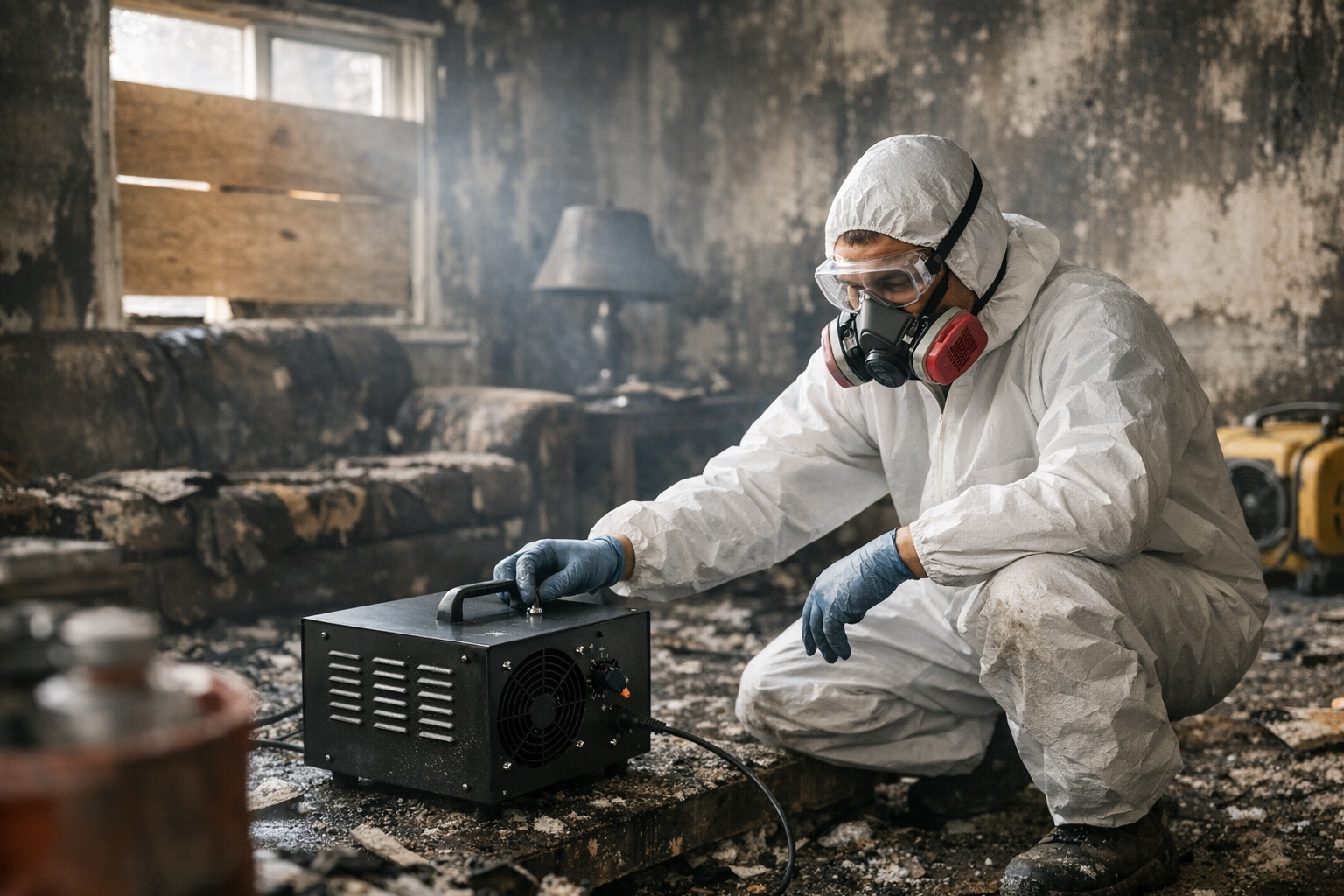
Ozone treatment removes persistent odors by breaking down odor molecules at the molecular level. Restoration teams seal affected areas and run ozone generators for 12-24 hours, then ventilate thoroughly before occupancy.
Hydroxyl generators offer a safer alternative to ozone for occupied spaces. These machines create hydroxyl radicals that attack odor molecules without producing harmful byproducts.
Surface-Specific Cleaning Approaches
Different surfaces require distinct cleaning methods based on their porosity and fire damage severity:
- Non-porous surfaces: Metal, glass, and sealed countertops respond to alkaline cleaners that break down acidic smoke residues
- Semi-porous materials: Painted walls and sealed wood need specialized solvents that penetrate without oversaturating
- Porous substances: Unfinished wood, drywall, and fabric often require replacement rather than cleaning
Content Restoration and Recovery Techniques
Ultrasonic cleaning uses high-frequency sound waves in specialized baths to remove soot from delicate items like jewelry, electronics, and fine china. The process creates microscopic bubbles that implode against surfaces, lifting contaminants without scrubbing.
Document freeze-drying preserves water-damaged papers, books, and photographs. Restoration specialists freeze items within 48 hours, then use sublimation chambers to remove moisture while maintaining structural integrity.
Electronics restoration requires immediate attention to prevent corrosion. Technicians disassemble devices, clean components with specialized solutions, and test functionality before reassembly.
Textile and Upholstery Recovery
Dry cleaning removes light smoke residue from clothing and fabrics. Wet cleaning with specialized detergents handles heavier contamination and odor penetration.
Ozone chambers treat soft goods that cannot withstand traditional washing. Items remain in controlled ozone environments for predetermined periods based on contamination levels.
Structural Drying and Water Damage Control
Firefighting water creates secondary damage that requires immediate attention. Structural drying prevents mold growth and additional deterioration using industrial dehumidifiers and air movers.
Moisture mapping identifies hidden water pockets behind walls and under flooring. Restoration teams use thermal imaging cameras and moisture meters to locate all affected areas.
Controlled demolition removes materials that cannot be dried effectively. Technicians strip wet insulation, damaged drywall, and compromised flooring to expose structural elements for proper drying.
Advanced Drying Equipment
Low-grain refrigerant dehumidifiers extract moisture more efficiently than conventional units. These machines operate at lower temperatures and remove water vapor that standard equipment cannot capture.
Desiccant dehumidifiers work in extreme conditions where refrigerant units fail. They use moisture-absorbing materials to pull humidity from the air in cold or already-dry environments.
Soot and Residue Removal Strategies
Different fire types create distinct residue patterns that require specific removal approaches. Protein fires from cooking leave nearly invisible films that yellow over time and produce strong odors.
Synthetic material fires create thick, smearing soot that spreads when cleaned improperly. Restoration teams use dry cleaning methods first, followed by specialized solvents.
Natural material fires produce dry, powdery soot that responds to HEPA vacuuming and alkaline cleaning solutions.
Professional Soot Testing
Soot analysis determines cleaning methods before work begins. Technicians test small areas with different cleaning solutions to identify the most effective approach without causing permanent damage.
pH testing reveals whether residues are acidic or alkaline. Acidic residues require alkaline cleaners, while alkaline residues need acidic solutions for proper neutralization.
Air Quality Restoration Methods
Air scrubbers with HEPA filtration remove particulates from indoor air during restoration work. These units run continuously to prevent cross-contamination between cleaned and uncleaned areas.
Negative air pressure systems contain contaminated air within work zones. Restoration teams create pressure differentials that prevent smoke particles from spreading to clean areas.
Activated carbon filters capture volatile organic compounds (VOCs) that cause persistent odors. Teams combine carbon filtration with other air cleaning methods for complete odor elimination.
Choosing the Right Fire Damage Techniques
Fire damage severity determines which restoration methods teams will employ. Light damage may require only surface cleaning and deodorization, while severe fires need complete reconstruction.
Age of the damage affects technique selection. Fresh fire damage responds better to standard cleaning methods, while older damage may need aggressive treatments or replacement.
Building materials influence restoration approaches. Historic buildings with plaster walls require different methods than modern homes with drywall construction.
Emergency Response Timing
First 24 hours focus on emergency stabilization: water extraction, board-up services, and initial assessment. Teams prioritize safety and preventing additional damage.
Days 2-7 involve detailed damage assessment, content inventory, and restoration planning. Professionals develop comprehensive scopes of work during this phase.
Weeks 2-8 cover active restoration work using appropriate fire damage techniques based on initial assessments and testing results.
Working with Fire Damage Restoration Professionals
Certified restoration companies have training in multiple techniques and access to specialized equipment. They understand which methods work best for specific damage types and building materials.
Insurance coordination requires detailed documentation of damage and restoration methods. Professional teams photograph conditions, maintain daily logs, and provide detailed invoicing for claim processing.
When selecting restoration contractors, verify certifications from organizations like the Institute of Inspection, Cleaning and Restoration Certification (IICRC). Check references and confirm insurance coverage before work begins.
Fire damage restoration combines multiple specialized techniques to address heat damage, smoke contamination, water damage, and odor problems. Professional restoration teams select appropriate methods based on damage severity, affected materials, and property characteristics. Browse RestorationLocator.com to find certified fire damage restoration specialists in your area who can assess your specific situation and recommend the most effective restoration approach.