
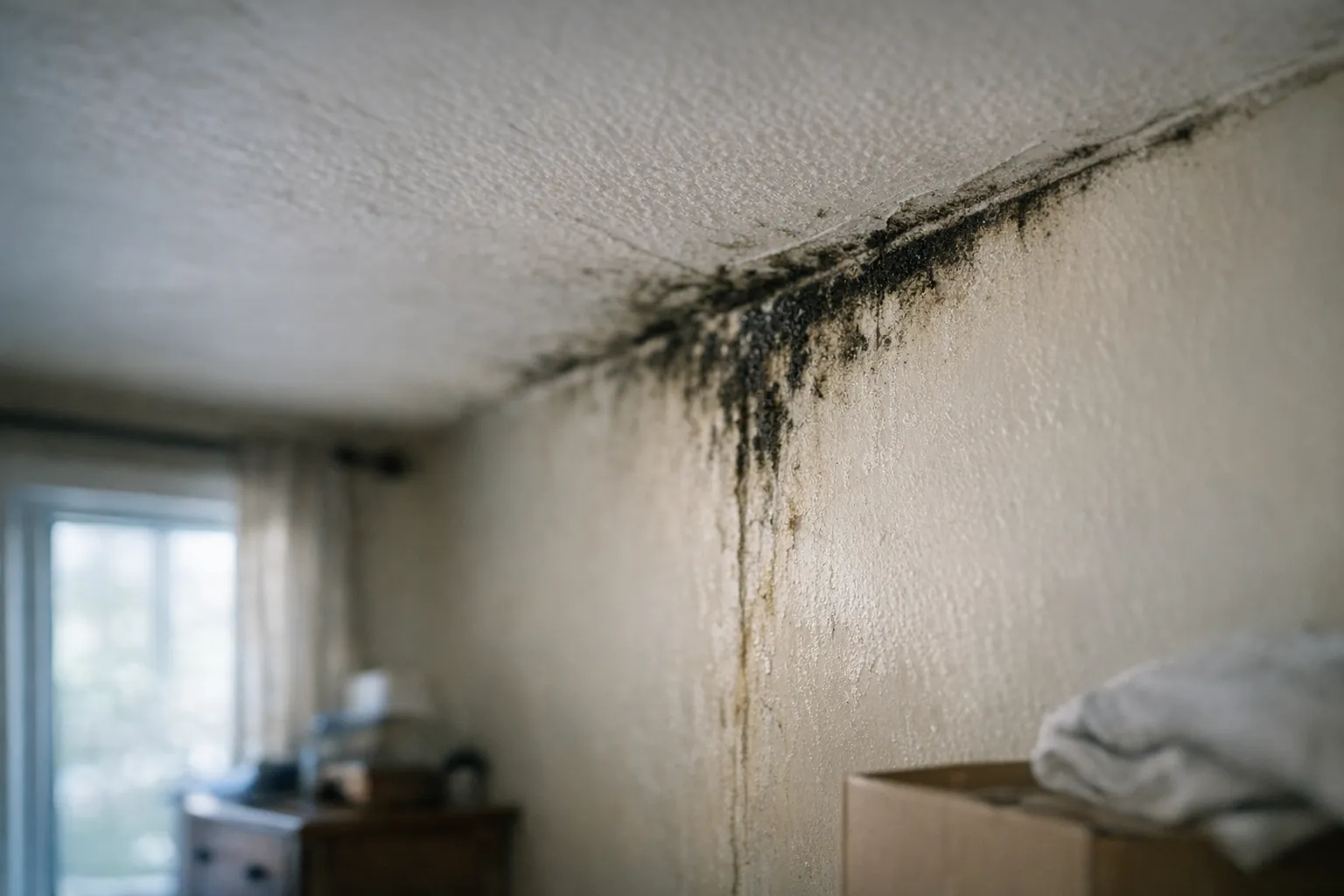
When **humidity and mold** problems intersect in your property, understanding their relationship becomes critical for prevention and control. Mold spores need moisture to germinate and grow, making humidity levels the primary factor determining whether your home or business will face a mold outbreak.
This guide explains how humidity drives mold growth and provides actionable strategies to maintain safe moisture levels in your environment.
How Humidity Creates Perfect Conditions for Mold Growth
**Humidity levels above 60% create ideal conditions for mold growth to begin within 24 to 48 hours.** Most mold species thrive when relative humidity reaches this threshold, particularly in temperatures between 68-86°F.
Mold spores exist everywhere in the environment, both indoors and outdoors. These microscopic particles remain dormant until they encounter sufficient moisture to begin germination.
When humidity rises, surfaces throughout your property absorb moisture from the air. This creates the wet environment mold spores need to establish colonies and spread rapidly across walls, ceilings, furniture, and personal belongings.
The Science Behind Humidity and Mold Formation
Relative humidity measures the amount of water vapor in air compared to the maximum amount that air can hold at a given temperature. As humidity increases, more moisture becomes available for mold spores to absorb.
Mold growth occurs in three distinct phases when humidity conditions are met:
- Germination: Spores absorb moisture and begin to swell within 12-24 hours
- Hyphal growth: Thread-like structures extend from spores to form the mold body
- Sporulation: Mature mold colonies produce new spores, spreading contamination
Critical Humidity Thresholds for **Mold Control**
**Indoor humidity should remain below 50% to prevent mold growth effectively.** This threshold provides a safety margin that accounts for temporary humidity spikes from daily activities like cooking and showering.
Different humidity ranges create varying levels of mold risk:
- 30-50% humidity: Optimal range that prevents mold growth while maintaining comfort
- 50-60% humidity: Moderate risk zone where some mold species may begin growing slowly
- Above 60% humidity: High risk zone where rapid mold growth typically occurs
- Above 70% humidity: Extremely high risk with potential for widespread contamination
Measuring Humidity Levels Accurately
Digital hygrometers provide the most reliable method for monitoring indoor humidity levels. Place these devices in multiple locations throughout your property, focusing on areas prone to moisture accumulation.
Check humidity readings at different times of day since levels fluctuate based on weather conditions and indoor activities. Morning readings often show the highest humidity levels due to overnight moisture accumulation.
Common Sources of Excess Indoor Humidity
Understanding where humidity originates helps target your **mold control** efforts effectively. Indoor moisture sources fall into two categories: internal generation and external infiltration.
Internal Humidity Sources
Daily activities generate significant amounts of water vapor that can push humidity into the danger zone:
- Cooking and dishwashing: Can add 2-3 pounds of moisture to indoor air daily
- Showering and bathing: Produces large amounts of steam in concentrated areas
- Laundry activities: Washing machines and dryers release moisture, especially when vented improperly
- Human respiration: Each person exhales approximately 1 pound of water vapor per day
- Houseplants: Release moisture through transpiration, particularly large or numerous plants
External Moisture Infiltration
Outside moisture enters buildings through various pathways, creating humidity problems that promote mold growth. Foundation leaks allow groundwater and soil moisture to seep into basements and crawl spaces.
Roof damage permits rainwater infiltration that increases humidity in attics and upper floors. Poor ventilation traps moisture from all sources, preventing natural drying processes that would normally keep humidity levels manageable.
Effective Strategies for Controlling **Humidity and Mold**
Successful humidity control requires a combination of moisture removal, ventilation improvements, and source elimination. These strategies work together to maintain safe humidity levels year-round.
Dehumidification Systems
**Mechanical dehumidifiers provide the most direct method for reducing indoor humidity levels.** Portable units work well for single rooms or small areas, while whole-house systems integrate with HVAC equipment to control humidity throughout larger properties.
Size dehumidifiers appropriately for the space they must serve. Undersized units run continuously without achieving target humidity levels, while oversized units cycle on and off too frequently to maintain consistent control.
Empty water collection tanks daily and clean units regularly to prevent them from becoming mold sources themselves.
Ventilation Improvements
Proper ventilation removes moisture-laden air and replaces it with drier outside air. Install exhaust fans in bathrooms, kitchens, and laundry rooms to capture humidity at its source.
Run exhaust fans during moisture-generating activities and continue operation for 30 minutes afterward to remove residual humidity. Ensure fan capacities match room sizes for effective moisture removal.
Open windows when outdoor humidity is lower than indoor levels to promote natural air exchange and moisture reduction.
Air Conditioning Systems
Air conditioners remove moisture from indoor air as part of their cooling process. Properly sized and maintained AC systems can significantly reduce humidity levels during warm weather.
Clean or replace air filters regularly to maintain efficient operation. Dirty filters reduce airflow and decrease dehumidification effectiveness.
Schedule annual professional maintenance to ensure optimal performance and humidity control capacity.
Identifying Early Signs of Humidity-Related Mold Problems
Early detection allows for prompt intervention before mold problems become severe. Visual indicators often appear before widespread contamination develops.
**Condensation on windows, walls, or pipes signals excessive humidity that can lead to mold growth.** This moisture accumulation creates the wet conditions mold spores need to germinate and establish colonies.
Watch for these warning signs of humidity-related mold issues:
- Musty odors: Often the first indication of hidden mold growth
- Discolored patches: Yellow, brown, or black spots on walls, ceilings, or surfaces
- Peeling paint or wallpaper: Excess moisture causes adhesives to fail
- Warped wood: Doors, floors, or trim that no longer fit properly
- Increased allergy symptoms: Persistent coughing, sneezing, or respiratory irritation
Professional Assessment Benefits
Professional mold inspectors use specialized equipment to detect hidden moisture and mold growth behind walls, under flooring, and in other concealed areas. Thermal imaging cameras reveal temperature differences that indicate moisture problems.
Air quality testing identifies mold spore concentrations and species present in your environment. This information helps determine the extent of contamination and appropriate remediation strategies.
When to Contact Mold Remediation Professionals
Small mold patches covering less than 10 square feet may be manageable with proper cleaning techniques and humidity control measures. Larger contaminated areas require professional remediation to ensure complete removal and prevent spread.
Contact restoration professionals immediately if mold growth covers extensive areas, affects HVAC systems, or occurs following water damage events. These situations often involve structural moisture problems that require specialized equipment and techniques to resolve effectively.
Professional remediation includes moisture source identification, contaminated material removal, air filtration during cleanup, and post-remediation verification testing.
Choosing Qualified Restoration Providers
Look for certified mold remediation specialists with proper training and insurance coverage. Reputable providers conduct thorough assessments before beginning work and provide detailed remediation plans.
Verify that contractors follow industry standards for containment, removal, and disposal of contaminated materials. Post-remediation testing should confirm successful mold removal and safe humidity levels.
Understanding the critical relationship between **humidity and mold** empowers you to take proactive steps that protect your property and health. Maintaining indoor humidity below 50% through proper ventilation, dehumidification, and moisture source control prevents most mold problems before they begin.
When mold issues do occur, prompt professional intervention ensures complete remediation and prevents recurrence. Find certified disaster cleanup and restoration specialists in your area by visiting https://restorationlocator.com to browse qualified providers and read verified reviews.