
A small crack around a chimney flashing can flood an attic within one heavy storm. Most homeowners never see the warning signs until water stains spread across the ceiling. A regular roof inspection catches those weak points before they turn into five-figure repair bills.
This post explains what inspectors look for, how often you need a check, and which problems lead to the worst disaster damage. You will learn how to spot red flags yourself and when to call a restoration specialist.
Why a Roof Inspection Is Your First Line of Disaster Prevention
A roof inspection is a structured examination of your roofing system to find damage, wear, and vulnerabilities. It covers shingles, flashing, gutters, vents, and the decking underneath. The goal is to catch failures before weather exploits them.
Roofs fail at their seams and edges, not in the middle of a flat field of shingles. Inspectors know to check transitions: where a vent meets shingles, where two roof planes join, where flashing seals a chimney.
Skipping inspections is the most common reason a manageable leak becomes a gutted ceiling. Disaster prevention starts with finding the half-inch gap before the rain does.
What a Single Storm Can Do to a Neglected Roof
A lifted shingle is harmless on a calm day. During a 60-mph wind event, that same shingle peels back and exposes the underlayment. Driving rain then soaks the decking and runs down into wall cavities.
Once water reaches insulation and drywall, mold growth can begin within 24 to 48 hours. What started as a $200 shingle repair becomes a multi-room remediation project.
What Inspectors Check During a Roof Inspection
An experienced inspector follows a repeatable order so nothing gets missed. Here is the sequence most use on a steep-slope asphalt roof.
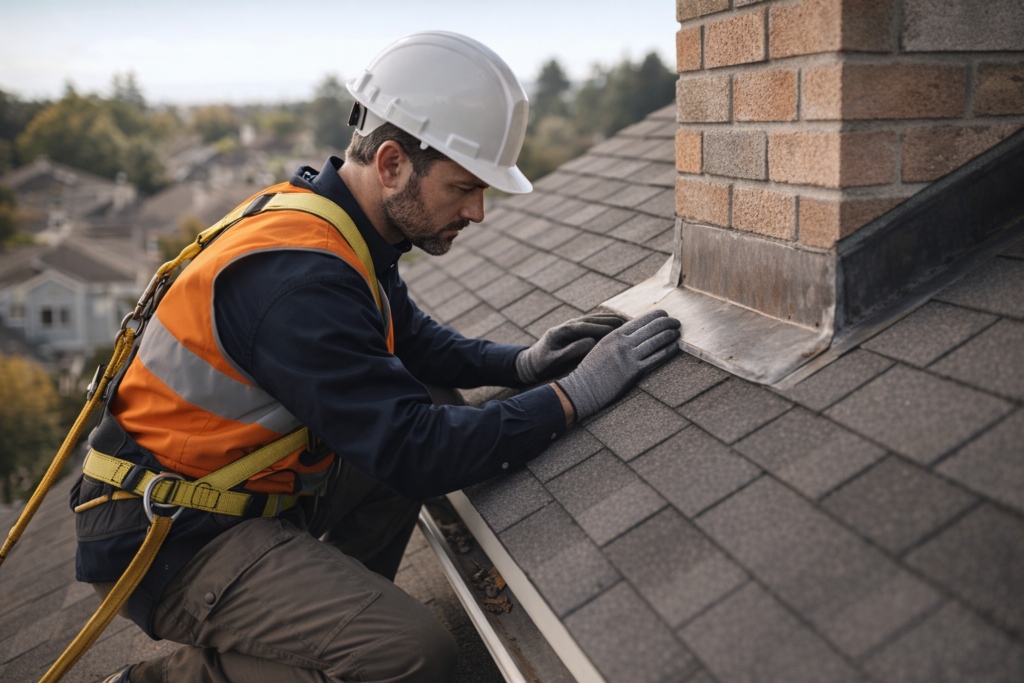
- Field shingles — checking for curling, cracking, granule loss, and bare spots.
- Flashing and seals — inspecting metal around chimneys, skylights, and wall joints for rust or separation.
- Penetrations — examining pipe boots and vent collars, which crack and leak faster than shingles.
- Valleys — where two slopes meet and carry the heaviest water flow.
- Gutters and downspouts — confirming water drains away from the foundation.
- Attic interior — looking for daylight, damp insulation, and dark streaks on rafters.
The attic check matters most for catching hidden trouble. A stain on the underside of decking points to a leak the surface scan might miss.
The Components That Fail First
Pipe boots are the quiet culprit behind many ceiling leaks. The rubber collar around plumbing vents dries out and splits after about 10 years. The shingles around it can look fine while water pours in below.
Flashing ranks a close second. Caulk-only seals on chimney flashing degrade fast under sun and freeze cycles. Proper step flashing tucked under shingles lasts decades; a bead of sealant lasts a few seasons.
How Often You Should Schedule a Roof Inspection
Inspect your roof twice a year: once in spring and once in fall. Spring checks find winter damage from ice and snow load. Fall checks prepare the roof for the next freeze.
Schedule an extra inspection after any of these events:
- Hail of one inch or larger
- Wind gusts above 50 mph
- A fallen tree limb or heavy debris impact
- Visible interior water stains
- A nearby home in your area filing storm damage claims
Hail damage is sneaky because bruised shingles may not leak for months. The granule loss accelerates aging and shortens the roof’s lifespan by years.
Age-Based Inspection Frequency
A roof under 10 years old can handle the twice-yearly schedule. A roof past 15 years deserves closer attention. Asphalt shingle roofs average 20 to 25 years, and the final third of that span brings the most failures.
Spotting Roof Trouble Yourself Between Inspections
You can catch many warning signs from the ground with binoculars. Looking up after a storm takes five minutes and saves a lot of grief.
Watch for these ground-level red flags:
- Shingle granules collecting in gutters or at downspout outlets
- Dark patches or missing shingles on the roof field
- Sagging rooflines or dips in the ridge
- Daylight visible through the attic during a daytime check
- Damp or musty smells in upstairs rooms
Never climb onto a wet or steep roof yourself. Falls from roofs send tens of thousands of people to emergency rooms each year. Leave the surface walk to someone with fall protection and the right footing.
When to Call a Restoration Specialist
An inspection finds the problem; a restoration specialist fixes the resulting water and structural damage. Call one when an inspection turns up any of the following.
- Active interior leaks staining ceilings or walls
- Wet insulation or saturated decking in the attic
- Visible mold on rafters or sheathing
- Storm impact that breached the roof envelope
Speed matters with water intrusion. The 24-to-48-hour window before mold sets means a fast call limits the damage and the cost.
How to Choose the Right Provider on Restoration Locator
The directory at https://restorationlocator.com lets you match the provider to the problem. Use the tools below to narrow your shortlist fast.
- Sort by location to find crews that can reach you the same day after a storm.
- Filter listings by specialty such as water damage, mold remediation, or storm cleanup.
- Check reviews from past clients to confirm response time and workmanship.
- Compare multiple providers before committing to repair scope and timeline.
For storm damage, prioritize firms that document moisture readings. Photo evidence and meter logs strengthen any insurance claim you file later.
The Cost of Inspections Versus the Cost of Disaster
A routine roof inspection runs far less than a single ceiling repair. The math favors prevention by a wide margin.
- Routine inspection: a modest flat fee, sometimes free with a repair estimate
- Minor flashing or boot repair: a few hundred dollars
- Water-damaged drywall and insulation: often several thousand dollars
- Mold remediation plus structural repair: tens of thousands in severe cases
Each step up the ladder costs roughly ten times the one below. Catching the problem at the inspection stage keeps you at the cheapest rung.
Key Takeaways
A roof inspection twice a year, plus checks after major storms, stops small failures from becoming flooded interiors. Watch for granule loss, cracked pipe boots, and degraded flashing — the parts that fail first. When an inspection reveals water damage or mold, act within 48 hours to contain the spread.
Find a vetted crew for repairs and restoration at https://restorationlocator.com. Start your search by location and specialty today.