
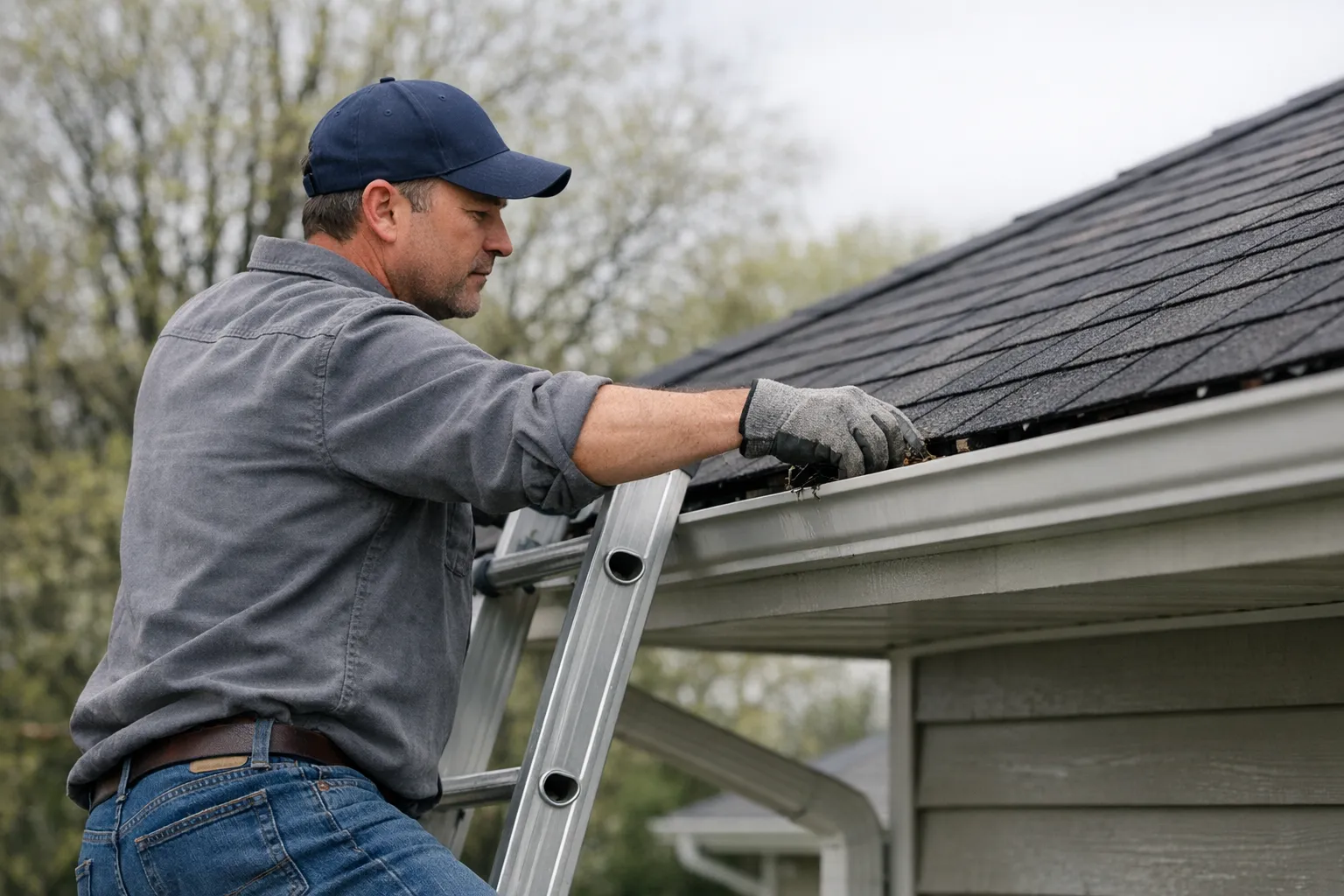
Why Spring Roof Maintenance Matters
Spring storms can cause thousands of dollars in damage to unprepared roofs. Roof maintenance performed before storm season arrives prevents most weather-related failures and extends your roof’s lifespan by up to 40%.
Winter weather creates small problems that become major vulnerabilities when spring winds and rain arrive. A loose shingle or clogged gutter transforms into a leak that damages your home’s interior.
This guide covers specific maintenance tasks that protect your roof from spring storm damage and when to call professionals for help.
Essential Roof Maintenance Tasks for Spring Preparation
Clean and Inspect Gutters
Clogged gutters cause water to back up under roof edges during heavy spring rains. Remove all leaves, debris, and ice dam remnants from gutters and downspouts.
Check for loose gutter hangers and sagging sections. Water pooling in gutters adds significant weight that can pull gutters away from your roof.
Test downspout flow by running water through each section. Clear any blockages with a plumber’s snake or high-pressure hose attachment.
Examine Shingles for Winter Damage
Missing or damaged shingles create entry points for wind-driven rain. Walk around your home and look for shingles on the ground after winter storms.
Use binoculars to inspect your roof from ground level. Look for these warning signs:
- Curled or cracked shingle edges
- Missing granules that expose black underlayment
- Loose or lifted shingles
- Dark stains indicating water penetration
Document damage locations with photos. This helps contractors provide accurate estimates and assists with insurance claims if needed.
Check Flashing and Sealants
Flashing around chimneys, vents, and skylights prevents water infiltration at roof penetrations. Winter freeze-thaw cycles crack sealants and loosen flashing.
Inspect all flashing joints for gaps or rust damage. Check that sealant remains flexible and hasn’t pulled away from surfaces.
Replace any cracked or missing caulk with roofing-grade sealant rated for your climate zone.
Interior Inspection Points
Attic Assessment
Your attic reveals roof problems before exterior damage becomes visible. Check for water stains on rafters and decking after winter weather.
Look for daylight coming through roof boards. Even small holes allow wind-driven rain to enter during storms.
Inspect insulation for moisture damage or compression. Wet insulation loses effectiveness and promotes mold growth.
Ceiling and Wall Monitoring
Water stains on ceilings often appear weeks after roof damage occurs. Check rooms directly below roof valleys and penetrations.
Feel for soft spots in drywall that indicate hidden moisture damage. Address these issues before spring storms worsen the problem.
Professional Roof Maintenance Services
When to Call Experts
Some roof maintenance tasks require professional expertise and safety equipment. Contact qualified contractors for steep roofs over two stories or complex repairs.
Professional services include comprehensive inspections, structural assessments, and warranty-backed repairs. Licensed contractors spot problems that homeowners often miss.
Schedule professional inspections if your roof is over 15 years old or experienced severe weather damage.
Choosing Qualified Contractors
Research contractors before spring storm season when demand peaks. Verify licensing, insurance, and local references for any roofing professional.
Get written estimates that detail materials, labor, and timeline. Avoid contractors who demand full payment upfront or pressure immediate decisions.
Timing Your Maintenance Schedule
Early Spring Tasks (March-April)
Begin roof maintenance as soon as winter weather subsides. Early spring provides ideal conditions for exterior work before storm activity increases.
Complete gutter cleaning and basic inspections first. These tasks reveal urgent problems that need immediate attention.
Schedule professional services early when contractors have availability and competitive pricing.
Pre-Storm Preparations
Monitor weather forecasts during spring storm season. Secure loose materials and check that recent repairs remain intact.
Keep emergency tarps and basic repair supplies accessible. Quick temporary fixes prevent minor damage from becoming major problems.
Cost-Effective Maintenance Strategies
Preventive vs. Reactive Spending
Annual maintenance costs significantly less than emergency storm repairs. Basic cleaning and minor repairs typically cost under $500 compared to thousands for storm damage restoration.
Document all maintenance activities with photos and receipts. This record helps with insurance claims and increases property value.
DIY Safety Guidelines
Only perform ground-level maintenance unless you have proper safety equipment and experience. Ladder accidents cause more injuries than roof problems cause property damage.
Work during dry conditions with good visibility. Wet or windy weather makes roof work extremely dangerous.
Have someone present when working at height. Never work alone on maintenance tasks above ground level.
Emergency Preparedness
Storm Response Planning
Create an action plan for roof damage during spring storms. Know how to safely access your electrical panel and water shutoffs.
Keep contact information for qualified restoration contractors readily available. Research options before you need emergency services.
Understand your insurance coverage limits and deductibles. Document your roof’s condition before storm season with detailed photos.
Post-Storm Assessment
Inspect your property safely after storms pass. Look for obvious damage from ground level before calling professionals.
Document new damage immediately with photos and written descriptions. Contact your insurance company within 48 hours of discovering problems.
Avoid contractors who go door-to-door after storms. These companies often provide poor workmanship and disappear quickly.
Long-Term Roof Health
Maintenance Record Keeping
Track all maintenance activities, repairs, and inspections in a dedicated file. This history helps identify recurring problems and validates warranty claims.
Note seasonal patterns in your roof’s performance. Some issues only appear during specific weather conditions.
Upgrade Considerations
Consider improvements that enhance storm resistance during routine maintenance. Impact-resistant shingles and reinforced flashing provide better protection.
Evaluate your roof’s remaining lifespan when planning major maintenance. Sometimes replacement proves more cost-effective than extensive repairs.
Regular roof maintenance protects your home investment and prevents costly storm damage. Start with basic cleaning and inspection tasks, then address problems before spring weather arrives. When in doubt about safety or repair complexity, contact qualified professionals who can assess your roof’s condition and recommend appropriate solutions.
Don’t wait for storm damage to find qualified restoration contractors. Browse Disaster Cleanup & Restoration listings now to connect with licensed professionals in your area.