
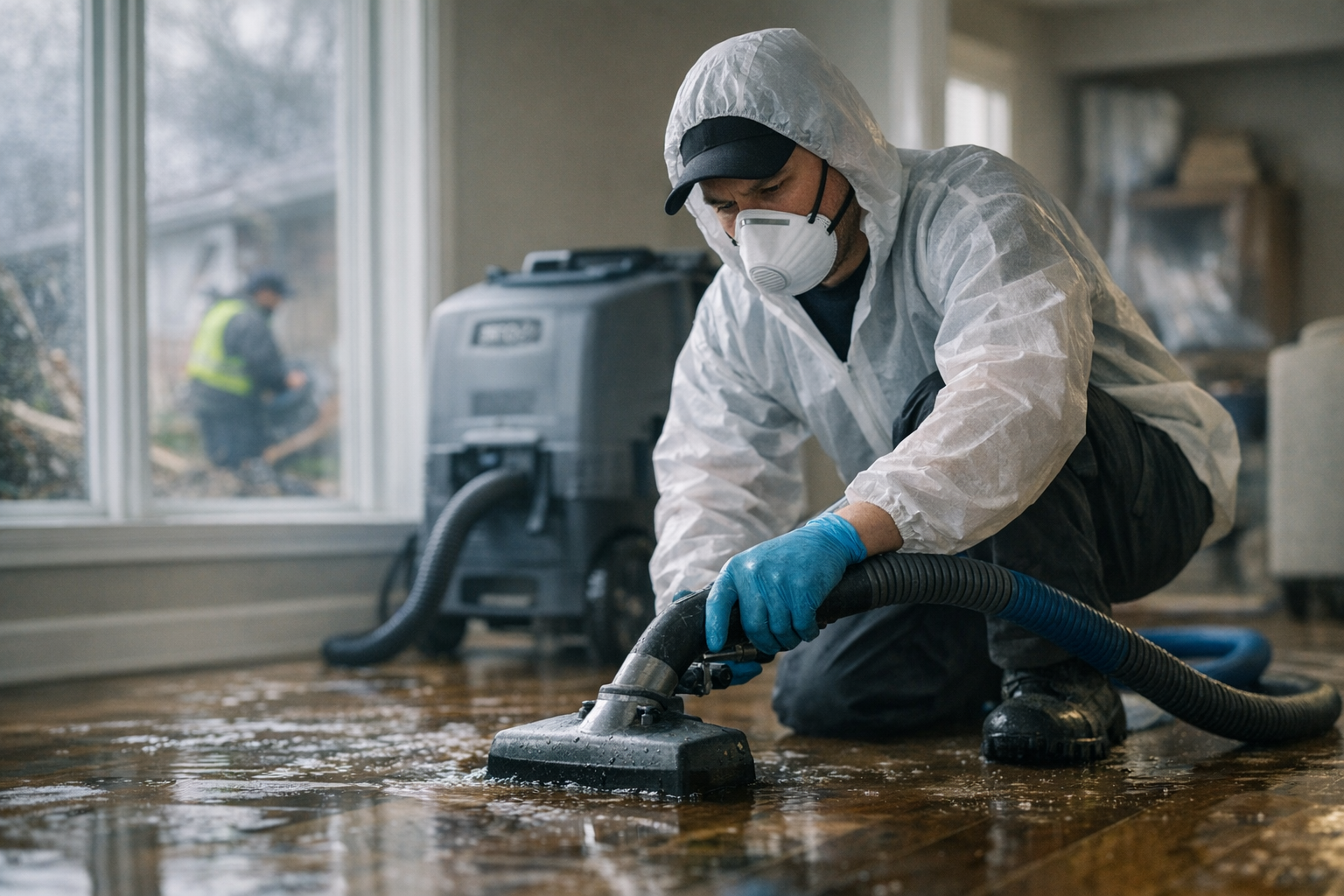
Why Speed Matters When Spring Storms Strike
Spring storms can devastate homes and businesses within hours, but rapid response from restoration professionals can mean the difference between minor repairs and complete reconstruction. Property damage from wind, hail, and flooding escalates exponentially when left untreated for even 48 hours.
Water infiltration begins breaking down building materials immediately after impact. Mold spores start colonizing within 24-48 hours in warm, moist conditions typical of spring weather.
Understanding the critical timeline for spring storm damage response helps property owners make informed decisions when disaster strikes their homes or businesses.
The 24-Hour Rule for Storm Damage Assessment
Professional restoration teams follow strict timing protocols because damage compounds rapidly after spring storms. The first 24 hours represent the most critical window for damage mitigation.
Water extraction must begin within hours to prevent structural damage. Wood flooring can cup and buckle within six hours of water exposure, while drywall begins deteriorating after 24 hours of saturation.
Insurance adjusters recommend documenting all visible damage within the first day. Photographs taken immediately after the storm provide the clearest evidence for claims processing.
What Happens Hour by Hour
Spring storm damage follows predictable patterns that restoration professionals track closely:
- Hours 1-4: Water penetrates building envelope through damaged roofing, siding, or windows
- Hours 4-12: Moisture saturates insulation, subflooring, and wall cavities
- Hours 12-24: Wood materials begin swelling; electrical systems face contamination risk
- Hours 24-48: Mold spores activate and begin reproduction cycles
- Beyond 48 hours: Secondary damage often exceeds original storm impact costs
How Rapid Response Prevents Secondary Damage
Secondary damage from delayed restoration efforts typically costs three to five times more than immediate storm repairs. Spring’s warm temperatures and high humidity accelerate these secondary effects.
Professional water extraction within the first 12 hours prevents most subflooring replacement. Immediate board-up services protect interiors from additional weather exposure during repair periods.
Thermal imaging technology allows restoration teams to identify hidden moisture pockets that cause problems weeks later. These areas require immediate attention to prevent structural compromises.
Preventing Mold Growth
Spring’s combination of warmth and moisture creates ideal conditions for mold proliferation. Restoration professionals use specific protocols to interrupt this process.
Industrial dehumidifiers reduce ambient humidity below 50% within hours of deployment. Air movers create circulation patterns that prevent moisture accumulation in corners and enclosed spaces.
Antimicrobial treatments applied within 24 hours can prevent mold establishment entirely. Once colonies form, removal becomes significantly more expensive and time-consuming.
Emergency Services Available During Spring Storm Season
Professional restoration companies maintain 24/7 rapid response capabilities during peak spring storm months. These services include immediate damage assessment, emergency stabilization, and mitigation planning.
Emergency board-up prevents additional damage from follow-up storms common during spring weather patterns. Temporary roofing systems protect building interiors while permanent repairs are planned and scheduled.
Many providers offer emergency water extraction using truck-mounted equipment that arrives within hours of initial contact. This equipment removes thousands of gallons per hour from flooded structures.
Coordinating with Insurance Claims
Restoration professionals experienced in insurance procedures can streamline claims processing significantly. They document damage using industry-standard protocols that insurance companies recognize and accept.
Digital moisture mapping creates detailed records of affected areas for accurate scope development. These records prevent disputes over coverage areas and repair specifications.
Direct insurance billing arrangements eliminate upfront costs for emergency services. Property owners can authorize immediate work without waiting for claim approvals on covered damages.
Technology That Speeds Storm Damage Response
Modern restoration equipment dramatically reduces response and recovery timeframes compared to traditional methods. Thermal imaging cameras identify moisture intrusion patterns within minutes of arrival.
Moisture meters provide instant readings on building materials to determine salvage potential. Materials reading below specific moisture content levels can often be dried and saved rather than replaced.
GPS dispatch systems route the closest available crews to storm-damaged properties. This technology reduces response times from hours to minutes in many service areas.
Advanced Drying Systems
Low-grain refrigerant dehumidifiers remove moisture at rates impossible with conventional equipment. These systems can dry structures in days rather than weeks when deployed immediately.
Injectidry systems force heated air into wall cavities and subfloor areas without requiring demolition. This technology saves both time and reconstruction costs on storm-damaged properties.
Remote monitoring allows restoration teams to track drying progress continuously. Sensors provide real-time data on temperature, humidity, and moisture content throughout the affected structure.
Choosing Restoration Providers for Emergency Response
Selecting restoration providers before spring storm season arrives ensures faster response when disasters occur. Research local companies’ response capabilities, equipment inventories, and staff availability.
Look for certifications from the Institute of Inspection, Cleaning and Restoration Certification (IICRC). These credentials indicate training in current restoration protocols and damage assessment techniques.
Verify 24/7 availability and average response times for emergency calls. Companies with local dispatch centers typically provide faster initial response than those routing calls through distant call centers.
Questions to Ask Potential Providers
Interview restoration companies about their emergency response protocols before you need their services:
- What is your guaranteed response time for emergency calls during storm events?
- Do you maintain local equipment inventories or rely on shipments from other regions?
- How many certified technicians are available for simultaneous emergency calls?
- What insurance companies do you work with directly for billing arrangements?
- Can you provide references from recent storm damage projects similar to your property type?
Regional Considerations for Spring Storm Preparation
Spring storm patterns vary significantly across different geographic regions. Tornado-prone areas require different preparation strategies than regions facing primarily hail or flooding risks.
Coastal properties face unique challenges from wind-driven rain and storm surge effects. Restoration providers in these areas maintain specialized equipment for saltwater contamination and high-velocity impact damage.
Mountain regions deal with rapid snowmelt flooding combined with spring precipitation. These conditions require restoration teams experienced with cold-weather drying techniques and altitude considerations.
Building Code Compliance During Repairs
Spring storm repairs often trigger local building code upgrade requirements. Experienced restoration contractors navigate these regulations while maintaining project timelines.
Permit acquisition can delay repairs significantly if not handled properly. Established local providers maintain relationships with building departments that facilitate faster approvals.
Code compliance affects insurance coverage for completed repairs. Work performed by licensed, bonded contractors provides coverage protection that unlicensed repairs may not offer.
Financial Benefits of Immediate Storm Response
Properties receiving professional attention within 24 hours of storm damage typically cost 60-80% less to restore than those left untreated for a week. This difference often reaches tens of thousands of dollars on significant damage claims.
Insurance deductibles apply to total claim amounts, so minimizing damage extent directly reduces out-of-pocket costs. Emergency services that prevent secondary damage can keep claims below deductible thresholds.
Business interruption coverage activates when commercial properties cannot operate normally. Faster restoration reduces interruption periods and associated revenue losses.
Swift professional response protects property values by preventing long-term structural issues. Delayed repairs often require extensive reconstruction that affects resale values for years.
Document all emergency services costs for potential insurance reimbursement. Most policies cover reasonable mitigation efforts when performed promptly after covered storm events.
When spring storms threaten your area, having a restoration provider ready to respond immediately can save thousands in repair costs and protect your property’s long-term value. Browse certified restoration professionals in your area at Restoration Locator to find experienced providers before you need emergency services.