
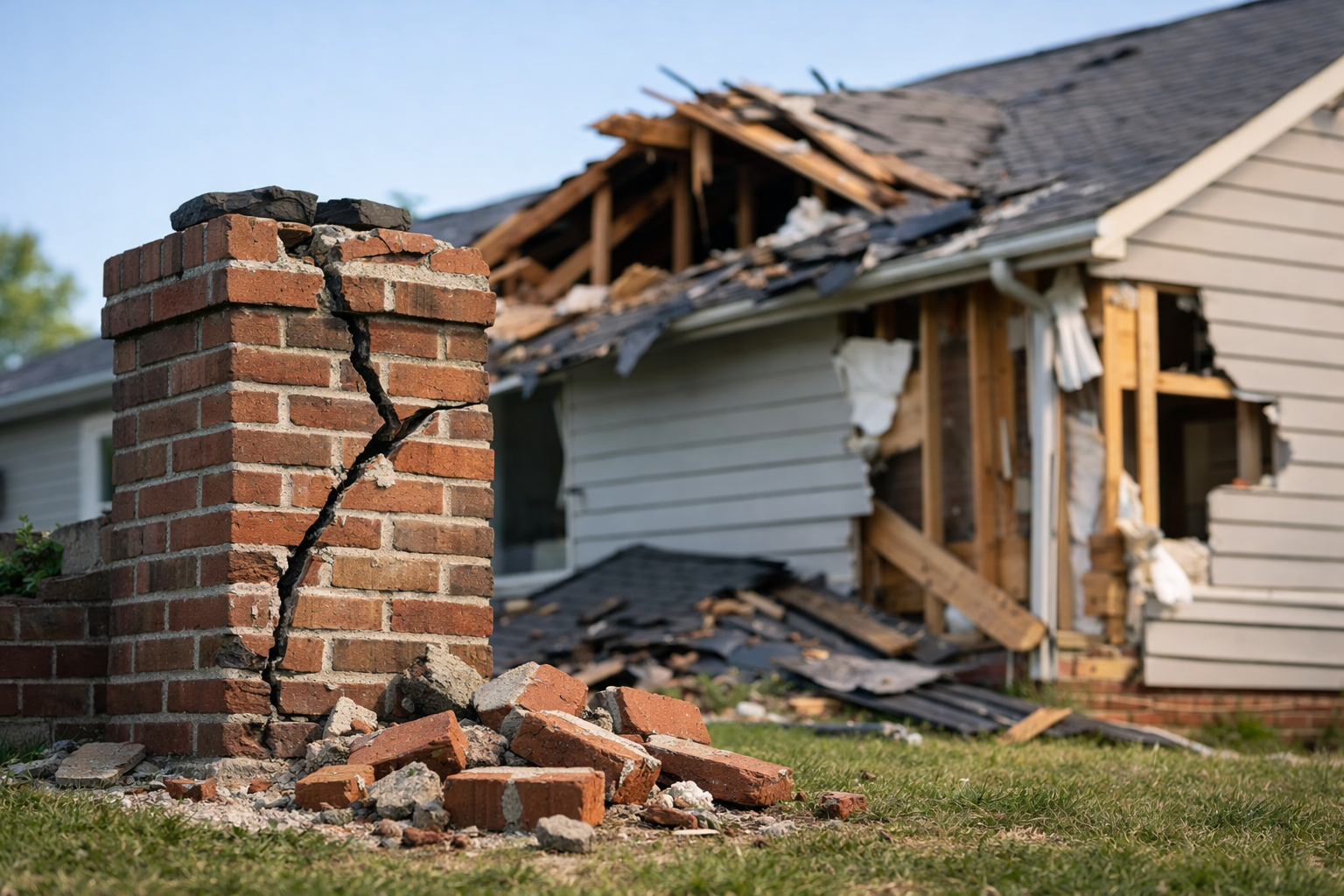
A single lightning strike carries up to one billion volts and heats the air around it to nearly 50,000°F. When that energy hits a house, the results are rarely subtle. Cracked chimneys, exploded outlets, and hidden wiring failures all trace back to one bolt.
This post explains how lightning damage attacks the physical structure of a home. You will learn where strikes cause the most harm, which warning signs mean trouble, and what protective measures actually work.
How Lightning Damage Affects Home Structures
Lightning damage is the physical and electrical destruction caused when a strike passes into or near a building. The energy seeks the fastest path to ground, and your home’s materials become that path.
The damage falls into three categories: fire, explosive force, and electrical surge. Each one attacks a different part of the structure.
Explosive Structural Force
When lightning hits masonry or wood, it superheats any moisture trapped inside. That water flashes to steam in an instant and blows the material apart.
This is why a strike on a chimney can send bricks flying 30 feet across a yard. The same effect splits roof rafters, cracks concrete, and blows siding off walls.
- Chimneys: Mortar joints crack and crowns shatter from steam pressure.
- Roof framing: Rafters and ridge beams split along the grain.
- Brick and stucco: Face material blows outward, leaving craters.
- Concrete foundations: Trapped moisture causes spalling and hairline fractures.
Fire Ignition Inside Walls
Roughly one in four lightning strikes on homes starts a fire. The dangerous part is that many of these fires begin inside wall cavities and attics.
A bolt traveling along wiring can ignite insulation or framing where no one sees it. Firefighters call these hidden burns, and they can smolder for hours after the storm passes.
Electrical System Destruction
A surge does not need a direct hit to ruin your electrical system. Lightning striking a nearby tree or power line pushes thousands of volts into house wiring.
That spike melts outlet contacts, welds breaker points, and destroys anything plugged in. It can carbonize the wire insulation inside your walls, leaving a fire hazard behind every switch plate.
Warning Signs of Lightning Damage After a Storm
Some damage announces itself with a loud crack and falling debris. Other damage stays hidden until it fails weeks later. Check for both types after a close strike.
Visible Structural Signs
- Scattered brick, mortar chunks, or roofing debris on the ground
- Fresh cracks in chimney crowns or exterior masonry
- Scorch marks or dark streaks running down siding
- Split or splintered rafters visible in the attic
- Blown-off shingles concentrated near one high point
Hidden Electrical Signs
- Outlets or switches that no longer work
- A burning or acrid smell near walls or the panel
- Flickering lights on circuits that were fine before
- A tripped main breaker that will not reset cleanly
- Dead appliances even after power returns
Treat any burning smell as an emergency. It points to smoldering insulation or carbonized wiring behind a finished surface.
Why Lightning Damage Is Easy to Underestimate
Homeowners tend to inspect the roof and stop there. The real risk lives in places you cannot see without opening walls or testing circuits.
A strike on a metal gutter, for example, can arc into the framing and char studs internally. The exterior looks fine. Months later, a small circuit fault ignites the pre-damaged wood.
This delayed failure pattern is why a thorough inspection matters after any close strike. Structural and electrical assessment together catch what a quick glance misses.
Home Protection Steps That Reduce Lightning Damage
Strong home protection against lightning combines a path for the energy and barriers for the surge. Here is a practical sequence, ordered by impact.
- Install a lightning protection system. Air terminals (rods) on the roof route the strike safely to grounding rods in the earth, keeping it out of your framing.
- Add a whole-home surge protector. Mounted at the electrical panel, it clamps voltage spikes before they reach wiring and outlets.
- Layer in point-of-use surge strips. These protect electronics from the residual spike a panel device lets past.
- Ground metal systems correctly. Gutters, satellite mounts, and metal roofing need bonding to reduce arc-over into walls.
- Trim tall trees near the roofline. A struck tree can throw energy and debris directly into the structure.
A certified lightning protection system follows standards set by the National Fire Protection Association. Ask any installer to confirm the work meets NFPA 780.
What Protection Does Not Do
No system makes a home strike-proof. Protection redirects energy and reduces harm; it does not stop a bolt from arriving.
The goal is to give that billion volts an easy path to ground that avoids your walls, wiring, and family. A well-designed system does that reliably.
What to Do After a Lightning Strike Hits Your Home
Fast, careful action limits secondary damage like fire spread and water intrusion. Follow this order.
- Get everyone outside if you smell smoke or see any flame.
- Call the fire department for any burning odor, even without visible fire.
- Shut off power at the main only if the panel is dry and safe to reach.
- Photograph all damage for your insurance claim before cleanup begins.
- Cover roof breaches with a tarp to stop rain from entering.
- Schedule a licensed inspection of both structure and electrical systems.
Water often follows fire when crews extinguish a hidden attic blaze. That combination means many strikes need both structural repair and water damage restoration.
Finding the Right Restoration Help
Lightning creates a mix of problems, and few contractors handle all of them alone. You may need fire cleanup, structural repair, and electrical work on the same house.
Restoration Locator lets you match providers to your exact situation. Use the directory to line up the right crew quickly.
- Filter listings by fire damage or water damage restoration.
- Sort by location to find crews near your address for a faster response.
- Check reviews on each provider to gauge past storm work.
- Compare providers that handle both structural and electrical-related repair.
Booking an inspection early prevents a small hidden burn from becoming a total loss.
Key Takeaways
Lightning damages homes three ways: explosive structural force, hidden fire, and electrical surge. The most dangerous harm hides inside walls and attics where a quick look never finds it. A grounded protection system plus surge protection cuts the risk sharply, and prompt inspection catches what remains.
If a strike has hit your home, act before hidden damage worsens. Browse Disaster Cleanup & Restoration listings now at https://restorationlocator.com and connect with crews who repair both structure and wiring.
Sources
- National Fire Protection Association – Lightning Safety and NFPA 780
- National Weather Service – Lightning Safety
- Insurance Information Institute – Lightning Damage and Your Insurance