
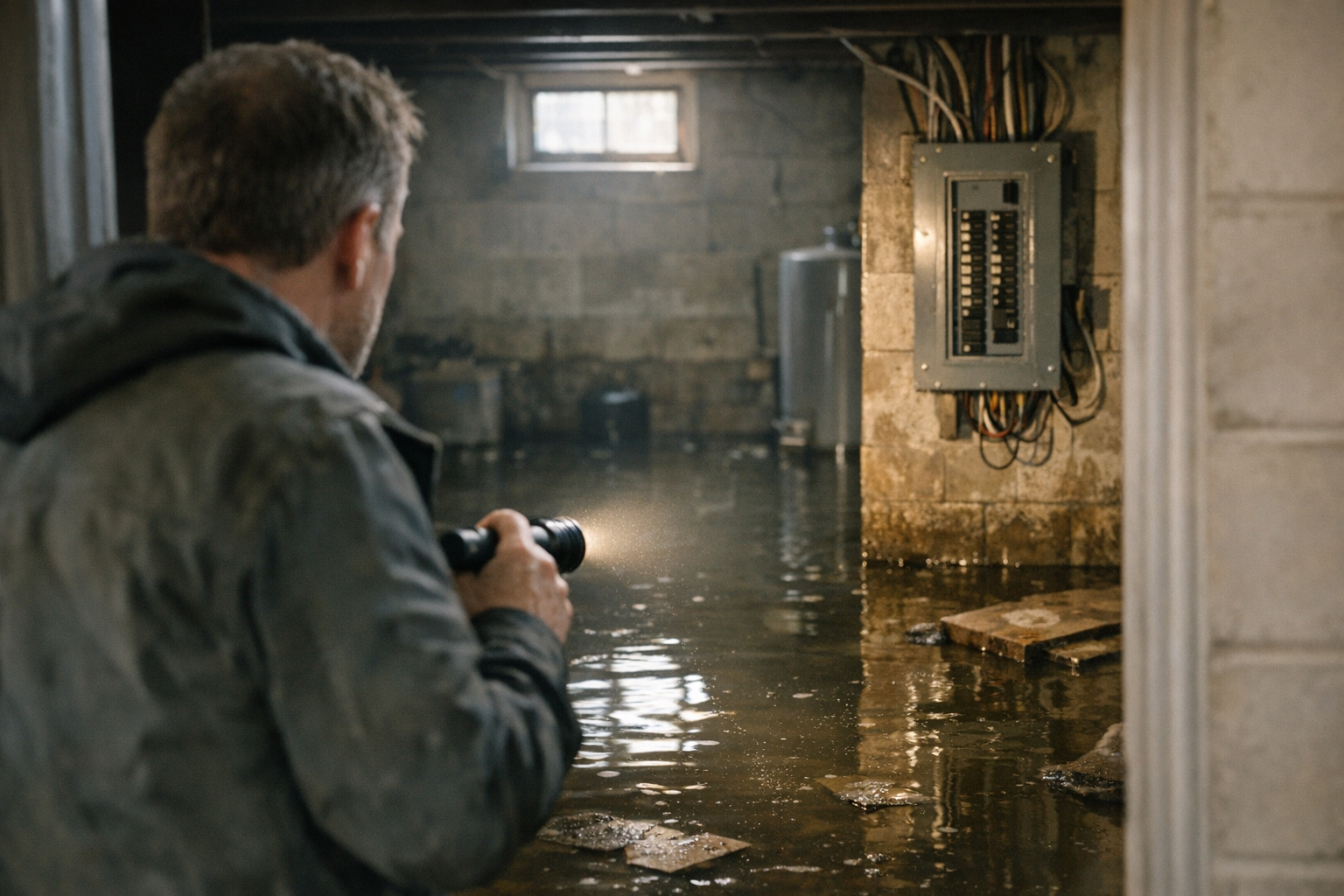
The Hidden Danger Lurking in Flooded Homes
Electrical hazards cause more post-flood injuries than contaminated water or structural damage. Water and electricity create a deadly combination that can electrocute homeowners during cleanup. Most people focus on pumping out water but ignore live electrical circuits still energized throughout their home.
Your first priority after flood waters recede is electrical safety, not salvaging belongings. Every switch, outlet, and appliance touched by water becomes a potential killer until properly inspected and cleared.
Turn Off Power at the Main Breaker Before Entering
The main electrical panel controls all power flowing into your home. Locate this panel before flood waters rise and mark its location clearly. Never enter standing water in a basement or ground floor if the electrical panel sits below the water line.
If you can safely reach the main breaker without stepping in water, turn it off immediately. Use a wooden stick or rubber-soled shoes for extra protection. Call your utility company to disconnect power at the meter if the main panel is submerged or inaccessible.
Some homes have multiple electrical panels or subpanels. Turn off all breakers in every panel you can safely access. Write down which breakers you turned off to help restoration professionals later.
When to Call Your Utility Company First
Contact your electric utility before touching any switches if you see these danger signs:
- Sparking or arcing from any electrical equipment
- Burning smells coming from outlets or panels
- Water covering electrical panels or major appliances
- Downed power lines touching your home or nearby water
- Humming or buzzing sounds from electrical equipment
Utility companies will disconnect power at the street level for free. This eliminates all electrical hazards inside your home until repairs are complete.
Inspect Every Circuit Before Restoring Power
Water damage to electrical systems is often invisible to homeowners. Moisture penetrates outlet boxes, light fixtures, and wiring conduits where you cannot see it. Corroded connections can spark fires weeks after flood waters disappear.
Professional electrical inspection costs $200 to $500 but prevents house fires and electrocution. Licensed electricians use specialized moisture meters and testing equipment to find hidden water damage. They check each circuit individually rather than assuming everything is safe.
Document all electrical damage with photos before cleanup begins. Insurance companies require proof of water contact with electrical components. Take pictures of the high-water mark on walls near outlets and switches.
What Electricians Test During Inspections
Certified electricians follow specific protocols when checking flood-damaged electrical systems:
- Insulation resistance testing – Measures how well wire insulation blocks current flow
- Ground fault circuit testing – Ensures GFCI outlets work properly
- Panel moisture detection – Checks for hidden water inside electrical boxes
- Appliance safety verification – Tests major electrical equipment for internal damage
- Circuit load analysis – Confirms wiring can handle normal electrical demands
Each test reveals different types of electrical hazards that visual inspection misses. Skipping professional testing puts your family at risk for months after the flood.
Replace All Water-Damaged Electrical Components
Any electrical device touched by flood water must be replaced, not just dried out. Water leaves behind mineral deposits and corrosion that create fire hazards. Outlets, switches, and junction boxes cost $15 to $50 each to replace but prevent electrical fires worth thousands in damage.
Circuit breakers and fuses exposed to water lose their protective function. These safety devices may not trip during electrical overloads, allowing wires to overheat and ignite. Replace the entire electrical panel if water reached the breaker box.
Ground fault circuit interrupter (GFCI) outlets are required by code in areas prone to moisture. Install GFCI protection throughout your home during post-flood electrical repairs. These outlets cut power within milliseconds if they detect electrical leakage.
Hidden Electrical Damage Behind Walls
Electrical wiring inside walls suffers flood damage that appears only after walls dry out. Copper wires corrode at connection points inside outlet boxes. Aluminum wiring expands and contracts as it dries, loosening wire nuts and creating hot spots.
Remove drywall at least 12 inches above the flood line to inspect hidden wiring. Look for green corrosion on copper wires or white powder on aluminum connections. Both indicate electrical hazards requiring immediate replacement.
Romex cable with paper backing retains moisture for weeks after flooding. This cable type was common in homes built before 1990. Replace any paper-backed electrical cable that contacted flood water.
Handle Major Appliances and HVAC Systems Separately
Furnaces, air conditioners, and water heaters create unique electrical hazards after flooding. These systems contain both electrical components and gas connections that require specialized restoration techniques. Never attempt to restart flooded HVAC equipment without professional inspection.
Refrigerators and washing machines with electronic controls suffer internal damage from flood water. Circuit boards and sensors fail gradually, creating intermittent electrical problems. Replace these appliances rather than risking electrical fires from damaged components.
Electric water heaters must be completely replaced if flood water reached the thermostat or heating elements. Internal corrosion continues for months after the flood, eventually causing electrical shorts and fires.
Gas Appliance Electrical Safety
Gas furnaces and water heaters use electrical controls for ignition and safety systems. Flood water damages these electronic components while leaving gas connections intact. This creates a dangerous situation where gas flows without proper electrical safety controls.
Call both an electrician and a licensed plumber to inspect flooded gas appliances. Each professional focuses on their area of expertise to ensure complete safety. Never attempt to light pilot lights manually if electrical controls are damaged.
Choose Qualified Restoration Professionals
Post-flood electrical work requires licensed electricians with flood damage experience. General contractors often lack the specialized knowledge needed to identify hidden electrical hazards. Ask restoration companies about their electrical safety protocols before hiring them for flood cleanup.
Certified water damage restoration technicians understand how water affects electrical systems. They coordinate with electricians to ensure safe working conditions throughout the cleanup process. This teamwork prevents accidents that injure workers and homeowners.
Insurance companies may require specific certifications for electrical restoration work. Check policy requirements before choosing contractors. Some insurers only cover work performed by licensed professionals with proper credentials.
Use RestorationLocator.com to find restoration professionals in your area who understand electrical safety during flood cleanup. Filter listings by location and read reviews from previous customers. Check each company’s licensing and insurance status before making your decision.
Protect Yourself During the Cleanup Process
Even with power turned off, electrical hazards remain during flood cleanup. Portable generators create new electrical risks if used improperly. Extension cords and temporary lighting must be rated for wet conditions or they become electrocution hazards.
Ground fault circuit interrupter (GFCI) protection is required for all temporary electrical equipment used during cleanup. Test GFCI outlets before each use by pressing the test and reset buttons. Replace any GFCI devices that fail to reset properly.
Wear rubber-soled boots and avoid working in standing water whenever possible. Use battery-powered tools instead of corded equipment when working in damp areas. Keep electrical equipment at least 10 feet away from wet surfaces and water pumps.
Generator Safety During Power Outages
Portable generators provide necessary power for cleanup equipment but create serious electrical hazards if misused. Never connect generators directly to your home’s electrical system without proper transfer switch installation. This practice, called backfeeding, can electrocute utility workers and neighbors.
Run generators outside your home, at least 20 feet from doors and windows. Carbon monoxide from generator exhaust kills people faster than electrical hazards. Use heavy-duty extension cords rated for outdoor use to bring power inside.
Turn off your main electrical breaker before starting any generator. This prevents your generator from energizing power lines outside your home. Utility workers expect downed lines to be dead and can be electrocuted if your generator backfeeds the electrical grid.
Know When to Call for Emergency Electrical Service
Some electrical situations after flooding require immediate professional response. Do not wait for regular business hours if you notice signs of active electrical danger. Emergency electricians respond 24 hours a day to prevent fires and electrocution.
Call emergency electrical service immediately if you smell burning plastic or see smoke from electrical outlets. These signs indicate active arcing or overheating that can ignite fires within minutes. Evacuate your home and call the fire department if electrical burning smells persist.
Flickering lights or intermittent power after flood cleanup suggests loose electrical connections. These connections create heat and sparks that ignite surrounding materials. Emergency electrical inspection can prevent house fires from developing overnight.
Document all electrical problems with photos and written descriptions for insurance claims. Emergency electrical work costs more than regular service but prevents much larger losses from electrical fires. Most insurance policies cover emergency electrical repairs related to flood damage.
Understanding electrical hazards during flood cleanup protects your family from preventable injuries and property damage. Professional electrical inspection and restoration ensure your home’s electrical system operates safely for years after the flood.
Start your search for qualified electrical and restoration professionals today at RestorationLocator.com. Browse local listings and read customer reviews to find experienced contractors who prioritize electrical safety in flood-damaged homes.