
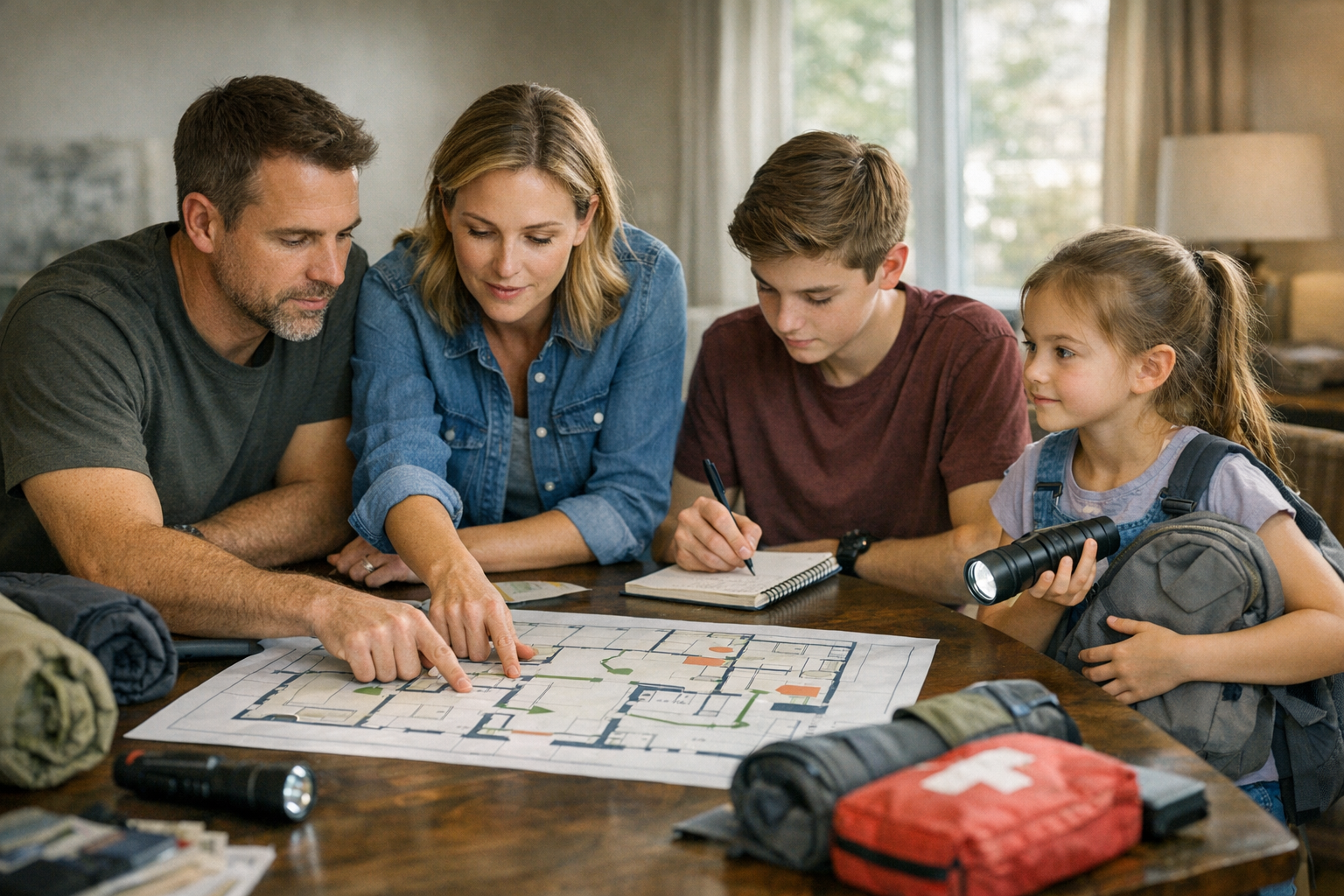
Natural disasters strike with little warning, leaving families mere minutes to evacuate safely. A well-structured home emergency plan can mean the difference between chaos and coordinated action when every second counts.
This guide walks you through building a comprehensive evacuation plan that prioritizes speed and safety. You’ll learn how to create escape routes, prepare emergency supplies, and establish communication protocols that work under pressure.
Creating Your Home Emergency Plan Foundation
Your home emergency plan starts with understanding the specific risks in your area. Coastal regions face hurricanes and flooding, while western states deal with wildfires and earthquakes.
Contact your local emergency management office to identify the most likely disasters for your location. Many counties provide hazard maps showing flood zones, wildfire risk areas, and evacuation routes.
Document your home’s layout with a simple floor plan. Mark all possible exits including windows, doors, and basement access points. Count the steps from each bedroom to the nearest exit – this becomes crucial during nighttime evacuations when visibility is limited.
Family Meeting and Role Assignment
Schedule a family meeting to discuss the plan with all household members. Assign specific roles based on age and ability.
Adults should handle complex tasks like shutting off utilities and gathering important documents. Older children can assist younger siblings or help with pets. Even young children can learn simple tasks like grabbing their emergency backpack.
Mapping Multiple Evacuation Routes
Single exit strategies fail when disasters block primary routes. Plan at least three different ways to leave your home and neighborhood.
Your primary route should be the fastest path from your home to a designated meeting point outside your immediate area. The secondary route goes in the opposite direction, avoiding major highways that become congested during mass evacuations.
The third route serves as a backup when the first two become impassable. Test each route by actually driving them at different times of day to understand traffic patterns and potential bottlenecks.
Meeting Points Strategy
Establish two meeting locations: one near your home and another outside your neighborhood. The close meeting point works for house fires or localized incidents.
Choose the distant meeting point carefully – it should be at least 10 miles away and accessible via all your planned routes. Schools, community centers, and large parking areas work well because they’re easy to find and remember.
- Nearby meeting point: End of your street or neighborhood park
- Distant meeting point: Community center or school outside your area
- Backup meeting point: Mall or large business with ample parking
Emergency Supply Kit for Quick Evacuation
Pre-packed emergency bags save precious minutes during evacuations. Each family member needs their own bag stored in an easily accessible location.
Adult bags should contain three days of water (one gallon per person per day), non-perishable food, medications, and copies of important documents in waterproof containers. Include cash in small bills since ATMs and credit card systems may not work.
Children’s bags need comfort items like a favorite stuffed animal or book, along with extra clothing and any special medications. Make these bags bright colors so they’re easy to spot in stressful situations.
Vehicle Emergency Supplies
Keep additional supplies in your vehicles since you may not have time to load bags from the house. Store these items in the trunk or cargo area:
- Jumper cables and basic tools
- Paper maps (GPS may not work during disasters)
- First aid kit with bandages and antiseptic
- Flashlights with extra batteries
- Emergency blankets and rain ponchos
Communication Plan During Emergencies
Cell towers often fail during disasters, making communication challenging. Establish multiple ways to stay in contact with family members.
Choose an out-of-state contact person who can serve as a central communication hub. Long-distance lines sometimes work when local calls fail. Everyone should memorize this person’s phone number.
Text messages often get through when voice calls don’t because they require less bandwidth. Set up a family group text and teach everyone how to send location updates.
Alternative Communication Methods
Social media platforms can help when traditional communication fails. Create a private family group on Facebook or WhatsApp for emergency updates.
Two-way radios provide communication when cell service is down. Choose models with at least a 5-mile range and include extra batteries in your emergency supplies.
Special Considerations for Quick Evacuation
Families with elderly members, young children, or pets need additional planning time. Practice evacuations regularly so everyone knows their role.
Elderly family members may need extra time to move or require mobility aids. Keep wheelchairs, walkers, and medications easily accessible. Consider having multiple people assigned to assist if needed.
Pet Evacuation Planning
Many emergency shelters don’t accept pets, so identify pet-friendly hotels or boarding facilities along your evacuation routes. Keep carriers, leashes, and pet supplies ready to grab quickly.
Microchip your pets and keep current photos in your emergency kit. Stressed animals may run away during evacuations, making identification photos valuable for recovery efforts.
Digital and Document Preparation
Important documents often get left behind during rushed evacuations. Scan insurance policies, identification, medical records, and financial documents to a secure cloud storage service.
Create a USB drive with copies of these documents as a backup. Store the drive in your emergency kit along with paper copies in waterproof bags.
Take photos or video of your home’s contents for insurance purposes. Store these files in multiple locations including cloud storage and the USB drive.
Financial Emergency Preparations
Keep emergency cash in small bills stored in your evacuation kit. Plan for at least $500-1000 per family member to cover immediate expenses like fuel, food, and temporary lodging.
Notify your bank and insurance companies about your evacuation plans. Some financial institutions offer emergency services for disaster victims including expedited card replacement and emergency funds access.
Practice and Plan Updates
Emergency plans only work when everyone knows them by heart. Schedule practice evacuations every six months, treating them like fire drills.
Time your practice runs and work to improve your speed. The goal is to evacuate completely within 15 minutes for most disasters, though some situations like flash floods require even faster response.
Update your plan annually or whenever family circumstances change. New babies, elderly relatives moving in, or job changes all affect your evacuation strategy.
Seasonal Plan Adjustments
Different seasons bring different challenges. Winter evacuations require warm clothing and may face blocked roads from snow or ice. Summer evacuations need extra water and sun protection.
Adjust your emergency supplies seasonally and check expiration dates on food, water, and medications. Replace batteries in flashlights and radios every year when daylight saving time changes.
After the Emergency: Recovery Planning
Your evacuation plan should include steps for returning home safely. Don’t return until authorities declare the area safe – damaged structures and contaminated water create ongoing hazards.
Document any property damage with photos before cleaning begins. Contact your insurance company as soon as possible to start the claims process.
When disaster strikes your home, professional restoration services can help recover and repair damage quickly. Use RestorationLocator.com to find certified disaster cleanup and restoration providers in your area, filtering by location and reading reviews from other homeowners who faced similar situations.
A well-executed home emergency plan protects your family when disasters strike. Regular practice and updates keep your plan effective and ensure everyone responds quickly during real emergencies. Start building your evacuation plan today – the next disaster won’t wait for you to be ready.
Browse disaster cleanup and restoration listings on RestorationLocator.com to connect with professionals who can help your family recover after an emergency evacuation.