
Spring flooding catches many homeowners off guard, but smart spring flood preparation can save thousands in damage costs. The combination of snowmelt, spring rains, and saturated ground creates perfect conditions for water intrusion.
This guide covers the most effective steps to protect your property before flood season peaks. You’ll learn what to inspect, when to act, and how to find qualified help if prevention isn’t enough.
Understanding Spring Flood Risks
Spring floods differ from summer storm flooding in several key ways. Frozen ground can’t absorb snowmelt effectively, creating surface runoff that overwhelms drainage systems.
Ice dams on roofs trap melting snow, forcing water under shingles and into wall cavities. Basement flooding becomes more likely as groundwater levels rise from sustained precipitation.
The risk window typically runs from March through May, depending on your region’s climate patterns. Early preparation gives you time to address problems before they become emergencies.
Inspect Your Property’s Drainage Systems
Proper drainage forms your first line of defense against spring flooding. Start by walking your property to identify potential water flow problems.
Check Gutters and Downspouts
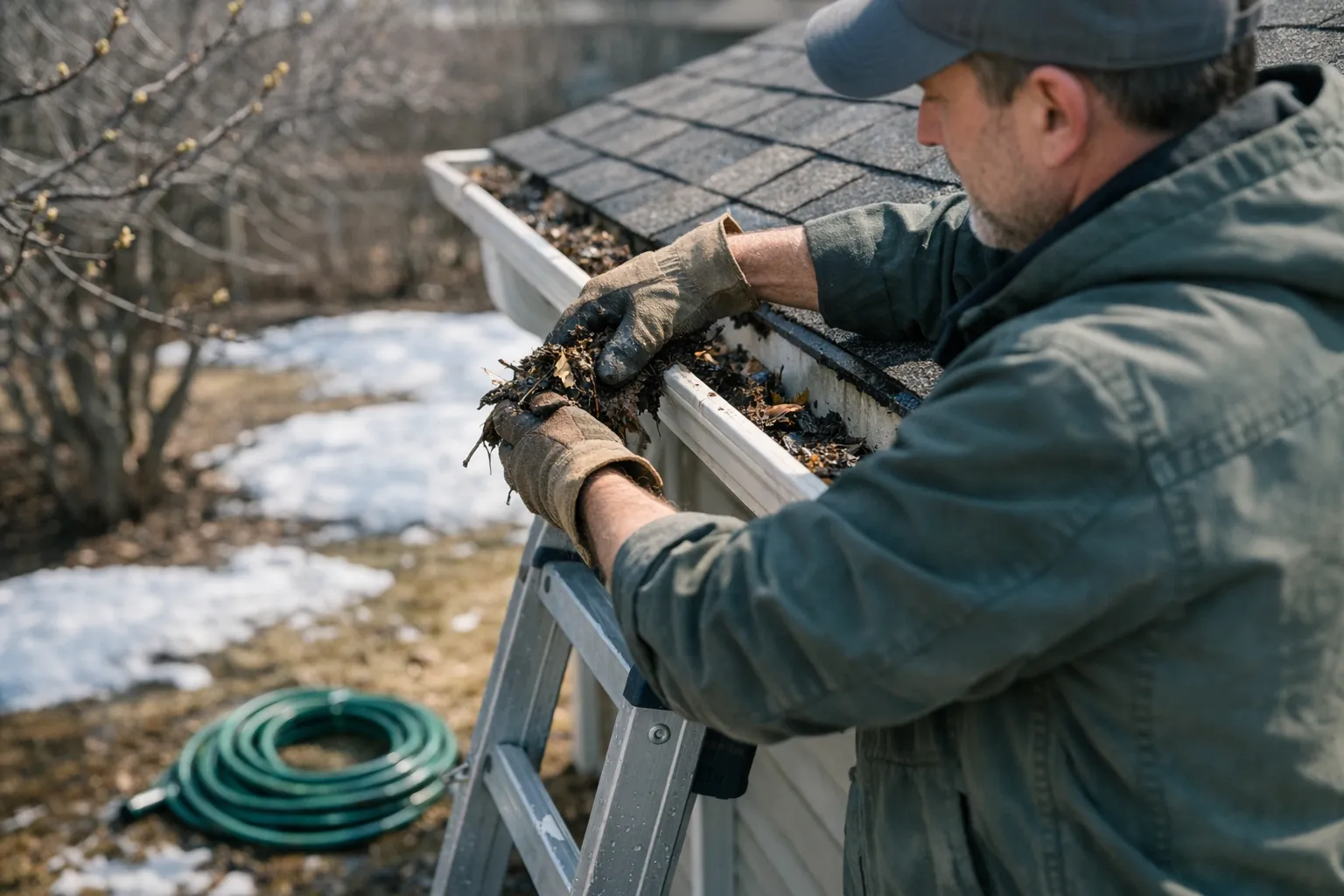
Clean gutters remove water efficiently from your roof. Clogged gutters overflow and dump water against your foundation.
Remove all debris from gutters and flush them with a garden hose. Check that downspouts direct water at least six feet away from your foundation.
Look for loose gutter sections or damaged downspouts that need repair. Ice damage from winter often creates gaps that weren’t visible under snow cover.
Evaluate Foundation Grading
Ground around your home should slope away from the foundation at a minimum 6-inch drop over 10 feet. This grade prevents water from pooling against basement walls.
Add soil or mulch to low spots that allow water to collect near your foundation. Pack the material firmly to prevent settling during heavy rains.
Mark areas that consistently stay wet after storms. These spots may need drainage tiles or French drains to move water away effectively.
Clear Storm Drains and Ditches
Municipal storm drains handle neighborhood runoff, but they need clear inlets to function properly. Remove leaves, branches, and debris from street drains near your property.
Check roadside ditches for blockages that could cause water to back up toward your home. Contact your local public works department about major obstructions.
Seal Foundation Vulnerabilities
Foundation cracks allow water to enter basements and crawl spaces during periods of high groundwater. Small cracks can quickly become major entry points under flood conditions.
Walk around your foundation looking for new cracks or gaps around utility penetrations. Pay special attention to areas where concrete meets different materials like pipe or conduit.
Use appropriate sealants for different crack types:
- Hairline cracks: Apply hydraulic cement or polyurethane caulk
- Larger gaps: Use expanding foam followed by exterior-grade sealant
- Active leaks: Install drainage systems before sealing
- Structural damage: Consult a foundation specialist immediately
Check basement windows for proper sealing and drainage. Install window well covers to prevent water accumulation during storms.
Maintain Sump Pump Systems
Sump pumps activate during your greatest need, making regular maintenance critical for reliable operation. Test your system monthly during flood season.
Pour water into the sump pit until the pump activates. The pump should start quickly and remove water efficiently.
Check the discharge pipe for ice damage or blockages. Frozen discharge lines can cause pumps to burn out when they can’t move water.
Consider installing a battery backup system for power outages. Spring storms often combine flooding with electrical failures.
Install Water Alarms
Water detection alarms provide early warning of basement flooding. Place sensors in low areas near sump pits, water heaters, and foundation walls.
Smart water sensors send alerts to your phone, allowing quick response even when you’re away from home. Early detection can mean the difference between minor cleanup and major restoration work.
Prepare Emergency Supplies and Documentation
Flood emergencies require quick action with the right tools and information readily available. Assemble supplies before you need them.
Essential Flood Response Kit
Keep these items accessible in a waterproof container:
- Battery-powered or hand-crank radio
- Flashlights with extra batteries
- First aid supplies
- Emergency water and non-perishable food
- Important documents in waterproof bags
- Cash in small bills
- Emergency contact list including restoration services
Document Your Property
Take photos or video of your home’s current condition, focusing on areas prone to water damage. Include basement spaces, ground-level rooms, and valuable items.
Store copies of insurance policies, home inventory, and property documentation in cloud storage or off-site locations. Digital copies remain accessible even if physical documents are damaged.
Know When to Call Professionals
Some spring flood preparation tasks require professional expertise to complete safely and effectively. Recognize when DIY efforts aren’t sufficient.
Contact specialists for major foundation cracks, electrical work near water, or complex drainage system installations. The cost of professional service is typically much less than flood damage repairs.
Establish relationships with qualified contractors before emergency situations arise. Research restoration companies in your area and check their credentials and customer reviews.
Finding Qualified Restoration Services
Use home protection directories to locate certified water damage restoration companies in your area. Look for businesses with proper licensing, insurance, and emergency response capabilities.
Check company certifications from organizations like the Institute of Inspection, Cleaning and Restoration Certification (IICRC). These credentials indicate training in proper restoration techniques.
Read customer reviews focusing on response time, communication, and quality of work. Emergency situations require contractors who can mobilize quickly and work efficiently.
Create Your Action Plan
Develop a step-by-step response plan for different flood scenarios. Print copies and keep them with your emergency supplies.
Include specific steps for shutting off utilities, moving valuables to higher ground, and contacting emergency services. Assign responsibilities to family members so everyone knows their role.
Practice your evacuation route and identify safe locations where you can stay if your home becomes uninhabitable. Update your plan annually and after any significant property changes.
Spring flood preparation protects your most valuable investment through proactive maintenance and emergency planning. Taking action now prevents much more expensive restoration work later.
Start your preparation checklist today, and remember that professional help is available when you need it. Browse qualified restoration specialists at https://restorationlocator.com to find certified professionals in your area.