
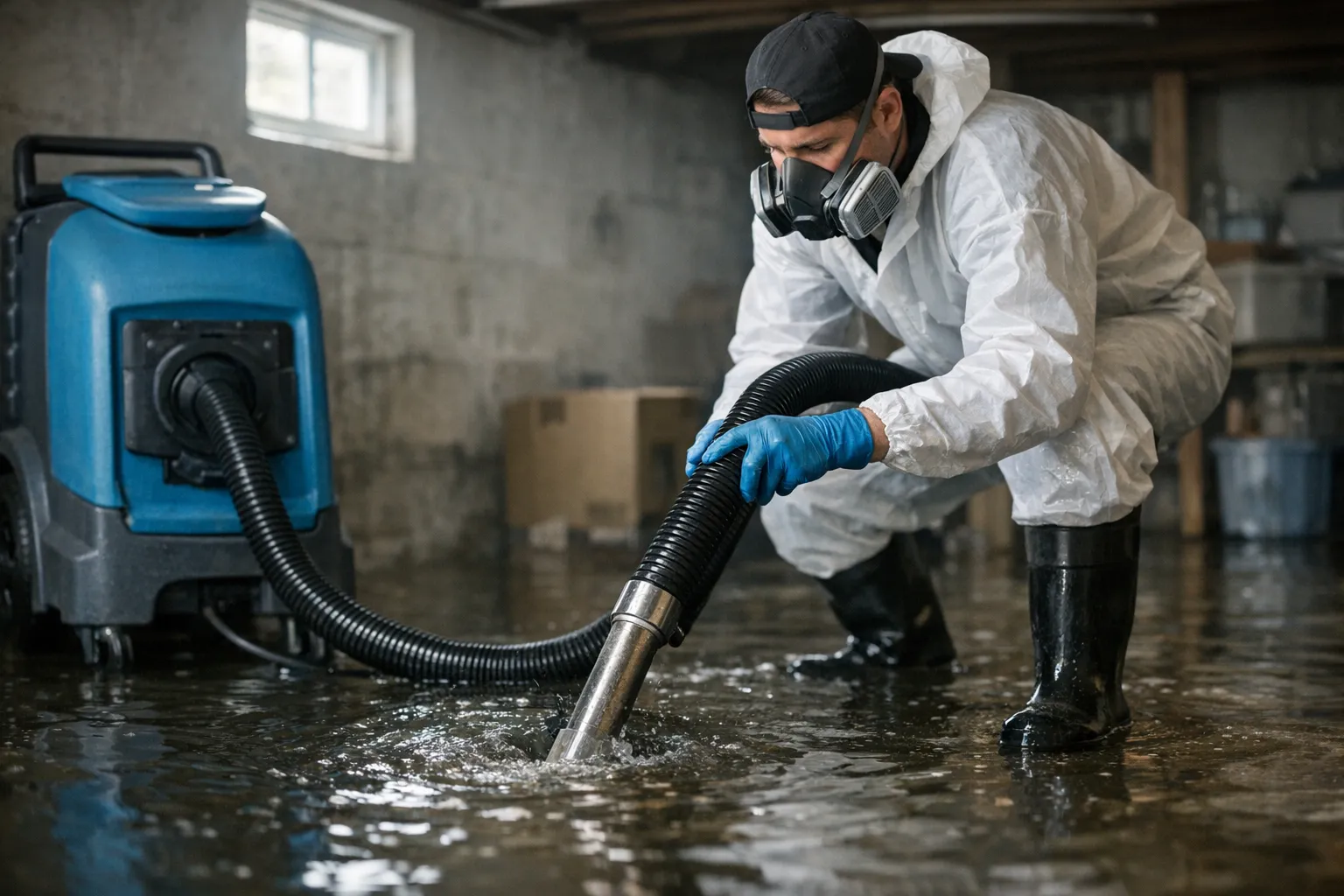
Floodwater removal is a dangerous task that requires proper safety equipment, contamination awareness, and electrical precautions before you begin. The wrong approach can lead to electrocution, illness from contaminated water, or structural damage to your home.
This guide covers the critical safety steps for removing floodwater from your property. You’ll learn when to call professionals and when DIY removal is possible.
Assess Safety Hazards Before Starting Floodwater Removal
Your safety comes first when dealing with flood damage. Never enter a flooded area until you’ve eliminated electrical hazards.
Turn off electricity at the main breaker if you can reach it safely. If the electrical panel is in a flooded area, contact your utility company to disconnect power.
Check for these immediate dangers:
- Gas leaks (smell of gas or hissing sounds)
- Structural damage to walls, floors, or foundation
- Contaminated water containing sewage or chemicals
- Standing water deeper than a few inches
Call professionals immediately if any of these hazards are present. Water restoration experts have specialized equipment and training to handle dangerous situations safely.
When Professional Water Removal Is Required
Some flood situations require professional intervention for your safety and to prevent further damage.
Category 2 and Category 3 Water
Water damage professionals classify floodwater into three categories. Category 1 is clean water from broken pipes or rain.
Category 2 water contains contaminants and comes from sources like washing machines or toilet overflows. Category 3 water is highly contaminated with sewage, chemicals, or outdoor floodwater.
Professional removal is recommended for Category 2 water and required for Category 3 contaminated water.
Extensive Flooding
Professional equipment becomes necessary when water covers large areas or reaches significant depths. Portable pumps and shop vacuums can’t handle major flooding effectively.
Commercial water extraction equipment removes thousands of gallons per hour. This speed prevents secondary damage like mold growth and structural weakening.
Essential Safety Equipment for DIY Floodwater Removal
Proper protective gear protects you from contamination and injury during water removal.
Wear waterproof boots with good tread to prevent slips on wet surfaces. Rubber gloves protect your hands from contaminated water and sharp debris.
Required safety equipment includes:
- Waterproof boots or waders
- Heavy-duty rubber gloves
- Safety glasses or goggles
- N95 mask or respirator
- Long-sleeved shirt and long pants
Keep a first aid kit nearby in case of cuts or injuries from debris in the water.
Safe Water Removal Methods and Techniques
Start water removal from the lowest point where water has accumulated. Work systematically to avoid recontamination of cleaned areas.
Manual Removal for Small Areas
Shop vacuums designed for wet pickup handle small amounts of standing water effectively. Empty the vacuum frequently to maintain suction power.
Mops and buckets work for minimal water amounts. Use a squeegee to direct water toward drains or outside doors.
Pump Systems for Larger Volumes
Submersible pumps remove large volumes of standing water quickly. Place the pump at the lowest point and run discharge hoses away from your foundation.
Never operate electrical equipment while standing in water. Use extension cords rated for outdoor use and keep connections elevated above water level.
Natural Drainage Methods
Open windows and doors to promote air circulation and evaporation. Remove weather stripping temporarily to allow water to flow outside.
Use fans to accelerate drying once standing water is removed. Position fans to blow humid air outside rather than circulating it indoors.
Contamination Prevention During Water Removal
Floodwater often contains bacteria, viruses, and toxic chemicals that pose health risks. Contaminated floodwater can cause serious illness even through brief contact.
Disinfect all surfaces that contacted floodwater using a bleach solution. Mix one cup of bleach per gallon of water for effective sanitization.
Follow these contamination prevention steps:
- Wash hands frequently with soap and clean water
- Avoid touching your face while working
- Shower immediately after completing water removal work
- Wash all clothing worn during cleanup separately in hot water
- Disinfect tools and equipment before storage
Dispose of porous materials like carpeting, insulation, and drywall that absorbed contaminated water. These materials cannot be effectively cleaned and pose ongoing health risks.
Post-Removal Safety Inspections
Complete water removal doesn’t eliminate all flood-related hazards. Hidden moisture promotes mold growth and structural problems.
Use moisture meters to check wall cavities and subflooring for remaining water. Professional restoration companies have advanced detection equipment to locate hidden moisture.
Schedule electrical and HVAC system inspections before restoring power. Water damage can create fire hazards in wiring and ductwork that aren’t immediately visible.
Mold Prevention Measures
Mold begins growing within 24-48 hours in damp conditions. Rapid drying prevents mold colonization that can spread throughout your home.
Monitor humidity levels with a hygrometer and maintain indoor humidity below 60%. Run dehumidifiers continuously until moisture levels stabilize.
Choosing Professional Water Restoration Services
Professional water restoration becomes necessary when DIY methods prove insufficient or safety concerns arise.
Look for certified technicians trained in water damage restoration techniques. The Institute of Inspection, Cleaning and Restoration Certification (IICRC) provides industry-standard training programs.
Compare local restoration companies by checking customer reviews and response times. Emergency water removal services should respond within hours to prevent additional damage.
Verify insurance coverage and licensing before hiring contractors. Water damage restoration involves significant liability and requires proper insurance protection.
Emergency Response Planning
Future flooding becomes more manageable with advance preparation and emergency plans.
Keep emergency supplies including flashlights, battery-powered radio, and first aid kit in a waterproof container. Store important documents in waterproof storage above potential flood levels.
Document your belongings with photos and maintain current insurance coverage. Review your policy annually to confirm adequate coverage for water damage restoration.
Safe floodwater removal protects your health and property when done correctly with proper safety precautions. Professional equipment and expertise become necessary for extensive flooding or contaminated water situations.
Remember that speed matters in water damage situations, but safety must come first. Browse water damage restoration professionals near you to find certified experts who can handle dangerous flood situations safely.