
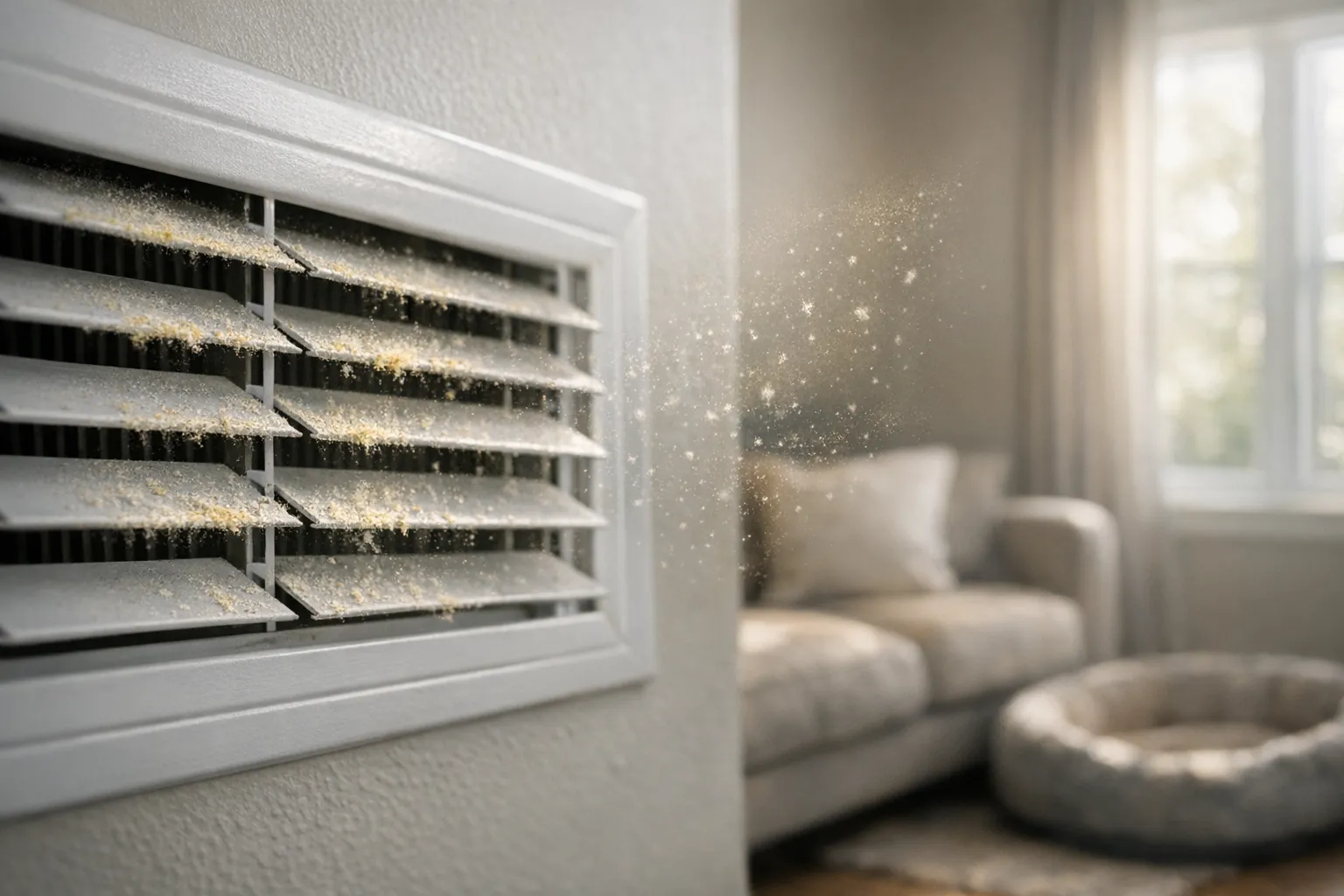
How Spring Pollen Invades Your Indoor Spaces
The spring pollen impact extends far beyond outdoor allergies and car windshields. Microscopic pollen grains infiltrate homes through HVAC systems, open doors, and clothing, creating significant indoor air quality challenges that require professional attention.
Pollen particles measure between 10-100 microns, making them small enough to penetrate most standard air filters. Once inside, these particles settle on surfaces, circulate through ductwork, and accumulate in hard-to-reach areas.
Understanding how pollen affects your indoor environment helps identify when professional cleanup becomes necessary. The seasonal surge creates unique restoration challenges that differ from typical dust or debris issues.
The Hidden Pathways of Pollen Contamination
Pollen enters buildings through multiple routes that homeowners often overlook. HVAC intake systems pull outdoor air directly into homes, carrying pollen loads that standard filters cannot capture.
Open windows and doors create direct pathways during peak pollen seasons. Even brief openings allow substantial amounts to enter, where air currents distribute particles throughout the structure.
People and pets serve as unwitting carriers. Clothing, hair, and fur collect pollen outdoors, then release it inside. This creates concentrated deposits in entryways and frequently used rooms.
HVAC Systems as Pollen Distributors
Air conditioning and heating systems become pollen distribution networks when filters prove inadequate. Standard fiberglass filters only capture particles larger than 10 microns, missing many pollen types.
Ductwork accumulates pollen deposits over time, creating reservoirs that continue releasing particles long after outdoor levels drop. Professional duct cleaning addresses these hidden contamination sources.
Spring Pollen Impact on Indoor Air Quality Metrics
Indoor pollen concentrations can reach 20-30% of outdoor levels in homes with standard filtration. This represents a significant indoor air quality degradation that affects sensitive individuals.
Pollen particles remain airborne for extended periods due to their lightweight nature. Unlike heavier debris, they require specialized removal techniques to achieve complete elimination.
The seasonal timing compounds the problem. Spring cleaning activities stir up settled pollen, redistributing it throughout living spaces and increasing exposure levels.
Measurement and Detection Methods
Professional air quality testing reveals pollen concentrations that visual inspection cannot detect. Particle counters identify specific size ranges associated with common pollen types.
Surface sampling techniques locate accumulation areas that require targeted cleaning. These assessments guide restoration strategies for maximum effectiveness.
Health Implications and Cleanup Requirements
Indoor pollen exposure creates year-round health challenges for sensitive individuals. Trapped particles continue triggering reactions long after outdoor pollen seasons end.
Respiratory symptoms intensify when indoor concentrations exceed outdoor levels. Poor ventilation and inadequate filtration create these problematic conditions.
Professional cleanup becomes necessary when standard cleaning methods fail to reduce symptoms. Specialized equipment and techniques address microscopic contamination that household tools cannot reach.
High-Risk Areas Requiring Professional Attention
Certain areas accumulate disproportionate pollen loads that demand professional intervention:
- HVAC ductwork – Requires specialized cleaning equipment to remove embedded particles
- Carpeted areas – Fibers trap pollen deep within pile structure
- Upholstered furniture – Fabric surfaces collect and retain microscopic particles
- Window treatments – Blinds and curtains near openings accumulate heavy deposits
- Basement and attic spaces – Poor ventilation allows particles to settle and concentrate
Professional Restoration Techniques for Pollen Removal
Effective pollen cleanup requires equipment and methods beyond typical cleaning capabilities. HEPA filtration systems capture particles as small as 0.3 microns with 99.97% efficiency.
Negative air pressure techniques prevent cross-contamination during cleaning. This approach contains disturbed particles rather than redistributing them to clean areas.
Surface treatments neutralize embedded pollen without damaging materials. Professional-grade solutions break down protein structures that cause allergic reactions.
Specialized Equipment and Methods
Professional restoration teams deploy specific tools for pollen remediation. High-powered vacuums with sealed HEPA systems prevent particle escape during removal.
Air scrubbers create clean zones by continuously filtering airborne contaminants. These units operate throughout the cleaning process to maintain air quality.
Antimicrobial treatments address secondary issues like mold growth that can develop in pollen-rich environments. Moisture retention in organic particles creates ideal conditions for microbial activity.
Timing Considerations for Maximum Effectiveness
Peak pollen seasons vary by region and plant types, but most areas experience multiple waves from February through June. Early intervention prevents deep penetration into building materials.
Post-season cleanup proves most effective when outdoor levels drop below 50 grains per cubic meter. This timing prevents immediate recontamination during restoration work.
Preventive treatments before pollen season reduce accumulation and simplify later cleanup efforts. Sealing entry points and upgrading filtration systems provide ongoing protection.
Regional Variation and Planning
Tree pollen dominates early spring periods, followed by grass and weed varieties through summer. Each type presents different cleanup challenges based on size and adhesive properties.
Local pollen forecasts help time restoration activities for optimal results. Professional services coordinate scheduling with weather patterns and seasonal peaks.
Prevention Strategies and Long-Term Solutions
Upgraded HVAC filtration reduces future pollen infiltration significantly. MERV 11-13 filters capture most pollen particles while maintaining proper air flow.
Building envelope improvements seal common entry points. Weather stripping, caulking, and door sweeps create barriers against particle infiltration.
Regular maintenance schedules prevent accumulation problems. Professional inspections identify potential issues before they require extensive restoration.
Cost-Effective Approaches
Combining prevention and cleanup strategies provides the best value for property owners. Upfront investments in filtration and sealing reduce ongoing restoration needs.
Scheduled maintenance programs spread costs over time while maintaining consistent air quality. Many restoration companies offer annual service agreements for comprehensive protection.
Selecting the Right Restoration Professional
Pollen cleanup requires specific expertise that not all restoration companies possess. Look for providers with air quality specialization and HEPA equipment capabilities.
Certification in indoor air quality assessment demonstrates professional competency. Organizations like the Indoor Air Quality Association provide recognized credentials.
Experience with seasonal contamination issues indicates familiarity with pollen-specific challenges. Ask about previous projects involving similar cleanup requirements.
Questions for Potential Service Providers
Evaluate restoration companies based on their approach to pollen contamination:
- What testing methods do you use to identify pollen concentrations?
- How do you prevent cross-contamination during cleanup?
- What type of filtration equipment do you deploy?
- Do you provide post-cleanup air quality verification?
- What preventive measures do you recommend?
When to Seek Professional Help
Professional intervention becomes necessary when symptoms persist despite regular cleaning efforts. Ongoing respiratory issues indicate contamination levels beyond household remediation capabilities.
Visible pollen accumulation on surfaces signals heavy infiltration that requires specialized removal. Standard vacuuming often redistributes particles rather than eliminating them.
HVAC system contamination demands professional attention to prevent ongoing circulation problems. Ductwork cleaning requires equipment and expertise that homeowners typically lack.
Property damage from moisture-related issues compounds pollen problems. Mold growth in pollen deposits creates complex remediation scenarios requiring professional assessment.
The spring pollen impact on indoor air quality creates restoration challenges that extend far beyond seasonal discomfort. Professional cleanup addresses contamination sources that household methods cannot reach, providing long-term relief for affected properties. Browse disaster cleanup and restoration listings at https://restorationlocator.com to find qualified professionals in your area.