When disaster strikes, having the right cleanup equipment can mean the difference between quick recovery and prolonged damage. Different disasters require different tools, and choosing poorly can waste time and money.
This guide shows you how to select cleanup equipment based on your specific disaster scenario. You’ll learn which tools work best for fires, floods, mold, and other common disasters.
Essential Cleanup Equipment Categories
Professional cleanup equipment falls into four main categories. Each serves a specific purpose in disaster recovery.
Extraction Equipment
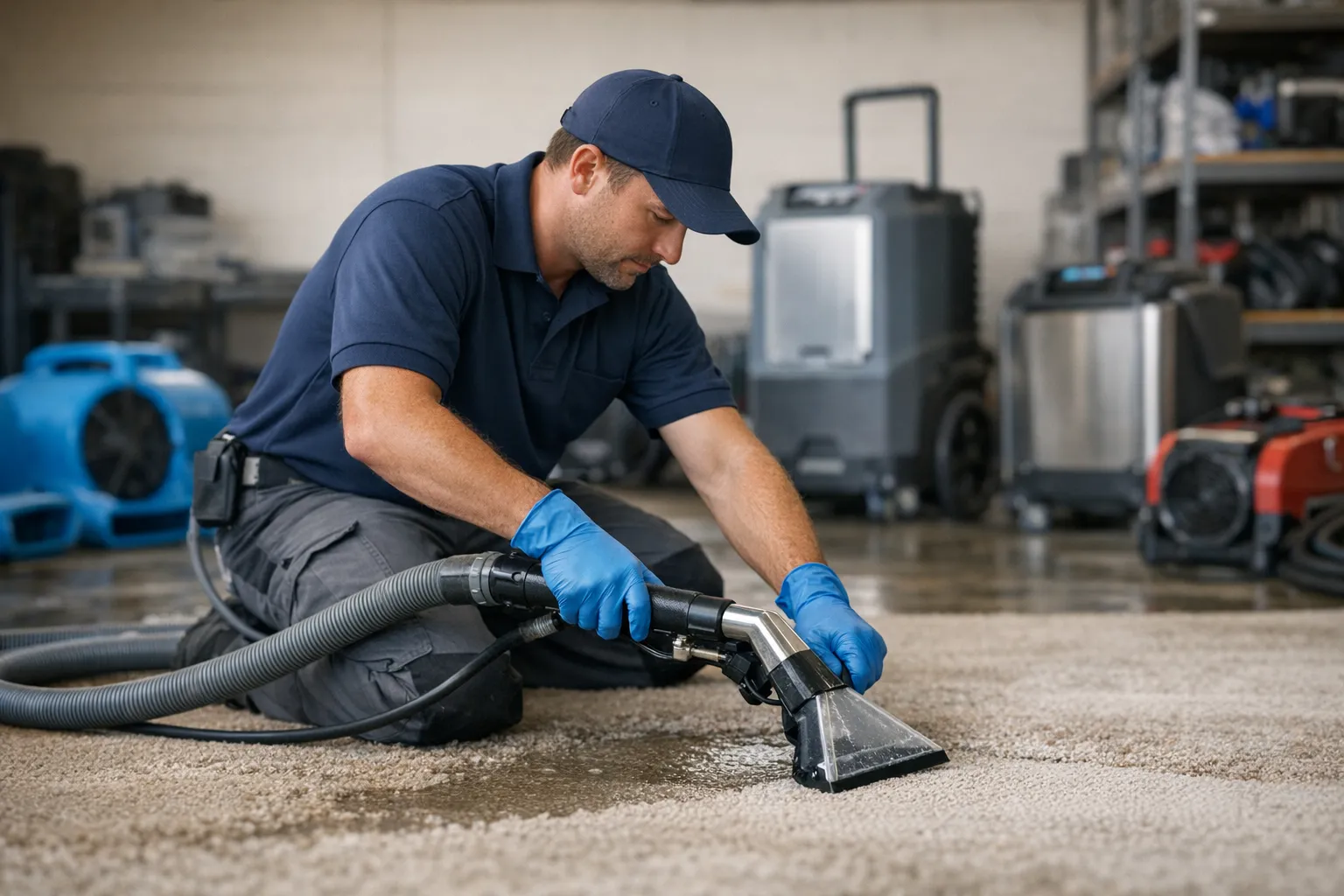
Water extractors remove standing water from carpets, upholstery, and hard surfaces. Truck-mounted units offer the most power for large jobs. Portable extractors work better for smaller areas or multi-story buildings.
Hot water extractors clean while they extract. They’re ideal for contaminated water situations like sewage backups.
Drying Equipment
Air movers create airflow to speed evaporation. Industrial fans move large volumes of air but consume more electricity. Axial air movers work well in tight spaces.
Dehumidifiers remove moisture from the air. Refrigerant models work best in warm conditions. Desiccant dehumidifiers perform better in cold environments.
Air Purification Tools
HEPA air scrubbers remove particles from the air during cleanup. They’re critical for mold remediation and fire damage cleanup.
Hydroxyl generators neutralize odors without producing harmful ozone. They’re safer than ozone generators for occupied spaces.
Detection and Monitoring Equipment
Moisture meters detect hidden water damage in walls and floors. Pin-type meters penetrate surfaces while pinless meters scan without damage.
Thermal imaging cameras reveal moisture patterns invisible to the naked eye. They help locate the full extent of water damage.
Matching Cleanup Equipment to Disaster Types
Different disasters create unique challenges that require specific equipment approaches. Here’s how to match tools to your situation.
Water Damage and Flooding
Water damage cleanup focuses on extraction and drying. Start with the most powerful water extraction equipment available for your space.
For category 1 water (clean water), basic extraction and drying equipment suffices. Category 3 water (sewage) requires antimicrobial treatments and protective gear.
Essential water damage equipment includes:
- High-capacity water extractors
- Industrial air movers
- Commercial dehumidifiers
- Moisture detection tools
- Anti-microbial sprayers
Fire and Smoke Damage
Fire damage creates soot, ash, and persistent odors. Smoke particles penetrate porous materials and require specialized removal techniques.
Thermal foggers neutralize odors by matching the particle size of smoke. Dry ice blasting removes soot without water damage.
- HEPA air scrubbers for particle removal
- Ozone or hydroxyl generators for odor control
- Ultrasonic cleaners for small items
- Soot removal vacuums with HEPA filters
Mold Remediation
Mold cleanup requires containment to prevent spore spread. Negative air pressure keeps contaminated air from escaping the work area.
HEPA filtration becomes critical during mold removal. All air moving equipment must include HEPA filters to capture microscopic spores.
Mold remediation equipment includes:
- HEPA air scrubbers with variable speeds
- Negative air machines
- HEPA vacuums for final cleanup
- Moisture meters to find hidden growth
- Antimicrobial foggers
Size and Capacity Considerations
Equipment capacity must match your project size. Undersized equipment extends drying time and increases secondary damage risk.
Calculating Equipment Needs
Measure the affected area in square feet. Most equipment manufacturers provide coverage guidelines for their units.
Factor in ceiling height for air movement calculations. Higher ceilings require more powerful air movers or additional units.
Power Requirements
Check your electrical capacity before renting equipment. Large dehumidifiers and air movers draw significant power.
Plan circuit usage to avoid overloading breakers. Distribute equipment across multiple circuits when possible.
Professional vs. Consumer-Grade Equipment
Professional disaster tools offer higher capacity and durability than consumer models. They’re designed for continuous operation under demanding conditions.
When Professional Equipment Makes Sense
Large affected areas benefit from professional equipment’s higher capacity. Commercial units dry spaces faster than multiple consumer units.
Contaminated water situations require professional-grade extraction and antimicrobial equipment. Consumer tools lack the power for thorough decontamination.
Consumer Equipment Limitations
Home-use equipment works for small, clean water incidents. It lacks the capacity for significant damage or contaminated water.
Consumer air movers and dehumidifiers may take weeks to dry what professional equipment handles in days.
Rental vs. Purchase Decisions
Most property owners should rent cleanup equipment rather than purchase. Professional equipment costs thousands of dollars and requires maintenance.
Rental Advantages
Equipment rental provides access to the latest technology without large upfront costs. Rental companies maintain and service their equipment.
You can try different equipment types to find what works best for your situation. Rental includes technical support and replacement if units fail.
When to Consider Purchasing
Property managers with multiple buildings might benefit from owning basic equipment. Purchase makes sense if you face frequent water damage incidents.
Start with versatile equipment like moisture meters and basic air movers. Add specialized tools as needs become clear.
Working with Restoration Professionals
Professional restoration contractors bring expertise in equipment selection and placement. They understand how different tools work together for maximum effectiveness.
Contractors carry commercial insurance and proper certifications for handling contaminated materials. They follow industry standards for safe and effective cleanup.
Many restoration companies offer equipment rental along with training on proper use. This provides access to professional tools with expert guidance.
Safety and Training Considerations
Cleanup equipment can pose safety risks without proper training. High-powered electrical equipment requires careful handling.
HEPA air scrubbers and negative air machines create powerful suction. Secure loose materials to prevent damage or injury.
Chemical application equipment requires proper ventilation and protective gear. Read all safety instructions before operating any equipment.
Budget Planning for Equipment Needs
Equipment costs vary based on disaster type and affected area size. Water damage typically requires the most equipment and highest costs.
Factor in electrical costs for high-powered equipment. Large dehumidifiers can significantly increase utility bills during operation.
Compare rental rates from multiple suppliers. Prices vary significantly between companies and regions.
Selecting the right cleanup equipment depends on matching tools to your specific disaster scenario. Water damage requires extraction and drying equipment, while fire damage needs air purification and odor control tools. Professional equipment offers superior performance for significant damage situations.
Ready to connect with restoration professionals who have the right equipment for your needs? Browse disaster cleanup and restoration listings now to find qualified contractors in your area.