
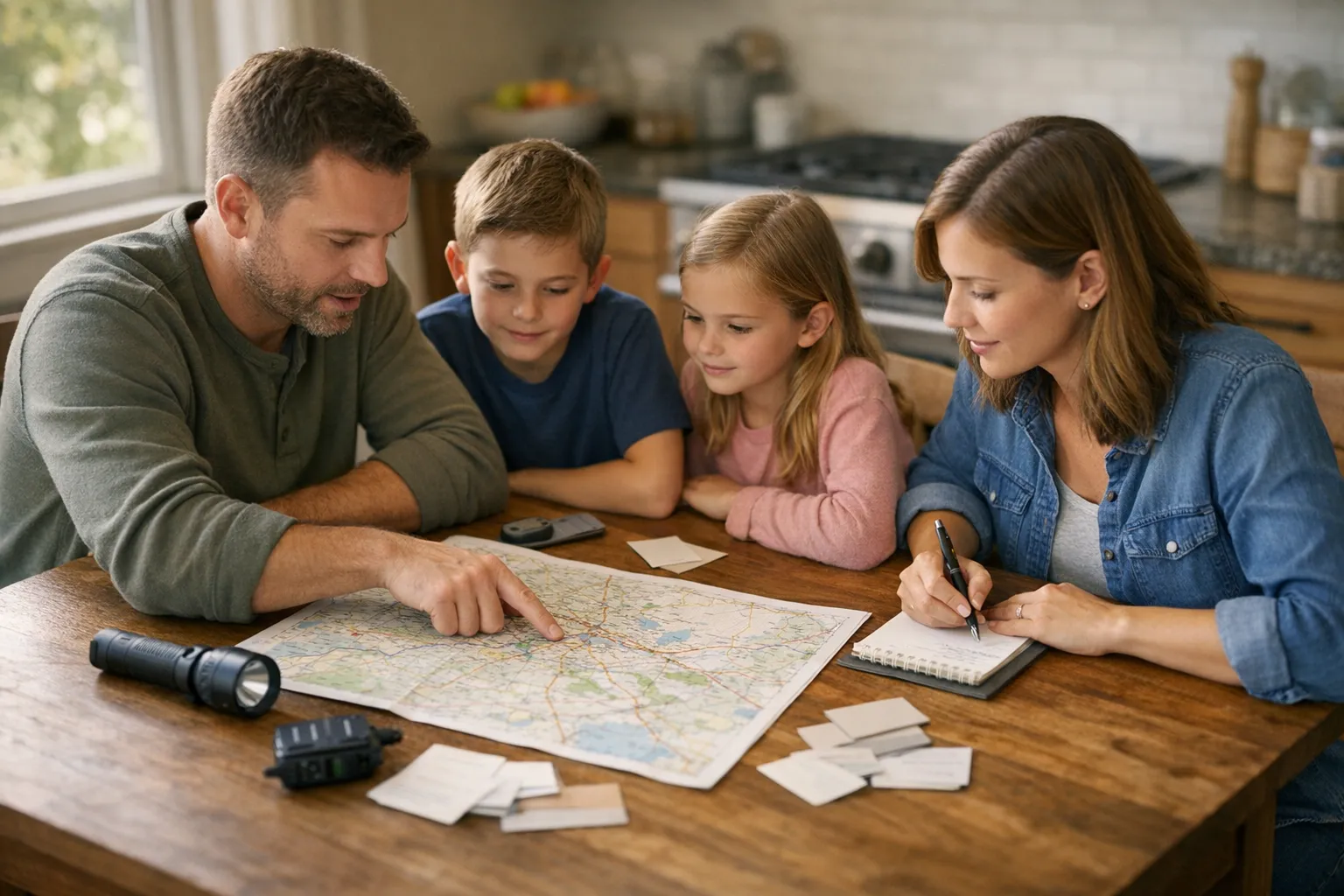
Why Every Family Needs a Disaster Plan
Natural disasters strike without warning, affecting millions of families each year across the United States. A family disaster plan serves as your roadmap for staying safe and connected during emergencies, whether facing hurricanes, floods, earthquakes, or house fires.
Creating this plan involves more than just gathering supplies. It requires establishing communication methods, identifying evacuation routes, and preparing each family member for their role during an emergency.
The time to prepare is now, before disaster strikes your community.
Essential Components of Your Family Disaster Plan
Every effective family disaster plan contains four core elements that work together to keep your household safe and organized during emergencies.
Communication Strategy
Emergency contact information forms the backbone of family emergency preparedness. Start by designating an out-of-state contact person who can coordinate information if local phone lines become overwhelmed.
Create wallet-sized contact cards for each family member listing:
- Local emergency services numbers
- Out-of-state contact person’s phone and address
- Important medical information and medications
- Insurance policy numbers
- Meeting locations and alternate contact methods
Program these numbers into every family member’s phone and teach children how to use them.
Meeting Locations
Identify two meeting spots where your family will reunite if separated during a disaster. Choose one location near your home for sudden emergencies like house fires, and a second location outside your neighborhood for larger disasters.
Make sure every family member knows both addresses and can reach them by multiple routes.
Evacuation Routes
Map out several evacuation routes from your home, workplace, and children’s schools. Traffic patterns change dramatically during emergencies, so having alternatives prevents getting trapped in gridlock.
Practice driving these routes during different times of day and weather conditions. Keep physical maps in your vehicles since GPS systems may fail during widespread disasters.
Important Documents
Gather copies of critical documents and store them in waterproof containers both at home and in an off-site location. Include identification documents, insurance policies, bank account information, and medical records.
Digital copies stored on encrypted cloud services provide additional backup access from any internet-connected device.
Building Your Emergency Supply Kit
Emergency supplies should sustain your family for at least 72 hours without outside assistance. However, recent disasters show that help may not arrive for a week or longer in severely affected areas.
Water and Food Storage
Store one gallon of water per person per day, with a minimum three-day supply for each household member and pet. Rotate water supplies every six months to maintain freshness.
Choose non-perishable foods that require no cooking or refrigeration:
- Canned meats, fruits, and vegetables
- Protein bars and nuts
- Dried fruits and crackers
- Baby food and formula if needed
- Pet food for animals
Include a manual can opener and disposable plates and utensils.
Medical Supplies and Medications
Pack a comprehensive first aid kit with bandages, antiseptic, pain relievers, and any prescription medications your family needs. Maintain at least a seven-day supply of all prescription drugs.
Include copies of prescriptions and medical device information in case replacements become necessary during extended displacement.
Tools and Equipment
Basic tools help your family respond to immediate dangers and maintain communication with the outside world. Pack battery-powered or hand-crank radios, flashlights, extra batteries, and cell phone chargers.
Add duct tape, plastic sheeting, wrenches for turning off utilities, and local maps to your emergency kit.
Special Considerations for Different Family Members
Family disaster planning must account for each person’s unique needs and capabilities.
Children and Disaster Planning
Involve children in age-appropriate planning activities to reduce fear and build confidence. Teach them your address, phone number, and how to call 911.
Practice emergency drills regularly, turning them into games rather than frightening experiences. Pack comfort items like stuffed animals or games in emergency kits.
Create simple visual guides showing evacuation routes and meeting places that young children can understand.
Elderly and Disabled Family Members
Plan for mobility challenges, medication needs, and communication barriers that may affect elderly or disabled family members. Identify neighbors or friends who can provide assistance during evacuations.
Keep backup power sources for medical equipment and extra supplies for wheelchairs, walkers, or other assistive devices.
Pets and Livestock
Research pet-friendly shelters and hotels along your evacuation routes, as many emergency shelters cannot accommodate animals. Prepare carriers, leashes, and identification tags for all pets.
Maintain vaccination records and photos of pets in your emergency documents in case they become separated from your family.
Staying Informed During Emergencies
Information saves lives during disasters, but communication systems often fail when you need them most. Multiple information sources ensure you receive critical updates about changing conditions.
Sign up for local emergency alert systems through your city or county government. Download weather apps that work offline and provide detailed radar information.
Battery-powered radios remain functional when cell towers fail, making them essential backup communication tools.
Testing and Updating Your Family Disaster Plan
Plans become outdated quickly as families grow and change. Schedule regular reviews every six months to update contact information, refresh supplies, and practice emergency procedures.
Conduct surprise drills to test how quickly your family can implement the plan. Time yourselves gathering emergency supplies and reaching meeting locations.
After each drill, discuss what worked well and what needs improvement. Adjust your plan based on these lessons learned.
When Disaster Strikes: Recovery and Restoration
Even the best planning cannot prevent property damage from major disasters. When floods, fires, or storms affect your home, professional restoration services help restore normal life more quickly.
Document property damage with photos before cleanup begins for insurance purposes. Contact your insurance company immediately to begin the claims process.
Professional restoration companies specialize in water damage cleanup, fire restoration, and mold remediation. They have specialized equipment and training that enables faster, more thorough recovery than attempting repairs yourself.
Research restoration providers in your area before disasters strike, so you know who to call when emergencies happen.
Your Family’s Safety Starts With Preparation
Creating a comprehensive family disaster plan takes time and effort, but it provides invaluable peace of mind and potentially life-saving preparation. Start with basic communication plans and emergency supplies, then build more detailed preparations over time.
Regular practice and updates keep your plan current and your family ready to respond effectively when disasters occur. When property damage does happen, professional restoration services help families recover faster and more completely.
Find qualified disaster cleanup and restoration providers in your area at https://restorationlocator.com. Browse listings by location and specialty to connect with professionals who can help restore your home after disasters strike.