
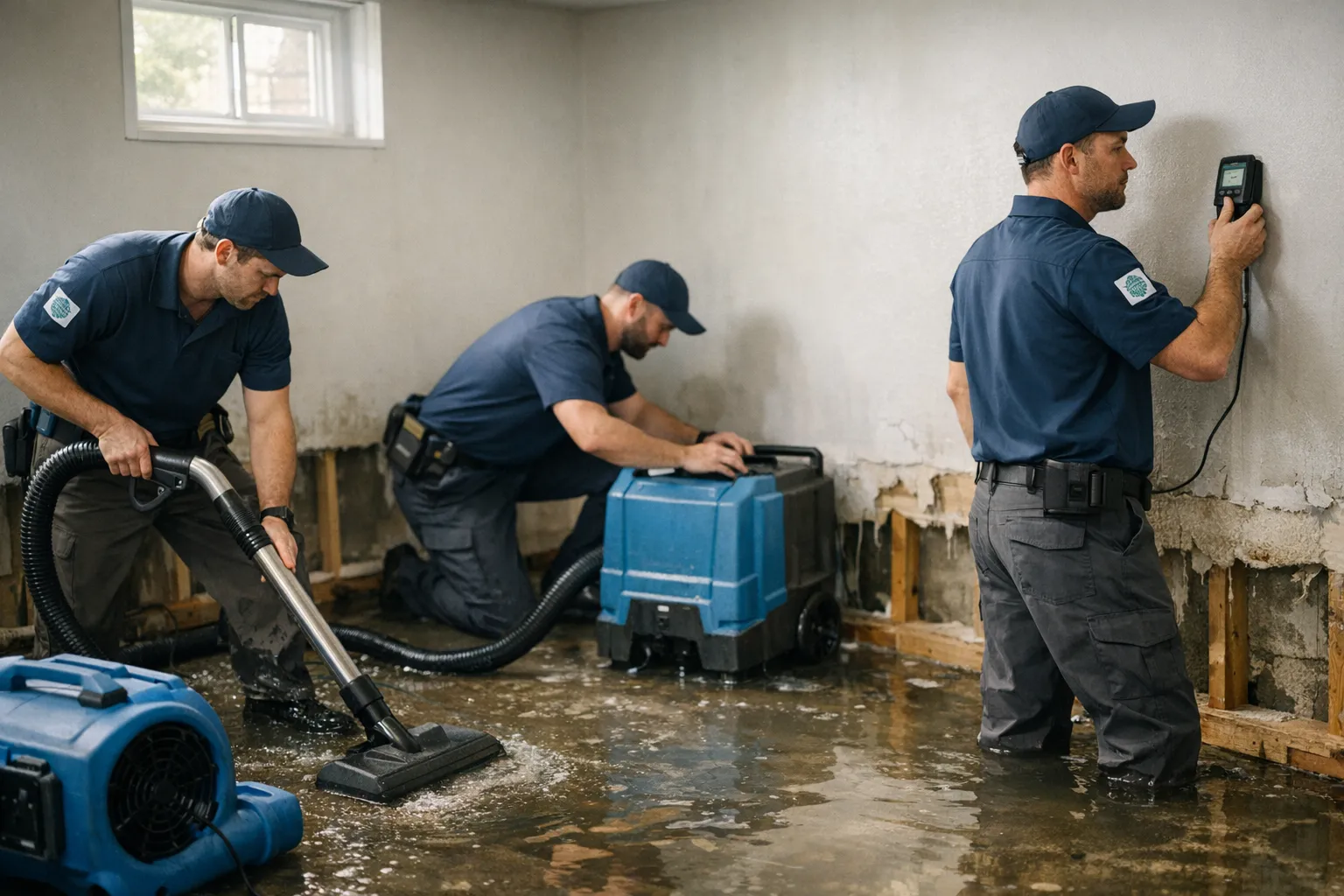
Understanding Water Damage Restoration Requirements
Water damage restoration involves removing standing water, drying affected areas, and preventing mold growth within 24-48 hours. The right provider can mean the difference between minor repairs and extensive structural damage to your property.
When disaster strikes, you need a qualified team that responds quickly and follows industry standards. This guide covers the key factors that separate reliable restoration companies from those that may leave your property worse than before.
Essential Certifications and Training to Verify
IICRC certification represents the gold standard for water damage restoration professionals. The Institute of Inspection, Cleaning and Restoration Certification sets industry standards and training requirements.
Look for technicians certified in Water Damage Restoration (WRT) and Applied Structural Drying (ASD). These certifications require ongoing education and demonstrate knowledge of proper drying techniques and equipment usage.
Additional certifications that indicate expertise include:
- Certified Restorer (CR) designation
- Mold remediation specialist certification
- Indoor air quality specialist training
- Structural drying certifications
Licensing and Insurance Requirements
State contractor licenses vary by location, but most require water damage restoration companies to carry specific insurance coverage. Verify the provider holds current liability insurance and workers’ compensation.
Ask to see proof of bonding, which protects you if the company fails to complete work or causes additional damage. Legitimate companies provide this documentation without hesitation.
Response Time and Availability Standards
Mold begins growing within 24-48 hours of water exposure, making immediate response critical for limiting damage. **Emergency response capabilities** separate experienced providers from general contractors.
Quality restoration companies offer 24/7 emergency response with arrival times under 60 minutes for local calls. They maintain on-call crews and keep equipment ready for immediate deployment.
During initial contact, ask about:
- Average response time to your area
- Equipment availability and backup options
- Crew size and project capacity
- After-hours and weekend availability
Equipment and Technology Assessment
Professional water damage restoration requires specialized equipment beyond basic wet/dry vacuums. Modern companies use moisture meters, thermal imaging cameras, and industrial-grade dehumidifiers.
Extraction equipment should include truck-mounted systems capable of removing large volumes of water quickly. Portable extractors serve as backup for areas inaccessible to truck-mounted units.
Drying and Monitoring Technology
Advanced drying systems use air movers, dehumidifiers, and heat injection systems to create controlled drying environments. Moisture monitoring equipment tracks progress and prevents over-drying or under-drying.
Thermal imaging cameras detect hidden moisture in walls, ceilings, and floors that standard meters might miss. This technology prevents costly callbacks and mold growth in untreated areas.
Insurance Knowledge and Claims Support
Experienced water damage restoration providers work directly with insurance companies and understand coverage limitations. They document damage thoroughly and provide detailed estimates that align with insurance requirements.
The best companies offer claims assistance, including direct billing arrangements with major insurers. This service reduces your out-of-pocket expenses and streamlines the claims process.
Key insurance-related services include:
- Direct insurance company billing
- Detailed damage documentation
- Supplemental claim support
- Coverage explanation and guidance
Local Market Knowledge and Reputation
Local providers understand regional building codes, common construction materials, and climate factors affecting drying times. They maintain relationships with local contractors, plumbers, and other trades needed for complete restoration.
Community reputation reflects long-term service quality and business stability. Check references from recent customers and verify complaints with local business bureaus.
Evaluating Customer Reviews and References
Recent reviews provide insight into response times, communication quality, and work completion standards. Look for patterns in feedback rather than isolated complaints or praise.
Ask potential providers for references from projects similar to yours. Contact these references directly to ask about work quality, timeline adherence, and post-completion follow-up.
Pricing Structure and Contract Terms
Transparent pricing includes detailed breakdowns of labor, equipment rental, and materials. Avoid companies that provide only lump-sum estimates without itemized costs.
Emergency mitigation work often begins before final pricing is established, but reputable companies provide written estimates before non-emergency restoration begins. They explain additional costs that might arise during the project.
Contract terms should specify:
- Scope of work and completion timeline
- Equipment rental periods and costs
- Change order procedures
- Final inspection and sign-off requirements
Understanding Additional Service Fees
After-hours emergency response may include premium charges, typically 1.5-2 times standard rates. Storage fees apply when contents require off-site storage during restoration.
Some companies charge separate fees for moisture monitoring, antimicrobial treatments, or specialty equipment. Get these costs in writing before work begins.
Communication and Project Management
Professional restoration companies assign dedicated project managers who provide regular updates throughout the restoration process. They coordinate with insurance adjusters, contractors, and other service providers.
Clear communication protocols include daily progress reports, moisture readings documentation, and timeline updates. You should never wonder about project status or next steps.
Documentation and Progress Reporting
Detailed documentation includes photos of damage, moisture readings at key intervals, and equipment placement records. This information supports insurance claims and provides proof of proper drying procedures.
Daily logs should record ambient conditions, equipment status, and moisture levels in affected materials. Professional companies provide access to this data throughout the project.
Making Your Final Selection
Compare multiple providers based on certifications, response capabilities, and local reputation rather than price alone. The lowest bid often indicates corner-cutting that leads to callbacks and additional damage.
Schedule brief consultations with your top candidates to assess their professionalism and knowledge. Ask specific questions about their approach to your situation and listen for detailed, technical responses.
Trust your instincts about communication style and transparency. You’ll work closely with the restoration team for days or weeks, making compatibility important for project success.
Start your search for qualified water damage restoration providers in your area at https://restorationlocator.com. Browse verified listings, compare certifications, and read customer reviews to make an informed decision.