
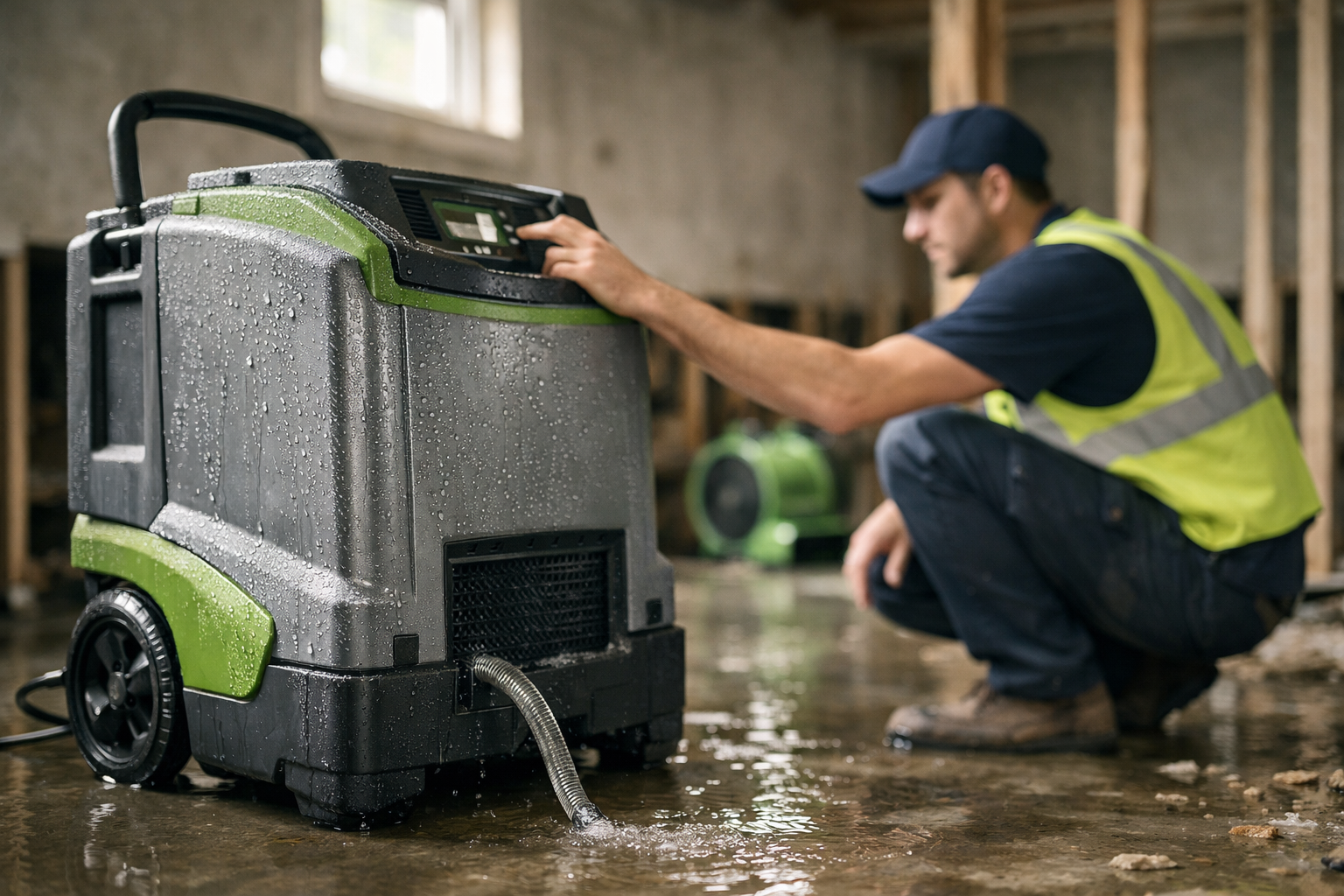
Water damage drying can run a dehumidifier around the clock for days. That single machine draws more power than most household appliances combined. Eco-friendly dehumidifiers cut that draw sharply, lowering both your energy bill and the carbon footprint of a cleanup job.
This post covers how green dehumidifiers work, where they save energy, and what environmental benefits they bring to a restoration site. You will learn how to spot restoration providers who use them.
What Eco-Friendly Dehumidifiers Are
An eco-friendly dehumidifier is a moisture-removal unit built to pull water from air using less electricity per pint removed. It measures performance by energy factor — liters of water extracted per kilowatt-hour.
Standard commercial units in flood work waste heat and run inefficiently in cold rooms. Green models use refrigerant systems, desiccant tech, or smart controls to trim that waste.
Common Types Used in Restoration
- Low-grain refrigerant (LGR) units — extract more water at lower humidity than standard refrigerant models.
- Desiccant dehumidifiers — pull moisture from cold spaces where refrigerant units stall, useful for crawl spaces and winter jobs.
- Smart-metered units — cycle down automatically as a room dries, avoiding wasted runtime.
Each type fits a different site. A frozen basement flood and a summer kitchen leak call for separate equipment.
Energy Efficiency Benefits During Drying Jobs
Eco-friendly dehumidifiers lower power draw on jobs that run for days at a time. A typical Category 3 water loss needs three to five days of continuous drying.
Older commercial units can pull 7 to 9 amps constantly. Efficient LGR models handle the same room at 4 to 6 amps. Across a five-day job with several units, that difference adds up fast.
Where the Savings Show Up
- Lower electric cost passed to the property owner. Drying a flooded 1,200-square-foot home can use hundreds of kilowatt-hours.
- Fewer machines needed. A high-extraction LGR unit can replace two weaker units in the same room.
- Shorter drying time. Faster moisture removal ends the job sooner, cutting total runtime.
On a mid-size basement flood, switching from two standard units to one LGR unit can drop drying-phase power use by roughly a third.
Environmental Benefits Beyond the Power Bill
Green dehumidifiers reduce more than kilowatt-hours. They cut refrigerant leaks, landfill waste, and jobsite noise.
Cleaner Refrigerants
Newer units run on refrigerants like R-410A or R-32 with lower global warming potential than older R-22. R-22 was phased out in the United States for damaging the ozone layer.
A restoration crew still running pre-2010 equipment may leak high-impact refrigerant every time a coil fails. Modern units limit that risk.
Less Equipment Waste
Durable, repairable units stay out of landfills longer. Many green models use modular parts that a technician can swap instead of scrapping the whole machine.
Quieter Sites and Better Air
Efficient variable-speed fans run quieter than old fixed-speed blowers. On an occupied home dry-out, that noise reduction matters to families staying put during repairs.
How Eco-Friendly Dehumidifiers Support Sustainable Restoration
Green equipment is one piece of a sustainable restoration workflow. It pairs with practices that reduce demolition and reuse building materials.
A crew focused on drying in place saves flooring and drywall that a rip-and-replace crew would haul to a dump. Efficient dehumidifiers make in-place drying faster and more reliable.
- Salvage over teardown — strong dehumidification dries materials before mold sets in.
- Documented moisture readings — proves drying success without guesswork or over-demolition.
- Lower fuel use — fewer machines means fewer truck trips to stage equipment.
How to Find Restoration Providers Using Green Equipment
You can screen providers by the equipment they run before you hire. Ask direct questions and check listing details.
Questions to Ask a Provider
- What dehumidifier models do you use, and what is their energy factor?
- Do you run LGR or desiccant units for cold-weather jobs?
- Do you monitor drying with daily moisture logs?
- Can you dry materials in place rather than removing them?
A provider who answers with specifics knows their equipment. Vague answers signal older, less efficient machines.
Use Directory Filters to Narrow Your Search
On Restoration Locator, you can filter listings by location and service type to find nearby water damage specialists. Check reviews on each listing for mentions of drying speed and equipment.
- Sort by location to find crews close enough for daily monitoring visits.
- Read reviews for notes on fast, low-disruption drying.
- Compare listings and contact providers directly to ask about green equipment.
What to Weigh Before Choosing Green Equipment
Eco-friendly dehumidifiers cost more upfront than base models. The savings show over runtime, not on day one.
For a homeowner, the choice matters most on long drying jobs. A three-day dry-out shows smaller savings than a week-long structural drying project.
Quick Comparison
- Standard refrigerant unit: lower purchase cost, higher power draw, weaker in cold rooms.
- LGR unit: higher extraction, lower amps per pint, stronger at low humidity.
- Desiccant unit: best in cold or low-humidity spaces, higher heat output, specialized use.
The right pick depends on the job, not a single spec sheet number.
Conclusion
Eco-friendly dehumidifiers cut power use, reduce refrigerant harm, and speed up drying on water damage jobs. Paired with in-place drying, they support sustainable restoration that saves materials and lowers waste.
Ask providers about their equipment before hiring, and use listing filters to compare local crews. Start your search for water damage specialists on https://restorationlocator.com now.