Finding a restoration company after disaster strikes is stressful enough without worrying about environmental impact. Sustainable restoration companies use green cleaning products, energy-efficient equipment, and waste reduction methods that protect your family’s health while minimizing ecological harm. The right provider can restore your property without compromising the environment.
This guide shows you how to identify restoration companies that prioritize eco-friendly practices. You’ll learn which certifications matter, what questions to ask, and how to verify a company’s environmental commitments.
What Makes Restoration Work Environmentally Responsible
Environmental restoration practices start with the materials and methods companies choose. Traditional restoration can introduce harmful chemicals into your home and send tons of debris to landfills. Green restoration takes a different approach.
Green restoration companies use low-VOC cleaning products that don’t release toxic fumes into your indoor air. These products clean just as effectively as conventional chemicals but break down safely without harming groundwater or soil.
Water conservation becomes critical during flood restoration. Companies practicing sustainable restoration install water-efficient extraction equipment and recycle water when possible rather than letting it run down drains.
Material Recovery vs. Disposal
The biggest environmental impact comes from what gets thrown away. Standard restoration companies often gut entire rooms and send everything to landfills.
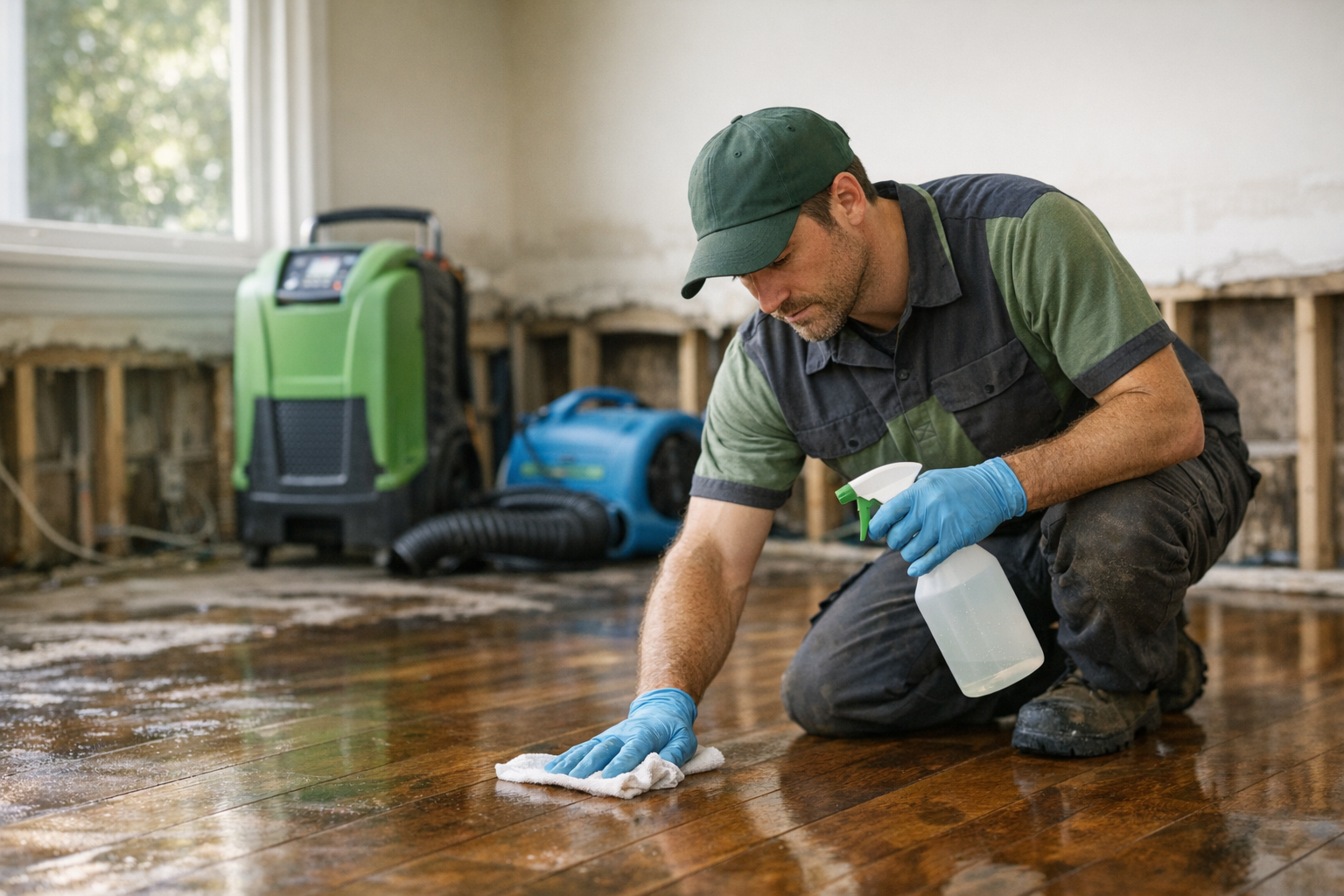
Environmentally conscious companies salvage hardwood floors, solid wood cabinets, and architectural elements. They clean and restore materials instead of replacing them automatically. This saves forests and reduces construction waste.
Key Certifications for Sustainable Restoration Companies
Several third-party certifications verify a company’s environmental commitments. These certifications require training, documentation, and ongoing compliance checks.
The Institute of Inspection, Cleaning and Restoration Certification (IICRC) offers Applied Microbial Remediation courses that cover eco-friendly mold removal techniques. Companies with this training understand how to eliminate mold without harsh fungicides.
Green Building Certifications
Look for companies with team members certified in green building practices:
- LEED Accredited Professional – Shows knowledge of green building materials and methods
- Green Advantage Certified – Focuses specifically on environmental health in construction
- EPA RRP Certification – Required for safe lead-based paint handling
- Asbestos and Mold Remediation Licenses – Ensures proper containment and disposal
Companies displaying these credentials have invested time and money in environmental training. They understand how their work affects indoor air and environmental health.
Equipment Efficiency Standards
Energy Star certified equipment uses 20-30% less electricity than standard models. This matters when restoration requires running dehumidifiers and air movers for days or weeks.
Ask restoration companies what type of equipment they use. Companies serious about sustainability invest in efficient models and maintain them properly for maximum performance.
Questions to Ask Potential Restoration Companies
Don’t assume companies practice what they preach without verification. Ask specific questions about their environmental policies and methods.
About Their Cleaning Products
Ask: “What specific cleaning products do you use, and can you show me their safety data sheets?” Companies using green products should readily share this information.
Request product names, not just generic claims about “eco-friendly” cleaners. Look up products yourself on the EPA’s Safer Choice database to verify environmental claims.
About Waste Management
Ask: “What percentage of materials do you typically salvage versus dispose of?” Companies tracking their waste diversion rates can give you concrete numbers.
Find out where disposed materials go. Do they separate recyclables? Do they donate usable materials to Habitat for Humanity or similar organizations?
About Air Quality Protection
Ask: “How do you prevent cross-contamination during restoration work?” Proper containment protects your family from exposure to mold, dust, and chemical fumes.
Companies should describe their containment procedures, air filtration systems, and how they test air quality before declaring work complete.
Red Flags That Indicate Poor Environmental Practices
Some warning signs indicate a company doesn’t prioritize environmental responsibility or worker safety.
Automatic recommendations for total replacement without attempting restoration should raise concerns. Reputable companies evaluate each damaged item individually.
Vague Environmental Claims
Companies making broad claims about being “green” without specifics probably aren’t. Real environmental commitment shows up in detailed policies and documented procedures.
Be wary of companies that can’t name their cleaning products or explain their waste disposal methods. Legitimate companies track these details for regulatory compliance.
Lack of Proper Licensing
Companies handling mold, asbestos, or lead without proper licenses pose serious environmental and health risks. Check licensing status with your state’s environmental agency before hiring.
Unlicensed work can contaminate your property and create legal liability. Insurance may not cover damage from unlicensed contractors.
How to Verify a Company’s Environmental Claims
Smart consumers verify environmental claims before making hiring decisions. Start by checking the company’s website for specific policies and certifications.
Look for detailed information about their methods, not just marketing language. Companies serious about sustainability publish clear environmental policies.
Check References and Reviews
Ask for recent references from environmentally conscious clients. Contact these references directly to ask about the company’s actual practices versus their stated policies.
Search online reviews for mentions of environmental practices. Customers who care about sustainability often mention green practices in their reviews.
Request Documentation
Ask to see copies of environmental certifications and training certificates. Legitimate companies keep these documents readily available.
Request a written estimate that specifies which eco-friendly practices and eco-friendly practices they’ll use on your project. This creates accountability and helps you compare companies fairly.
Cost Considerations for Environmental Restoration
Green restoration methods don’t automatically cost more than conventional approaches. Many environmentally friendly practices actually reduce costs.
Restoring materials instead of replacing them saves money on disposal fees and new material costs. Green cleaning products often work more efficiently, requiring less product per square foot.
Long-term Value
Environmental restoration protects your property’s long-term value. Homes restored with low-toxicity materials maintain better indoor air over time.
Green restoration methods often last longer because they address root causes rather than just surface problems. This reduces the need for future restoration work.
Insurance and Health Savings
Some insurance companies offer discounts for environmentally responsible restoration. Check with your insurer about potential savings.
Avoiding exposure to harsh chemicals can prevent health problems that would otherwise require medical treatment. Factor these potential savings into your decision.
Finding Certified Environmental Restoration Companies
Use directory filters to identify companies with environmental certifications and green building experience. Look for providers who list specific environmental credentials in their profiles.
Filter search results by certifications like IICRC Applied Microbial Remediation or LEED accreditation. This saves time by showing only companies with verified environmental training.
Read company profiles carefully for mentions of sustainable restoration practices. Companies investing in environmental training typically highlight these qualifications prominently.
Geographic Considerations
Environmental regulations vary by region, affecting which companies invest in green training and equipment. Urban areas typically have more certified environmental restoration companies.
Rural areas may have fewer options, but companies serving these markets often emphasize environmental stewardship as a core value. Read company descriptions to identify environmentally minded providers.
Making Your Final Decision
Compare companies based on specific environmental credentials, not just general claims. Choose providers who can document their sustainability practices with certifications and detailed policies.
The best environmental restoration companies combine technical expertise with genuine environmental commitment. They should answer your questions knowledgeably and provide documentation to support their claims.
Start your search for certified environmental restoration companies at https://restorationlocator.com. Use the directory filters to find providers with verified green building credentials and sustainable restoration experience in your area.
Sources
- EPA Safer Choice Program – Product Database
- IICRC – Choosing a Certified Restoration Firm
- Energy Star – Certified Dehumidifiers
- U.S. Green Building Council – LEED Certification