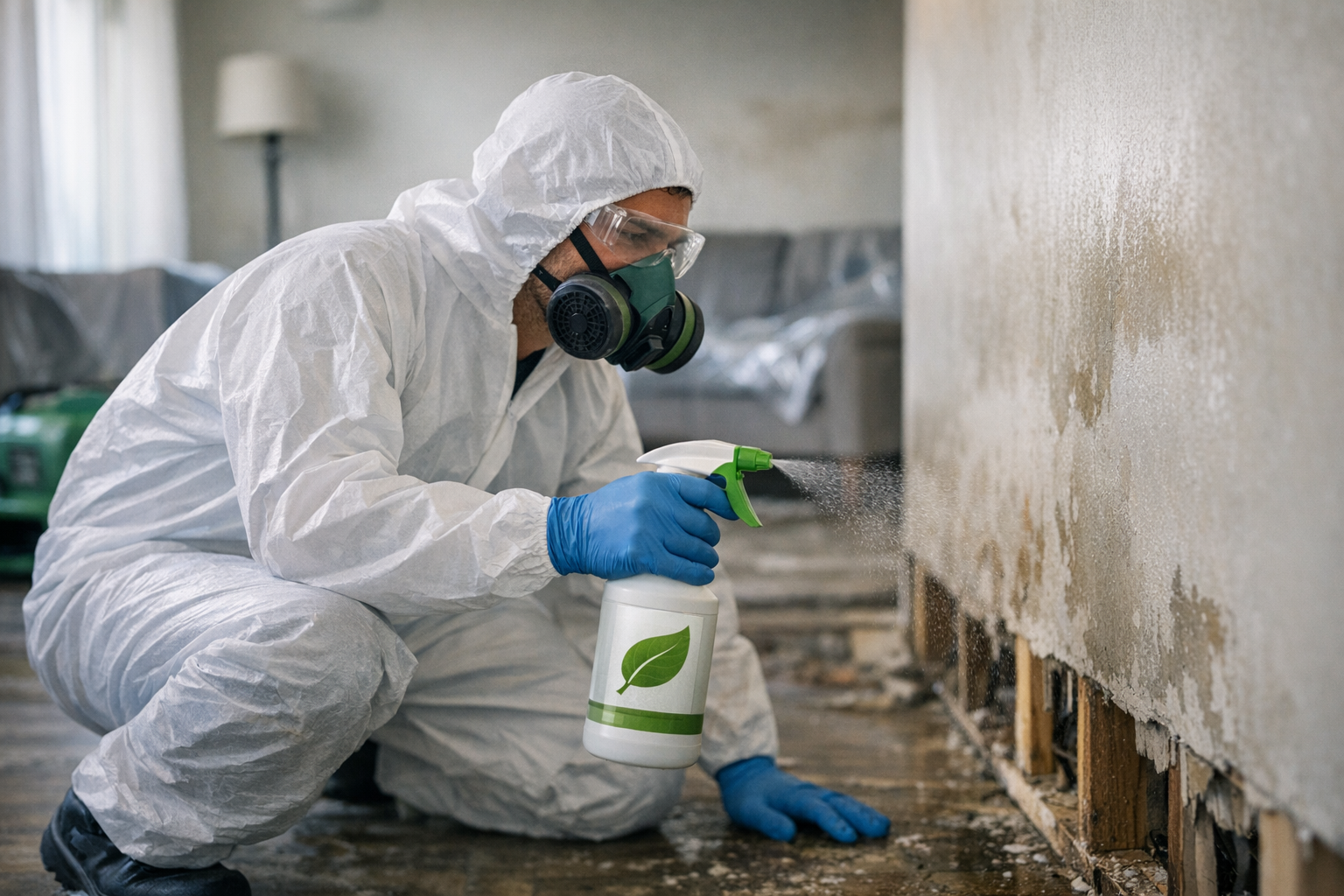
Choosing restoration companies that use green products protects your family’s health while reducing environmental impact during water damage, fire damage, or mold remediation. These eco-friendly cleaning agents and materials contain fewer harsh chemicals than traditional restoration products.
Property owners face immediate decisions after disasters strike. The restoration company you select determines not just repair quality, but also the chemical exposure levels in your home for months ahead.
Why Green Products Matter in Restoration Work
Traditional restoration chemicals can trigger respiratory problems, skin irritation, and headaches during the recovery period. Green products eliminate these health risks by avoiding volatile organic compounds (VOCs) and toxic fumes.
Children and elderly family members are most vulnerable to chemical sensitivities. Eco-friendly restoration products create safer indoor air quality throughout the cleanup process.
Environmental benefits extend beyond your property. Green cleaning agents break down safely in water systems without harming local ecosystems or contaminating groundwater supplies.
Health Benefits of Eco-Friendly Restoration
Green restoration products reduce asthma triggers by 60% compared to conventional chemical cleaners. Families report fewer headaches and respiratory symptoms during eco-friendly remediation projects.
Pet safety improves dramatically with plant-based cleaning formulas. Dogs and cats can return to treated areas sooner without risk of paw pad irritation or toxic ingestion.
Key Questions to Ask Potential Restoration Companies
Direct questions reveal each company’s commitment to environmental safety. Ask these specific questions before signing any restoration contract:
- What certifications do your green products carry? Look for EPA Safer Choice labels and Green Seal certifications on all cleaning agents.
- Can you provide ingredient lists for your cleaning products? Reputable companies readily share safety data sheets for their eco-friendly formulations.
- Do you use low-VOC paints and sealers? These products prevent long-term off-gassing in restored spaces.
- What disposal methods do you follow? Green companies properly recycle materials and dispose of waste through certified facilities.
- Are your technicians trained in green restoration methods? Specialized training ensures proper application of eco-friendly products for maximum effectiveness.
Red Flags to Avoid
Companies that hesitate to discuss their products likely rely on harsh chemicals. Avoid contractors who claim “all products work the same way” or refuse to provide ingredient information.
Pricing that seems unusually low may indicate corners cut on product quality. Effective green products cost slightly more but provide better long-term value through healthier results.
Types of Green Products Used in Professional Restoration
Modern eco-friendly restoration relies on plant-based enzymes and biodegradable surfactants. These products match or exceed the cleaning power of traditional chemicals without health risks.
Water Damage Restoration Products
Enzyme-based moisture extractors break down organic matter without leaving chemical residues. These products eliminate odors at the molecular level rather than masking smells with synthetic fragrances.
Antimicrobial treatments derived from citrus oils prevent mold growth without toxic fungicides. Tea tree oil and thyme extracts provide natural antifungal properties that protect restored materials.
Fire Damage Cleanup Solutions
Soot removal products now use coconut-based surfactants instead of petroleum solvents. These green alternatives lift smoke residue effectively while maintaining indoor air quality.
Odor elimination relies on activated charcoal and ozone-safe compounds. These methods neutralize smoke smells without adding synthetic fragrances that can trigger sensitivities.
Mold Remediation Materials
Botanical fungicides eliminate mold colonies using plant-derived compounds. Essential oil blends containing oregano and rosemary provide powerful antifungal action without respiratory irritation.
Encapsulation products now feature bio-based polymers that seal contaminated surfaces. These green alternatives prevent mold spore release without off-gassing harmful chemicals.
Certifications That Indicate Eco-Friendly Practices
Third-party certifications verify a restoration company’s commitment to environmental safety. These credentials require ongoing compliance with strict green standards.
The Institute of Inspection, Cleaning and Restoration Certification (IICRC) offers specialized green cleaning certifications. Technicians must complete training on eco-friendly methods and product applications.
Green Business Certification programs evaluate companies on waste reduction, chemical usage, and environmental impact. These certifications require annual audits to maintain standing.
Product-Specific Certifications to Look For
- EPA Safer Choice: Products meet strict human health and environmental safety criteria
- Green Seal: Life-cycle environmental impact assessment and performance standards
- GREENGUARD: Low chemical emissions for improved indoor air quality
- Cradle to Cradle: Material health, renewable energy use, and social responsibility
Cost Considerations for Green Restoration
Eco-friendly restoration typically costs 10-15% more than conventional chemical methods. This premium reflects higher product costs and specialized training requirements.
Long-term savings offset initial expenses through reduced health impacts and faster occupancy timelines. Families can return to restored spaces sooner without waiting for chemical off-gassing to dissipate.
Insurance coverage increasingly favors green restoration methods. Some providers offer discounts for eco-friendly restoration work that reduces liability risks.
Budget Planning Tips
Request detailed quotes that separate green product costs from labor expenses. This breakdown helps you evaluate the true cost difference between conventional and eco-friendly options.
Consider partial green restoration for high-use areas like kitchens and bedrooms. This targeted approach reduces costs while protecting spaces where families spend most time.
Finding Certified Green Restoration Companies
Use https://restorationlocator.com filters to identify companies with environmental certifications in your area. Search specifically for contractors who advertise eco-friendly or green restoration methods.
Check company websites for detailed information about their green product lines. Legitimate eco-friendly contractors prominently feature their environmental commitments and certifications.
Read customer reviews that mention chemical sensitivities or health concerns. Previous clients often comment on air quality and comfort levels during green restoration projects.
Verification Steps Before Hiring
Request proof of current certifications and training documentation. Valid credentials include certificate numbers and expiration dates that you can verify independently.
Ask for references from recent green restoration projects. Contact these customers about their experiences with product effectiveness and health impacts.
Visit completed project sites when possible to assess air quality and observe any lingering chemical odors. Green restoration should leave spaces smelling clean without artificial fragrances.
Questions About Product Effectiveness
Green restoration products perform equally well or better than traditional chemicals in most applications. Enzyme-based cleaners often prove more effective at eliminating organic stains and odors.
Drying times remain comparable between eco-friendly and conventional products. Modern green formulations have improved significantly in speed and effectiveness over the past decade.
Durability of green restoration work matches traditional methods when applied correctly. Proper surface preparation and application techniques matter more than product type for long-lasting results.
Performance Metrics to Evaluate
Ask for before and after photos from similar restoration projects using green products. Visual evidence demonstrates cleaning effectiveness and final appearance quality.
Request humidity and moisture readings throughout the restoration timeline. These measurements prove that eco-friendly methods achieve proper drying and prevent future mold growth.
Making Your Final Decision
Compare at least three restoration companies that offer green product options. Evaluate their certifications, product lines, and customer testimonials to make an informed choice.
Prioritize companies that can explain their green methods clearly and provide detailed product information. This transparency indicates genuine commitment to environmental safety rather than marketing tactics.
Choose contractors who offer guarantees on their green restoration work. Confident companies stand behind their eco-friendly methods with written performance warranties.
Selecting a restoration company that uses green products protects your family’s health while supporting environmental responsibility. The right contractor combines effective cleaning power with safe, eco-friendly formulations that create healthier indoor spaces.
Browse certified restoration professionals on https://restorationlocator.com to find green-focused companies in your area and start your search for safer restoration options.