
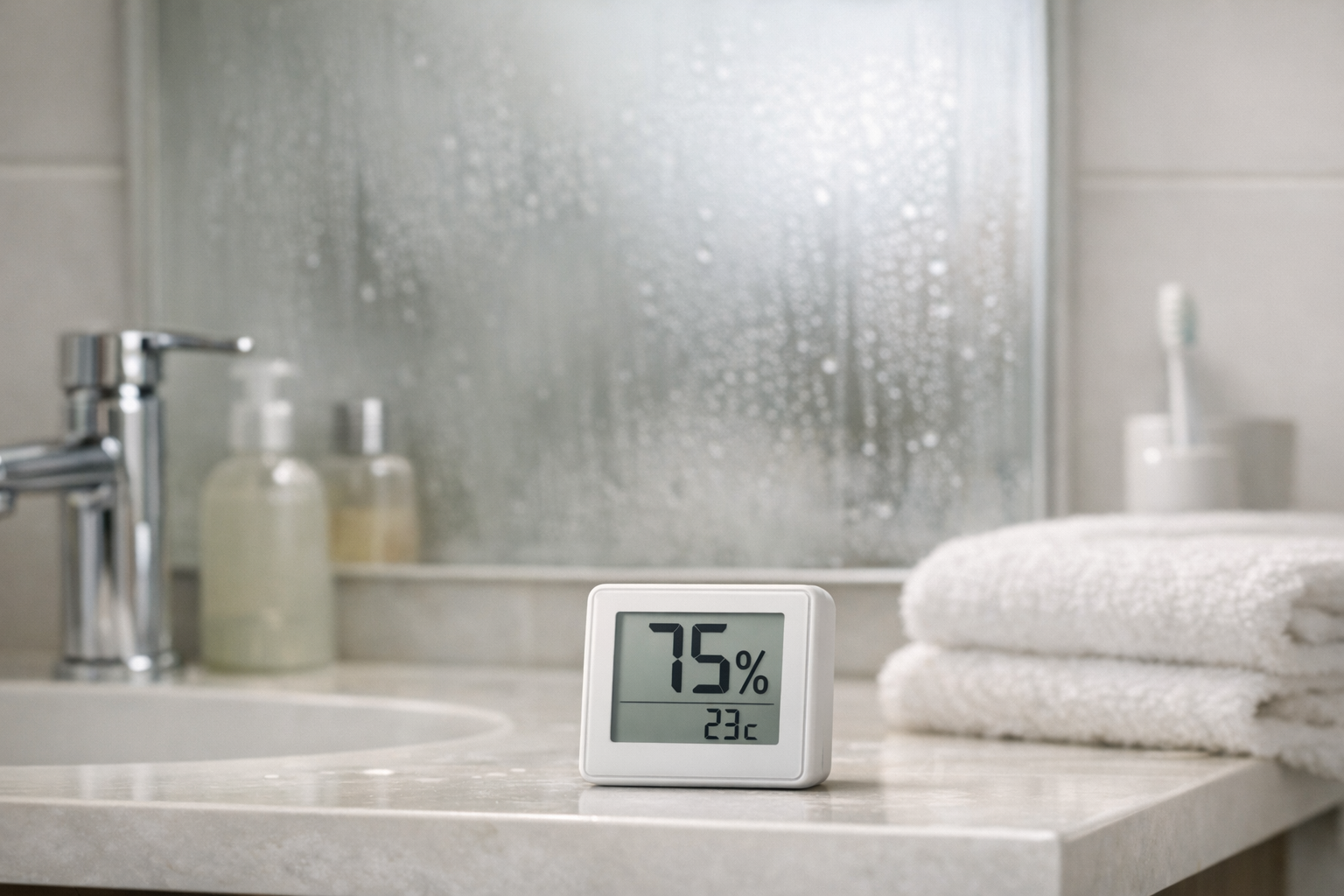
If your bathroom mirror stays foggy an hour after a shower, your home has a moisture problem worth fixing. Residents of Gulf Coast states, the Pacific Northwest, and humid Southern regions face indoor moisture levels that rarely drop below 60% on their own. This post covers humidity control tactics built for those conditions, plus signs you need a restoration specialist.
You will learn which indoor humidity range protects your home, where moisture hides in coastal houses, and how to spot trouble before mold spreads. Each section gives steps you can act on this week.
Why Humidity Control Matters in Naturally Humid Regions
The target indoor humidity range is 30-50%. Above 60%, mold colonies start forming on drywall, wood, and fabric within 24 to 48 hours. Homes in places like Houston, New Orleans, and Miami sit above that line for months at a time.
Outdoor air in these areas carries dew points above 70°F during summer. Every time a door opens, that moisture enters. Air conditioning helps, but undersized or oversized units leave moisture behind.
A house in coastal Louisiana behaves differently than one in Arizona. Cooling alone will not dry the air enough. You need active moisture removal paired with smart habits.
What Excess Moisture Costs You
- Structural damage: Wood swells, subfloors warp, and door frames stick.
- Mold growth: Spores spread behind baseboards and inside HVAC ducts.
- Health effects: Damp air worsens asthma and allergy symptoms.
- Pest attraction: Termites and cockroaches favor high-moisture environments.
How to Measure Indoor Humidity Accurately
Buy a hygrometer before changing anything else. A digital hygrometer costs under $15 and shows real-time humidity readings. Place one in your bedroom, one near the bathroom, and one in any room that smells musty.
Take readings at three times: early morning, mid-afternoon, and late evening. Humid-climate homes swing widely across a single day. A bathroom reading 75% at 7 a.m. tells you the exhaust fan is undersized.
Log the numbers for one week. Patterns reveal which rooms need attention first. A laundry room holding 65% overnight points to a venting problem.
Dehumidifier Strategies for Humid Climates
A whole-home dehumidifier removes moisture across every room at once. For a 2,000-square-foot home in a humid region, choose a unit rated for 70 pints per day or higher. Portable units work for single problem rooms only.
Sizing and Placement Steps
- Measure the square footage of the space you want dried.
- Match capacity to dampness: heavily damp rooms need 12 pints per 500 square feet.
- Place portable units away from walls for airflow on all sides.
- Drain into a floor drain or condensate pump to avoid emptying tanks daily.
- Set the target to 45% and check the hygrometer after 48 hours.
In a New Orleans shotgun house, a single portable unit will not keep up. Connect a whole-home model to your HVAC return for even coverage.
HVAC Adjustments That Lower Indoor Moisture
An oversized air conditioner cools fast but leaves air damp. Short cooling cycles do not run long enough to pull moisture from the air. If your AC clicks off within ten minutes, it may be too large for the space.
Run the fan on “auto,” not “on.” The “on” setting blows moisture back into rooms from the wet evaporator coil. Switching to “auto” lets condensation drain away between cycles.
Service your system before each humid season. A clogged condensate drain backs water into the air handler. Technicians can add a dedicated dehumidification stage to standard systems.
Sealing and Ventilation for Mold Prevention
Mold prevention starts with stopping moisture entry and clearing humid air fast. Two tasks matter most: sealing gaps and venting wet rooms outdoors.
Seal These Entry Points
- Crawl space vents: Encapsulate with a vapor barrier in humid regions.
- Window and door gaps: Re-caulk where you feel warm outdoor air leaking in.
- Plumbing penetrations: Foam-seal openings under sinks and behind toilets.
- Dryer vents: Confirm the line exits fully outdoors, not into the attic.
Vent Wet Rooms Correctly
Bathroom and kitchen exhaust fans must terminate outside, not in the attic. An attic-vented fan dumps moisture into your roof structure. Run bathroom fans for 20 minutes after every shower.
In a Florida home with a closed crawl space, adding a small supply vent keeps the area dry. Standing humidity under the house migrates upward into living space.
Targeted Habits for Coastal and Southern Homes
Daily habits move the needle in homes that never fully dry out. Small changes compound over a humid summer.
- Cook with lids on pots and run the range hood every time.
- Hang wet towels outside or in a vented room, never over furniture.
- Keep closet doors cracked so air circulates against exterior walls.
- Wipe down shower walls after use to cut surface moisture.
- Move furniture two inches off exterior walls to prevent condensation pockets.
In older Charleston homes with plaster walls, watch corners where exterior walls meet ceilings. Cold-spot condensation forms there first during AC season.
When to Call a Restoration Specialist
Some moisture problems pass the point of DIY fixes. Call a specialist when you see any of the warning signs below.
- Visible mold covering more than 10 square feet of surface.
- A musty smell that returns after cleaning.
- Buckling floors or soft spots in subflooring.
- Water stains spreading on ceilings or walls.
- Persistent humidity above 60% after running a dehumidifier.
Restoration teams use moisture meters and thermal cameras to find hidden water. They remove affected materials and set commercial drying equipment. This work stops mold from returning inside walls.
How to Pick the Right Provider
Use the directory at Restoration Locator to compare local teams. Filter listings by location to find providers familiar with your region’s humidity patterns. Check reviews on each listing for mold and water damage work.
Sort by proximity so help arrives fast during an active leak. A Gulf Coast provider knows storm-season moisture better than an out-of-state firm.
Key Takeaways
Keep indoor humidity between 30% and 50% using a hygrometer, a properly sized dehumidifier, and corrected HVAC settings. Seal moisture entry points and vent wet rooms outdoors to block mold before it starts. When damage spreads past surface level, bring in a specialist with the right drying equipment.
Ready to find moisture and mold experts in your humid region? Browse Disaster Cleanup & Restoration listings now at https://restorationlocator.com and start your search today.