
A 105°F heatwave does more than make your house uncomfortable. It warps vinyl siding, cracks roof shingles, overloads electrical panels, and pushes air conditioners until they fail. Heatwave preparation means fixing the weak points in your home before the temperature spikes, not after your AC dies on the hottest afternoon of the year.
This article covers the specific damage extreme heat causes and the steps that prevent it. You will learn how to protect your cooling system, roof, attic, and water lines, plus when to call a restoration provider.
Why Heatwave Preparation Is Different From Summer Comfort
A heatwave is a stretch of three or more days with temperatures far above the local average. The danger comes from sustained heat, not a single hot afternoon.
Your roof can reach 150°F to 170°F during a multi-day event. Attic air can climb past 130°F. That heat does not stop at comfort levels — it degrades building materials.
Common heat-driven damage includes:
- Cracked or curled asphalt shingles from baking and rapid cooling at night
- Buckled hardwood floors when indoor humidity and heat shift together
- Failed AC compressors running nonstop against a 100°F outdoor load
- Warped vinyl siding, especially near grills or reflective windows
- Burst supply lines when plastic fittings soften and weaken
Protect Your Cooling System Before It Fails
Air conditioners fail most during heatwaves because they run at maximum capacity for days. A system that worked fine in June can quit in July when it never gets a rest cycle.
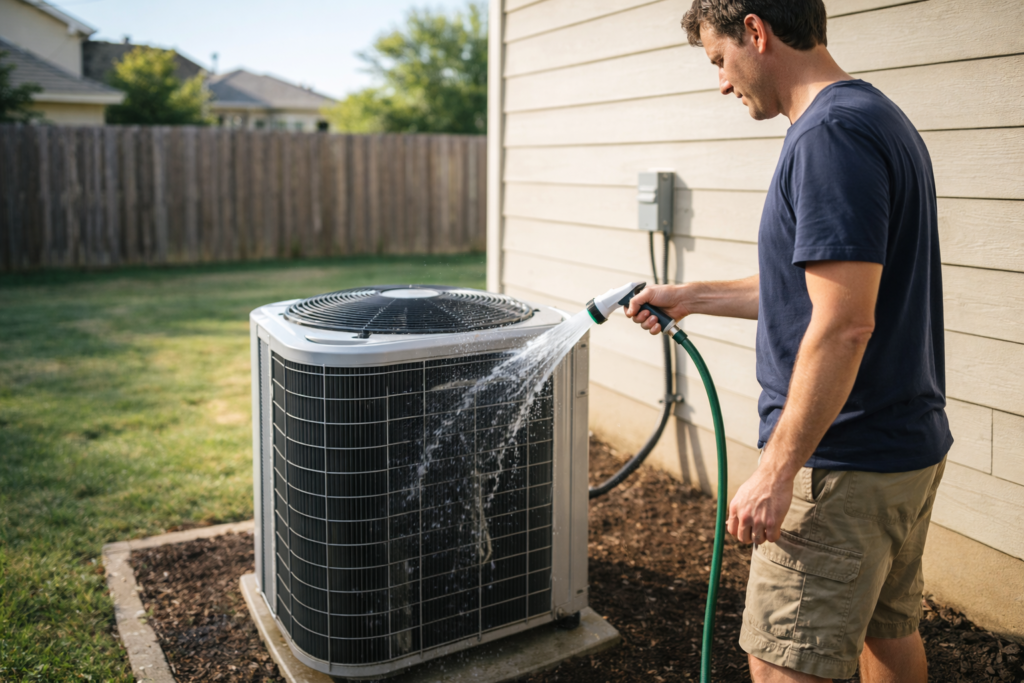
Steps to ready your AC
- Replace the air filter. A clogged filter forces the unit to work harder and overheat.
- Clear the outdoor condenser. Pull weeds, leaves, and debris back at least two feet on all sides.
- Rinse the condenser fins. Use a gentle hose spray to remove dust that blocks heat release.
- Check the refrigerant date. If a technician has not inspected the system in two years, book one now.
- Test it early. Run the AC for an hour on a mild day to catch problems before peak heat.
Set your thermostat to a steady temperature instead of swinging it up and down. Constant cycling wears the compressor faster than a fixed setting.
Improve Home Cooling Without Overworking the AC
Home cooling during extreme heat depends on blocking heat before it enters, not just fighting it once inside. The less heat your house absorbs, the less your AC strains.
Block heat at the windows
South- and west-facing windows take the worst afternoon sun. Close blinds and curtains on those sides by mid-morning, before the room heats up.
Cellular shades and blackout curtains cut solar gain more than thin blinds. Reflective window film on west windows can drop a room’s peak temperature several degrees.
Seal the leaks
Hot air sneaks in around doors, outlets, and attic hatches. Weatherstrip exterior doors and add foam gaskets behind outlet covers on outside walls.
An attic hatch without insulation leaks heat downward all day. A reflective cover or rigid foam board on the hatch lid helps.
Cool the Attic to Protect the Whole House
The attic is the hottest part of your home during a heatwave. Heat trapped there radiates into living spaces and pushes your AC past its limit.
Check that soffit and ridge vents are clear. Blocked vents trap superheated air against your roof deck and ceiling.
If your attic insulation sits below 10 inches deep, the heat passes into rooms below. Adding insulation to the recommended depth for your climate zone slows that transfer.
A heat-damaged roof deck can lead to leaks during the next storm. If you spot dark staining or sagging plywood, a restoration provider can assess moisture and structural risk.
Guard Against Plumbing and Water Damage
Extreme heat stresses plumbing in ways most homeowners miss. Plastic fittings soften, seals dry out, and outdoor pipes expand.
- Inspect washing machine hoses. Heat-aged rubber hoses crack and burst. Replace any over five years old with braided steel lines.
- Check exposed pipes in the garage or attic. Heat-stressed joints leak slowly, then fail under pressure.
- Run outdoor spigots briefly. Stuck valves and dried washers show up before you need them for cooling the yard.
A small leak in a 130°F attic grows fast. Trapped moisture plus heat builds mold within 48 hours, which moves the problem from plumbing to restoration territory.
Prepare for Power Outages During Peak Heat
Grid demand spikes when everyone runs AC at once. Rolling blackouts and brownouts happen during the hottest hours, exactly when you need cooling most.
Stock these before a heatwave hits:
- Battery fans and a power bank to keep one room livable
- Coolers and ice to protect medication and food if the fridge goes dark
- A plan to relocate to a cooling center if your home passes 90°F indoors
If your home loses power and food spoils or pipes leak, document the damage with photos. That record helps with insurance claims and any restoration work.
Know When to Call a Restoration Provider
Some heat damage needs more than a homeowner fix. Call a provider when you find these signs:
- Water stains on ceilings after AC overflow or a burst attic line
- Mold growth from condensation or a slow leak in hot, humid spaces
- A failed sump or condensate pump that flooded a basement or crawlspace
- Warped flooring or buckled drywall from trapped moisture
On Restoration Locator, you can filter listings by location and damage type. Sort by your area, then check reviews to compare providers who handle water and mold cleanup.
A Simple Heatwave Preparation Checklist
Run this list before the next forecast climbs past 95°F:
- Replace AC filter and clear the condenser
- Test the AC on a mild day
- Close west and south blinds by mid-morning
- Seal door and attic-hatch leaks
- Clear attic vents and check insulation depth
- Replace aging washer hoses with braided steel
- Stock fans, ice, and a backup plan for outages
Each step lowers the load on your home and cuts the odds of a heat-driven failure.
Final Takeaways
Effective heatwave preparation protects three things: your cooling system, your roof and attic, and your plumbing. Block heat at the windows, ready your AC early, and replace heat-stressed hoses before they fail. When extreme heat causes water damage or mold, act fast to limit the spread.
Browse Disaster Cleanup & Restoration listings at Restoration Locator to find a local provider. Start your search today and have a name ready before the next heatwave arrives.