
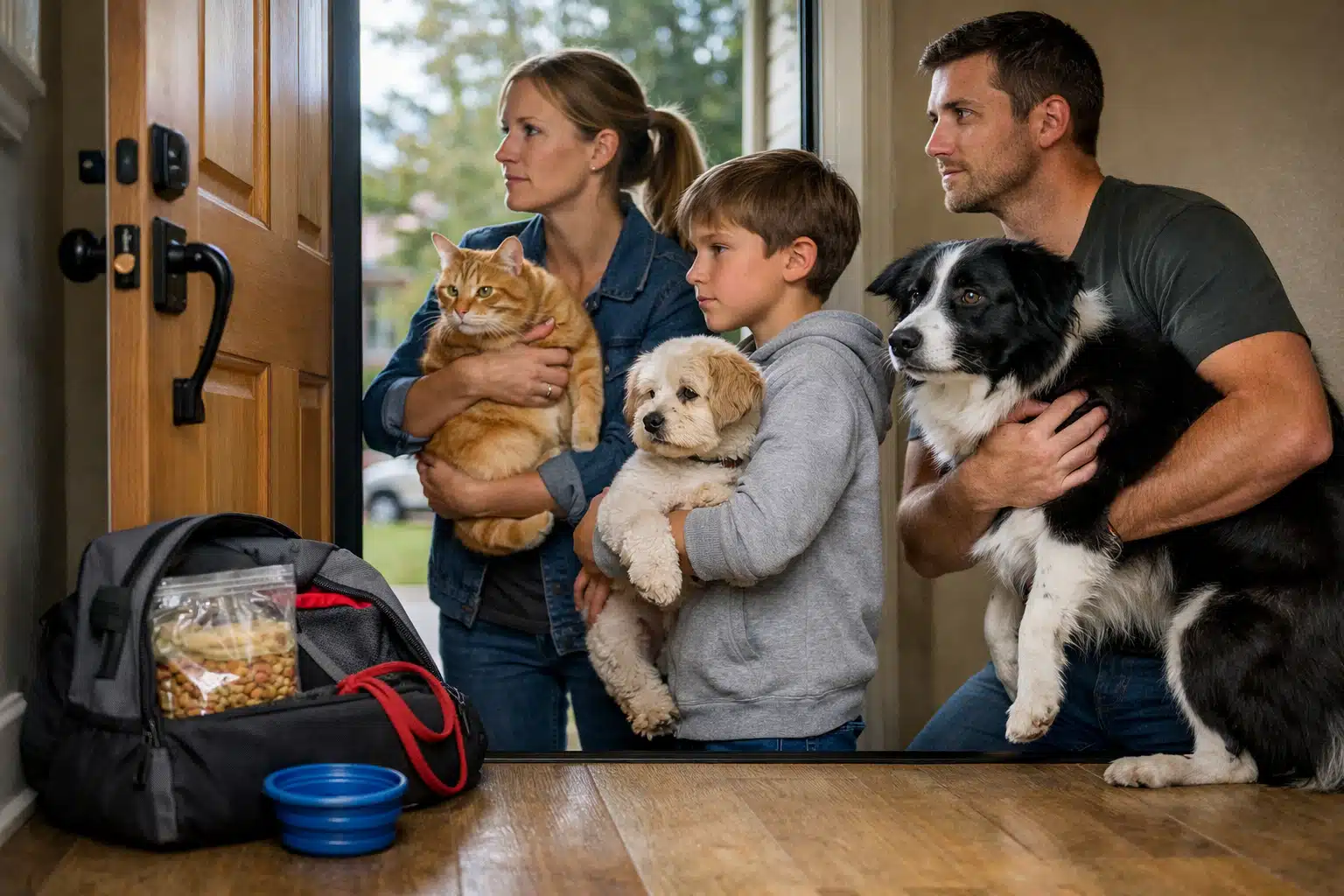
House fires give most families under two minutes to get out. When you add pets to that equation, seconds matter even more. Pet evacuation during a home disaster fails most often because owners waste time searching for a hiding cat or a leash they cannot find.
This post covers the exact steps pet owners can take before, during, and after an emergency. You will learn how to build a pet go-bag, coax frightened animals out, and find lodging that accepts them.
Every recommendation here comes from patterns seen across real flood, fire, and storm cleanup calls.
Why Pet Evacuation Fails Without a Plan
Animals do not follow instructions during a crisis. A dog that sits on command every day will bolt when a smoke alarm shrieks. A cat that greets you at the door will vanish under a bed the moment strangers or sirens arrive.
Fear changes behavior. That single fact drives every strategy below.
Restoration crews arriving after a fire routinely find pets trapped in laundry rooms, closets, and basement corners. The owners evacuated. The animals hid. Planning closes that gap.
The Two-Minute Reality
A kitchen grease fire can fill a room with smoke in 30 seconds. Rising floodwater can cut off a staircase in minutes. You will not have time to improvise.
Decide now who grabs which animal. Assign one person per pet in a multi-pet household.
Build a Pet Go-Bag Before You Need It
A pet go-bag is a pre-packed kit holding everything an animal needs for 72 hours away from home. Keep it near your own emergency supplies, by the door you exit most.
Pack the following in a waterproof container or backpack:
- Three days of food in sealed bags, plus a manual can opener for wet food
- Bottled water and a collapsible bowl sized for your animal
- Medications with dosing instructions written on the bottle
- A recent photo of you with your pet to prove ownership at a shelter
- Vaccination records in a zip-top bag, since most boarding sites require proof
- A spare leash, harness, and collar with ID tags
- Waste bags, a small litter tray, and litter for cats
- A worn t-shirt or blanket carrying your scent to calm a stressed animal
Rotate the food and water every six months. Expired kibble helps no one.
Microchips Beat Collars
Collars slip off during frantic escapes. A microchip stays put. Register the chip and keep the contact details current with the registry.
After a storm displaced hundreds of pets in one neighborhood, microchipped animals reunited with owners at nearly double the rate of tagged-only pets.
Keep Carriers and Leashes Where You Can Reach Them
The biggest delay in pet evacuation is hunting for the carrier. Store it out in the open, not buried in a garage or attic.
Cats especially fight carriers they see only during vet trips. Break that association.
- Leave the carrier out year-round with the door open and a soft bed inside
- Feed treats inside it once or twice a week so the space feels safe
- Practice short closures so your cat tolerates the door shutting without panic
Dogs need a leash hung by every exit. During a real fire, you cannot walk back into a smoke-filled hallway to find one.
How to Get a Hiding Pet Out Fast
Frightened animals retreat to tight, dark spaces. Know your pet’s three favorite hiding spots right now.
Cats pick under beds, behind couches, and inside closets. Dogs head for bathrooms, crates, or a corner behind furniture.
Fast-Capture Techniques
- Cats: Drop a pillowcase or towel over the cat, then scoop the whole bundle into the carrier. It restricts claws and reduces struggle.
- Small dogs: Lift by supporting the chest and hindquarters, then clip the leash before opening any door.
- Large dogs: Leash first, calm voice second. A panicked large dog can knock you down.
- Birds and reptiles: Move the entire cage or tank if time allows, or transfer to a ventilated travel container.
Never chase a hiding cat during smoke or fire. If you cannot reach it in seconds, evacuate and tell firefighters exactly where it hides.
Disaster Safety for Different Emergency Types
The threat changes the strategy. Match your response to the event.
Fire and Smoke
Stay low, since smoke rises and pets breathe cleaner air near the floor. Get out and stay out. Firefighters carry pet oxygen masks and train to search interiors.
Flooding
Move pets to upper floors early, before water blocks the stairs. Never leave a chained or crated animal where water can rise around it.
Floodwater carries sewage and chemicals. Rinse paws and fur once you reach safety to prevent chemical burns.
Tornado or High Wind
Bring pets into your interior safe room in their carriers. A loose animal in a storm shelter can escape when the door opens.
Sound disaster safety practice means practicing these moves twice a year, once in daylight and once after dark.
Where to Take Pets After You Evacuate
Most emergency shelters for people do not accept animals. Service animals are the exception. Sort your lodging plan before disaster strikes.
Build a short list of three destinations:
- A pet-friendly hotel within 50 miles, with policies confirmed by phone
- A friend or relative outside your immediate area who agrees in advance
- A boarding kennel or veterinary office that offers emergency intake
Save the addresses offline. Cell networks fail during widespread disasters.
After the Disaster: Returning Home Safely
A damaged home holds hidden dangers for animals. Do not release pets inside until the space is cleared.
Watch for these hazards:
- Broken glass and nails that cut paw pads
- Standing water hiding sharp debris or live wires
- Mold and soot residue that irritate lungs and skin
- Displaced wildlife like snakes driven indoors by flooding
Keep pets confined to one cleaned room until restoration work finishes. Their nose and paws contact surfaces yours never will.
Find Cleanup Help Fast
Smoke, water, and mold demand trained crews. Restoration Locator lets you filter listings by your location and disaster type.
Check reviews on each provider before you call. Sort by proximity to reach a crew that can respond while your pets stay in temporary lodging.
Key Takeaways for Pet Owners
Pet evacuation succeeds when the go-bag, carrier, and lodging plan exist before the emergency. Assign one person per animal, know every hiding spot, and never re-enter a burning home to chase a pet.
Once your family and animals are safe, restoring your home is the next step. Browse Disaster Cleanup & Restoration listings now at https://restorationlocator.com and find a crew near you.