
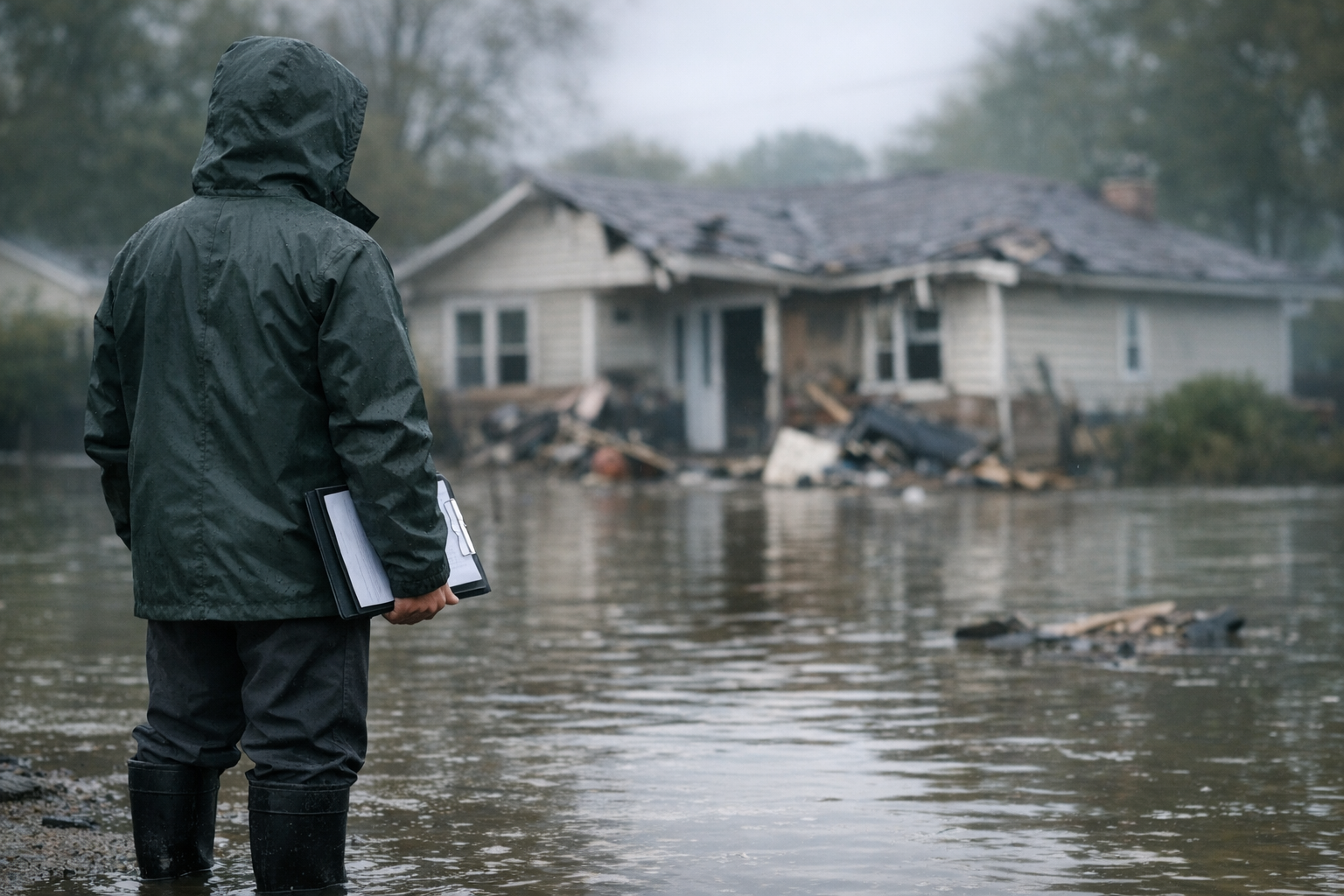
Safety First: Your Initial Approach to a Flood-Damaged Home
The moment you arrive at your flood-damaged property, your natural instinct is to rush inside and assess the damage. Stop. Before taking a single step toward your front door, you need to complete a safety assessment that could save your life.
The first 30 minutes of returning to flooded home situations determine whether you’ll face immediate danger or begin recovery safely. Standing water, compromised electrical systems, and structural damage create hazards that aren’t always visible.
Start your assessment from the street. Look for obvious signs of structural damage like sagging rooflines, cracked foundations, or debris against exterior walls.
Critical Safety Indicators to Check Before Entry
Electrical hazards pose the most immediate threat when returning to flooded home environments. Never enter a flooded building if power is still on.
- Electrical panel location: If your electrical panel was submerged, assume all circuits are compromised
- Downed power lines: Check for fallen lines on or near your property – they remain dangerous even when not sparking
- Gas smell: Natural gas leaks require immediate evacuation and professional response
- Standing water depth: Water deeper than 2 inches near electrical outlets creates electrocution risk
Document these conditions with photos from a safe distance. Insurance adjusters and restoration professionals need this visual evidence to understand the scope of damage.
The Systematic Interior Inspection Process
Once you’ve confirmed it’s safe to enter, your interior inspection follows a specific sequence. This methodical approach helps identify structural issues before they become dangerous.
Begin with the foundation and basement areas. Water damage starts from the bottom up, and these spaces reveal the full extent of flooding impact.
Foundation and Basement Assessment
Foundation integrity determines whether your home can safely support normal loads. Look for new cracks wider than a quarter-inch or any horizontal cracking in basement walls.
Check floor joists and support beams for warping or separation. Wooden structural members that stayed wet for more than 48 hours often develop serious integrity issues.
Measure water lines on basement walls. These marks show flood height and help restoration professionals calculate the volume of water your home absorbed.
Main Floor Structural Elements
Move through your home’s main floor systematically, testing each room’s structural soundness. Press firmly on flooring near walls – springiness indicates subfloor damage.
Windows and doors reveal frame damage through alignment issues. If doors stick or won’t close properly, the frame has likely shifted due to foundation movement.
Load-bearing walls show stress through new cracks, especially where they meet ceilings. These require immediate professional evaluation.
Documenting Damage for Professional Assessment
Professional restoration work depends on thorough damage documentation. Your initial photos and notes guide restoration teams toward the most critical repairs.
Create a room-by-room inventory that captures both visible damage and potential hidden issues. This documentation becomes invaluable when working with restoration professionals.
Photography Best Practices
Take wide-angle shots of each room showing overall damage, then focus on specific problem areas. Include a measuring tape or coin in close-up shots to show scale.
Photograph water lines on walls, warped flooring, and damaged personal belongings. These images help restoration professionals estimate drying time and equipment needs.
Capture serial numbers on damaged appliances and electronics. This information speeds up insurance claims and replacement processes.
Written Damage Inventory
Your written inventory should include details that photos can’t capture – like musty odors that indicate mold growth or soft spots in drywall that suggest extensive water absorption.
- Room dimensions: Length, width, and ceiling height for each affected space
- Flooring type and condition: Hardwood warping, carpet saturation, tile lifting
- Wall damage extent: How high water reached, drywall condition, insulation exposure
- Personal property losses: Furniture, electronics, clothing, documents
Note any areas where you detect unusual odors or see discoloration that wasn’t present before flooding.
Understanding Hidden Dangers in Flood-Damaged Homes
The most serious threats in flood-damaged homes often remain invisible during initial inspections. These hidden dangers develop over days or weeks after water recedes.
Mold growth begins within 24-48 hours in wet environments. Even if you don’t see visible mold during your first visit, spores are likely already establishing colonies in wall cavities and under flooring.
Contamination Concerns
Floodwater carries contaminants that make your home unsafe until properly cleaned. Sewage backup, chemical runoff, and decomposing organic matter create health hazards that persist after water disappears.
Category 3 water (contaminated floodwater) requires specialized cleaning protocols. Standard household cleaners cannot eliminate the bacteria and toxins present in this type of water damage.
HVAC systems that operated during flooding may have distributed contaminants throughout your home via ductwork. Professional duct cleaning becomes necessary even in rooms that didn’t flood directly.
Electrical System Complications
Electrical systems affected by flooding require complete professional inspection before restoration. Corroded wiring creates fire hazards that may not manifest for months after the flooding event.
Circuit breakers and outlets that were submerged need replacement, not just drying. Salt water causes particularly aggressive corrosion that makes electrical components unreliable.
Smart home systems, security systems, and other low-voltage wiring also suffer damage that isn’t immediately apparent but can cause system failures later.
Creating Your Professional Restoration Plan
Your damage assessment guides the selection of appropriate restoration professionals. Different types of damage require specialized expertise and equipment.
Water extraction and structural drying represent the most time-sensitive aspects of flood restoration. These processes must begin within 72 hours to prevent extensive secondary damage.
Prioritizing Restoration Services
Structural drying takes priority over cosmetic repairs. Restoration professionals use moisture meters and thermal imaging to identify all wet materials, including those hidden behind walls.
Mold remediation often runs parallel to drying processes. Professional restoration teams coordinate these services to address contamination while structures are still open for access.
Electrical and plumbing system restoration requires licensed trades professionals. These repairs must meet current building codes, which may differ from your home’s original construction standards.
Selecting Qualified Restoration Professionals
Look for restoration companies with specific flood damage experience in your area. Local professionals understand regional building codes and common construction methods in your neighborhood.
Verify that restoration companies carry proper licensing and insurance for the scope of work your home requires. Water damage restoration, mold remediation, and structural repairs each require different certifications.
Check company reviews that specifically mention flood restoration projects. The skills needed for burst pipe cleanup differ significantly from those required for major flood recovery.
Timeline Expectations for Safe Occupancy
Understanding realistic timelines for flood restoration helps you make appropriate temporary housing decisions. Rushing the process creates long-term problems that cost more to fix later.
Structural drying alone typically requires 3-7 days with professional equipment running continuously. Homes with stone or brick construction may need longer drying periods due to these materials’ water retention properties.
Factors That Extend Recovery Time
Extensive contamination from sewage or chemicals requires additional cleaning steps that can double restoration timelines. Category 3 water damage involves removing and replacing materials rather than just drying them.
Mold discovery during the drying process adds remediation steps that weren’t part of the initial restoration plan. Severe mold contamination may require temporary relocation during treatment.
Permit requirements for electrical or structural repairs introduce additional time delays. Building departments often have backlogs during widespread flooding events that affect entire communities.
Signs Your Home Is Ready for Re-Occupancy
Professional moisture testing confirms that all building materials have returned to acceptable moisture levels. This testing uses specialized meters that measure moisture content in wood, drywall, and concrete.
Air quality testing verifies that mold spore counts have returned to normal levels and that no chemical contaminants remain airborne.
Final inspections by licensed electricians, plumbers, and building inspectors ensure that all systems operate safely and meet current codes.
Returning to your flood-damaged home safely requires patience and professional guidance. The initial safety assessment and thorough damage documentation you complete lay the foundation for successful restoration.
Working with qualified restoration professionals protects both your immediate safety and your long-term investment in your property. Take time to find experienced local professionals who understand the complexities of flood damage recovery.
Start your search for qualified disaster cleanup and restoration professionals at https://restorationlocator.com to connect with certified experts in your area.