
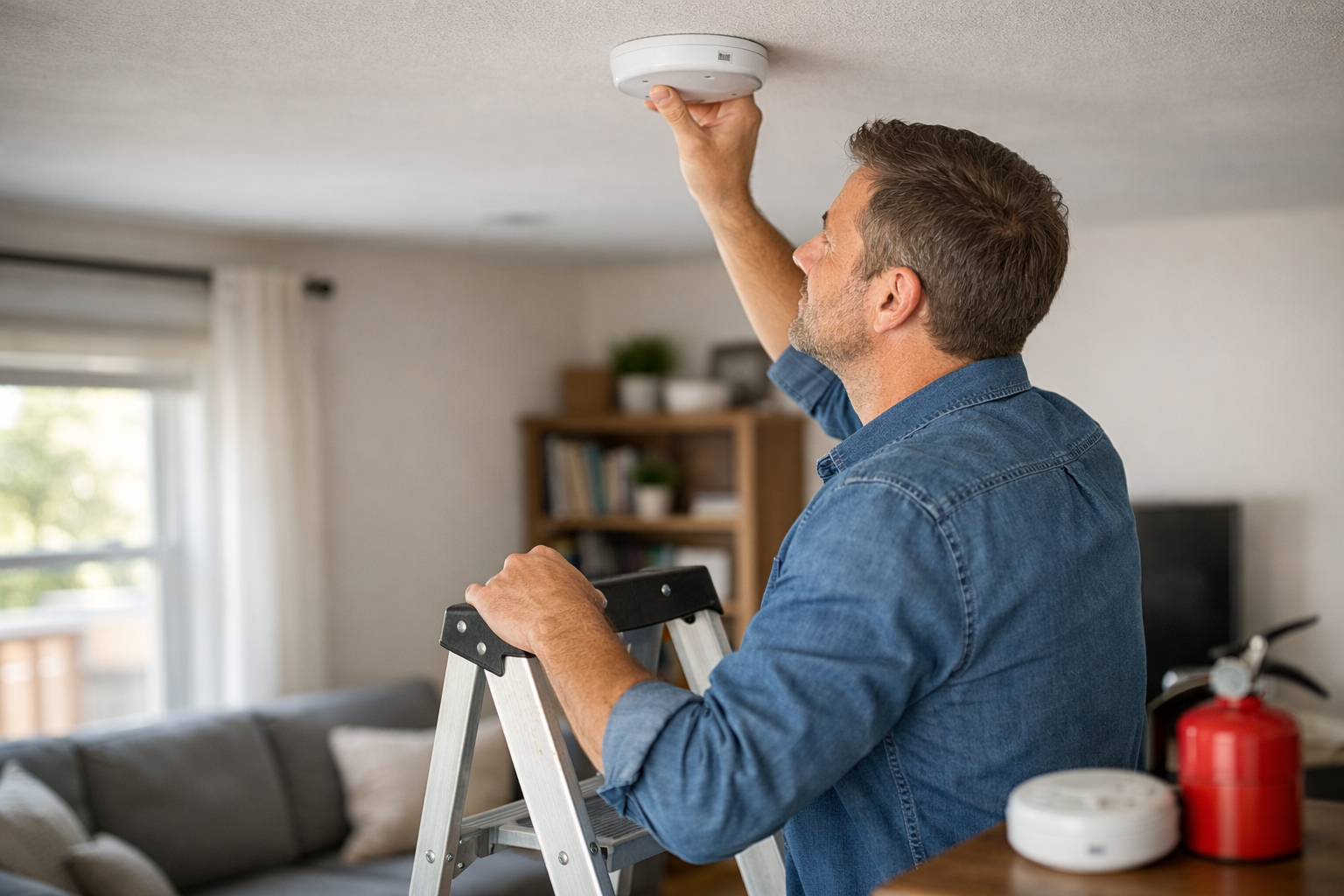
Why Home Fire Safety Equipment Depends on Your Floor Plan
A fire in a single-story ranch behaves differently than one in a three-story townhouse. Smoke rises, and stairwells act like chimneys. Your equipment choices should match how your house is built, not a generic checklist.
This post walks you step by step through picking the right home fire safety equipment for real living spaces. You will learn which alarms suit each room, how to match extinguishers to fire types, and where escape tools earn their keep.
The goal is prevention first, then fast response if flames start.
Smoke Alarms: Match the Sensor to the Room
Smoke alarms come in two sensing types, and each catches a different fire. Buying the wrong one for a room leaves a gap you never notice until it matters.
Ionization vs. Photoelectric
- Ionization alarms react fastest to flaming fires, like a grease flare-up or paper igniting.
- Photoelectric alarms catch smoldering fires sooner, like a cigarette in a couch cushion or wiring behind drywall.
- Dual-sensor alarms combine both technologies in one unit.
Place photoelectric units near bedrooms and living rooms where slow, smoldering fires start. Kitchens and garages benefit from dual-sensor models that resist nuisance alarms.
Placement Rules That Cut False Alarms
- Install an alarm inside every bedroom.
- Add one in the hallway outside sleeping areas.
- Put at least one on each level, including the basement.
- Keep alarms at least 10 feet from cooking appliances to reduce false triggers.
- Mount ceiling units 4 inches from any wall.
Interconnected alarms sound together, so a basement fire wakes people upstairs. Wireless interconnected models retrofit older homes without new wiring.
Fire Extinguishers: Read the Class Rating Before You Buy
A fire extinguisher only works on the fire types printed on its label. Grabbing a water-based unit for a grease fire spreads the flames instead of stopping them.
What the Letter Ratings Mean
- Class A handles wood, paper, and cloth.
- Class B handles flammable liquids like gasoline and grease.
- Class C handles live electrical fires.
- Class K handles cooking oils and fats in kitchens.
A multipurpose ABC extinguisher covers most household risks. Keep a Class K unit in the kitchen where deep-frying happens.
Where to Stage Each Unit
Mount one extinguisher near the kitchen exit, not next to the stove. You need to reach it without walking into flames. Add units in the garage, near the furnace, and on each floor.
Check the pressure gauge monthly. Replace or recharge any unit that drops out of the green zone.
Fire Prevention Tools That Stop Ignition
The strongest equipment prevents a fire from ever starting. Detection matters, but stopping ignition sources removes the threat at the source.
Useful fire prevention tools for the average home include:
- Arc-fault circuit interrupters (AFCIs) that trip when damaged wiring sparks.
- Surge protectors with auto-shutoff for space heaters and electronics.
- Automatic stove shutoff devices that cut power after unattended cooking.
- Dryer vent brushes to clear lint, a leading cause of laundry fires.
- Fire-resistant safes for documents and backup drives.
A stove shutoff device matters most in homes with older adults or frequent distractions. Unattended cooking causes the largest share of home fires.
Escape Equipment: Plan for the Worst Case
Escape tools bridge the moment between detection and safe exit. Two-story and three-story homes need them most because upper floors trap people.
Fire Escape Ladders
A collapsible escape ladder hooks over a window sill for a fast drop to the ground. Buy one rated for your window height and test the fit before an emergency. Store it under the bed in each upstairs bedroom.
Fire Blankets and Carbon Monoxide Alarms
Keep a fire blanket in the kitchen to smother small pan fires or wrap a person. Install carbon monoxide alarms near sleeping areas, since fires and faulty heaters both produce the gas.
Building Your Home Fire Safety Equipment Kit by Priority
Budget rarely allows buying everything at once. Order your purchases by the risk each item reduces.
- Interconnected smoke alarms in every bedroom and hallway.
- ABC extinguisher near the kitchen exit.
- Carbon monoxide alarms on each level with sleeping areas.
- Class K extinguisher for kitchens with frequent frying.
- Escape ladders for upstairs bedrooms.
- Prevention add-ons like AFCIs and stove shutoffs.
This order protects lives first, then property. A family in a two-story home should reach escape ladders before adding a fire-resistant safe.
When Equipment Fails: Finding Cleanup Help Fast
Even a well-equipped home can suffer fire and smoke damage. Soot spreads into walls, ducts, and belongings within hours. Fast cleanup limits corrosion and permanent staining.
Use Restoration Locator to find fire and smoke damage specialists in your area. On https://restorationlocator.com, you can:
- Filter listings by location to find nearby responders.
- Check reviews from other homeowners after fire events.
- Sort by service type to match soot removal, odor treatment, or structural drying.
Save a shortlist before you need it. A pre-selected provider saves hours during a crisis.
Maintenance Schedule That Keeps Equipment Ready
Equipment fails silently when ignored. A simple calendar keeps every device working.
- Monthly: Press the test button on all alarms. Check extinguisher gauges.
- Every six months: Replace alarm batteries unless sealed 10-year units.
- Yearly: Clean dryer vents and inspect escape ladders.
- Every 10 years: Replace all smoke alarms, sensors degrade with age.
Extinguishers carry a service life on the label. Dispose of expired units and replace them rather than trusting an old canister.
Conclusion
The right home fire safety equipment matches your floor plan, room risks, and household routine. Start with interconnected alarms and an ABC extinguisher, then add escape ladders and prevention tools. Maintain each item on a fixed schedule so it works when seconds count.
If fire damage strikes, find vetted cleanup and restoration providers now at https://restorationlocator.com.