
More home fires start between December 24 and 26 than almost any other three-day stretch of the year. Holiday fire hazard preparation means spotting the risks hidden in your decorations, cooking, and heating before they spark. The decorations that make the season feel festive are the same items that send thousands of families to hotels each winter.
This article breaks down the exact fire risks tied to holiday activities. You will learn how real fires start, how to stop them, and what to do if one happens.
Why Holiday Fire Hazard Preparation Matters More Than Usual
The winter holidays stack fire risks that rarely appear together the rest of the year. A dried-out tree, overloaded outlets, lit candles, and a busy kitchen all share the same rooms at once.
Christmas tree fires are rare but brutal. The National Fire Protection Association reports that one of every 30 reported Christmas tree fires results in a death. That ratio is far higher than the average home fire.
Cooking is the number one cause of holiday home fires. Thanksgiving is the single biggest cooking fire day in the United States, followed by Christmas Day and Christmas Eve.
Christmas Tree Fire Risks and How to Stop Them
A dry Christmas tree can go from spark to full fire in under 30 seconds. A fresh, watered tree resists ignition far longer than a neglected one.
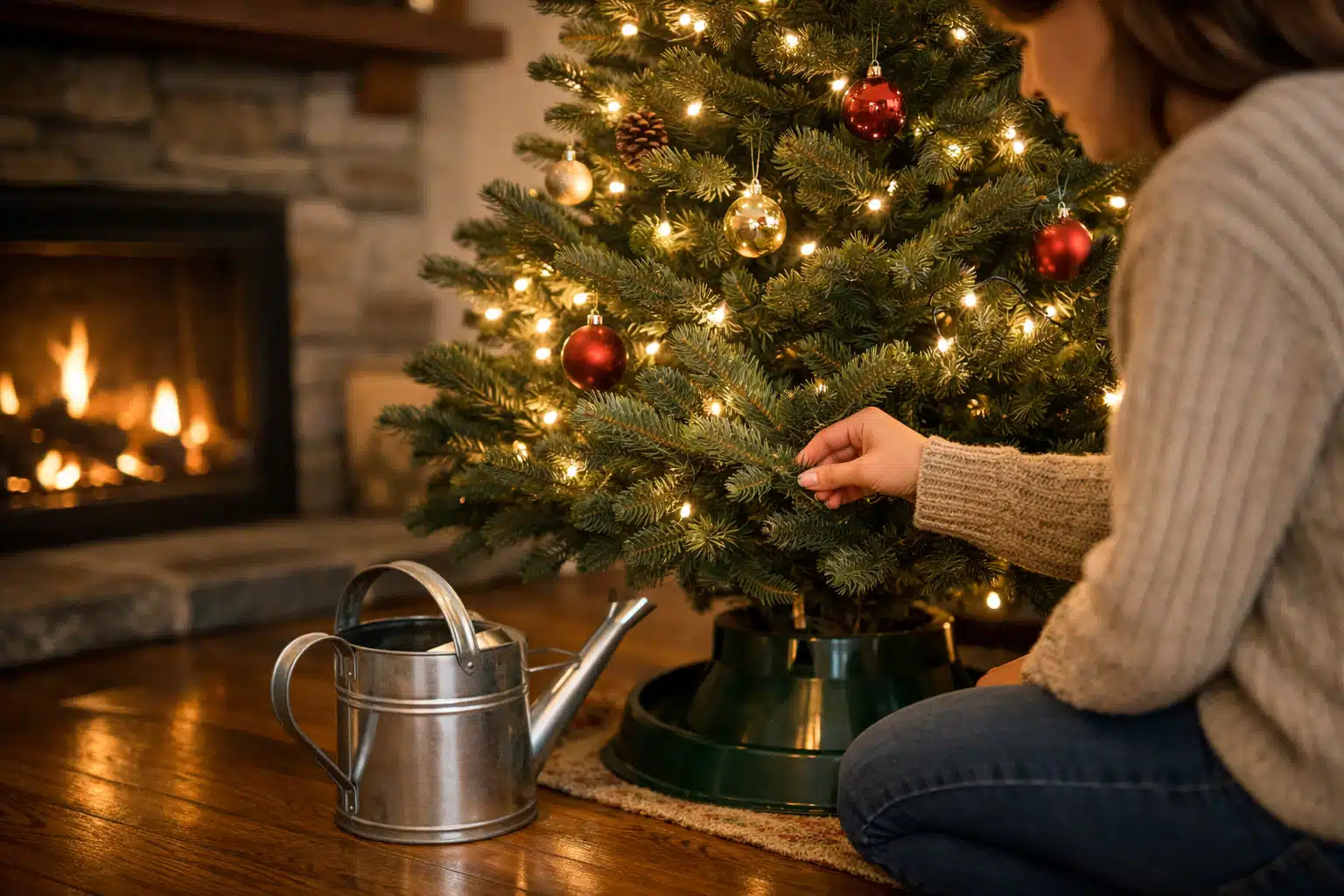
Keeping a Real Tree Safe
- Check freshness before buying. Bend a needle. If it snaps instead of flexing, the tree is already drying out.
- Cut two inches off the trunk base. A fresh cut lets the tree absorb water again.
- Water it daily. A standard tree drinks up to a quart of water per day during the first week.
- Keep it three feet from heat. Radiators, vents, candles, and fireplaces all dry a tree fast.
- Remove it within four weeks. After that, even a watered tree becomes a fire load.
Artificial Tree Precautions
An artificial tree is not fire-proof. Buy only trees labeled fire-resistant, which slows ignition but does not prevent it.
Never run electric lights on a metallic tree. A faulty bulb can charge the whole frame and cause a shock or fire.
Holiday Lighting: The Most Overlooked Fire Hazard
Faulty or overloaded light strings cause hundreds of home fires each December. The danger comes from old wiring, cheap connectors, and plugging too much into one outlet.
Inspect Before You Hang
- Discard any string with cracked insulation or exposed copper wire.
- Replace burned-out bulbs to stop the rest of the string from overheating.
- Connect no more than three strings of incandescent lights end to end.
- Switch to LED lights. They run cooler and draw far less power.
- Use outdoor-rated lights outside. Indoor strings degrade fast in cold and moisture.
Outlet and Extension Cord Rules
Do not run cords under rugs or across doorways. Foot traffic cracks insulation and creates hidden shorts.
Plug outdoor decorations into a GFCI-protected outlet. It cuts power the instant it detects a fault.
Turn off all lights before bed and when you leave. A timer handles this for you automatically.
Candles, Fireplaces, and Open Flame Safety
December sees the highest candle fire rate of any month. Decorations placed too close to a flame are the usual starting point.
Candle Habits That Prevent Fires
- Keep candles at least 12 inches from anything that burns.
- Place them in sturdy holders that will not tip.
- Never leave a lit candle in an empty room.
- Switch to flameless LED candles near greenery or wrapping paper.
Fireplace Precautions
Never burn wrapping paper or boxes in a fireplace. They flare fast and can throw burning scraps into the room.
Have the chimney inspected before the first fire of the season. Creosote buildup is a leading cause of chimney fires.
Hang stockings away from an active fire. A single ember can ignite fabric left too close.
Kitchen Fire Prevention During Holiday Cooking
Unattended cooking causes most holiday kitchen fires. A pot left on the stove during a conversation is the classic scenario.
Stovetop and Oven Safety
- Stay in the kitchen when frying or broiling. Grease fires start in seconds.
- Keep a lid nearby. Sliding a lid over a grease fire smothers it. Water makes it worse.
- Clear the stovetop of towels, packaging, and oven mitts.
- Set a timer for every dish so nothing runs past its mark.
Turkey Fryer Warning
Outdoor turkey fryers cause some of the most severe holiday burns. A frozen or wet turkey dropped into hot oil erupts instantly.
Fry only a fully thawed, dry bird. Place the fryer on level ground, far from the house, deck, and garage.
Smoke Alarms and Escape Planning
Working smoke alarms cut the risk of dying in a home fire roughly in half. Holiday clutter can block exits and slow escape.
- Test every smoke alarm at the start of the season.
- Install alarms on every level and inside each bedroom.
- Keep paths to exits clear of gifts, boxes, and extra furniture.
- Practice a two-exit escape plan with the whole household.
- Keep a fire extinguisher in the kitchen and know how to use it.
Seasonal Fire Safety for Guests and Travel
Seasonal fire safety shifts when the house fills with visitors or sits empty during travel. Both situations change your risk profile.
Guests may not know your exits or smoke alarm locations. Point them out and keep hallways clear during gatherings.
If you travel, unplug holiday lights and decorations entirely. An empty home with lit decorations is a risk no one will catch in time.
What to Do After a Holiday Fire
Act fast once the fire is out and everyone is safe. Smoke and water damage spread long after the flames stop.
- Call your insurer and document everything with photos.
- Do not re-enter until fire officials clear the structure.
- Contact a restoration company quickly. Soot becomes acidic and etches surfaces within days.
Restoration Locator lets you find local fire damage specialists fast. Filter listings by location, read verified reviews, and sort by the services you need after a fire.
Key Takeaways for Holiday Fire Hazard Preparation
Holiday fire hazard preparation comes down to three zones: your tree and lights, your open flames, and your kitchen. Water your tree, inspect your cords, keep flames 12 inches from anything flammable, and never leave cooking unattended. Test your smoke alarms and clear your exits before the first guest arrives.
If a fire does strike, quick cleanup limits lasting damage. Browse Disaster Cleanup & Restoration listings now at restorationlocator.com and find a local provider in minutes.
Sources
- National Fire Protection Association – Winter Holiday Fire Safety
- U.S. Fire Administration – Holiday Fire Safety
- U.S. Consumer Product Safety Commission – Holiday Decoration Safety