
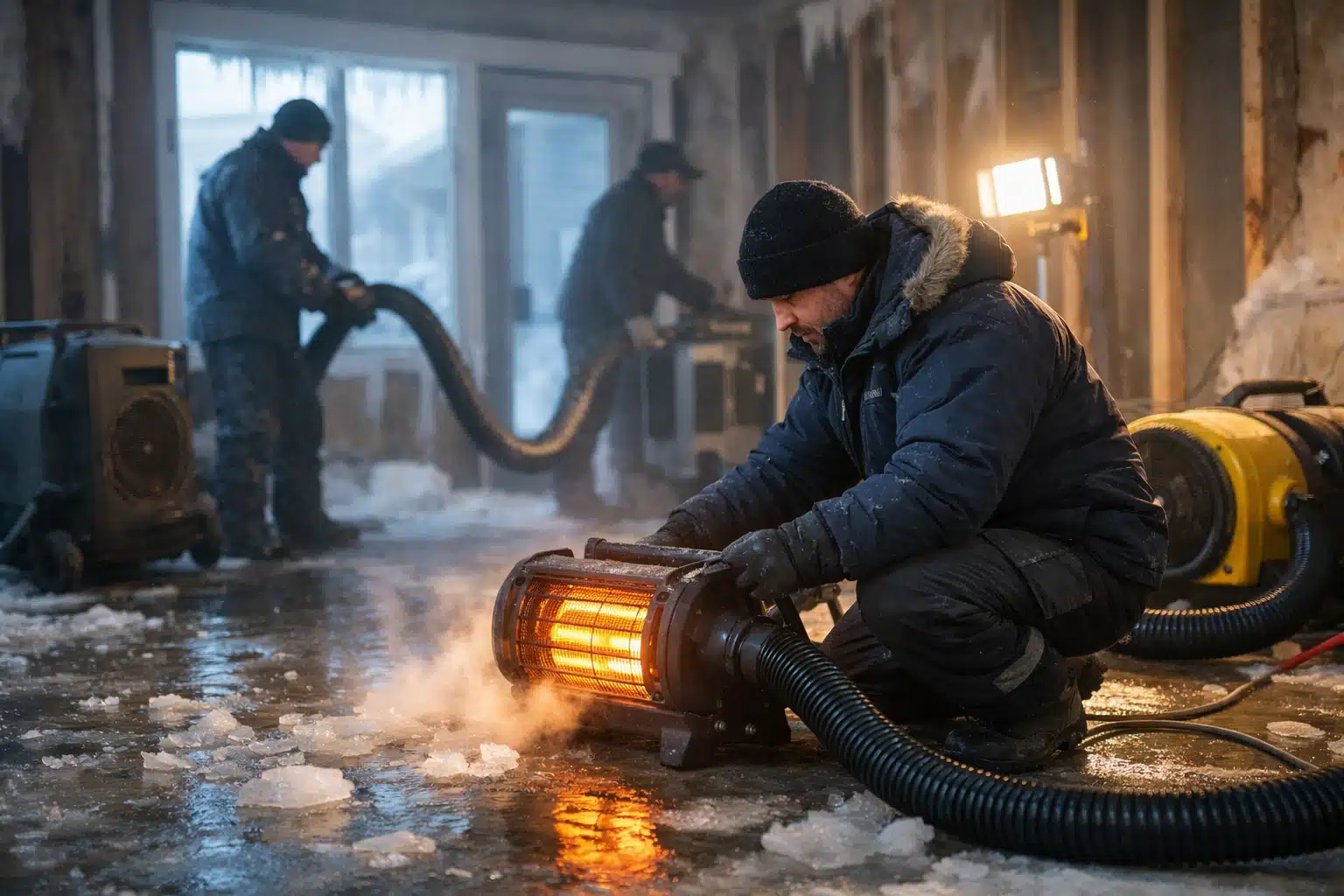
A burst pipe at 2 a.m. during a January freeze floods three floors of a home before anyone wakes up. Within hours, standing water starts freezing again, and the damage compounds. This is the reality of cold weather restoration, a category that punishes slow response and inexperienced crews.
Not every disaster contractor handles frozen-climate damage with equal skill. Below, you will learn how to spot providers equipped for winter emergencies and which credentials separate them from the rest.
Why Cold Weather Restoration Is a Different Job
Winter damage behaves differently than a summer storm or a kitchen flood. Water refreezes. Humidity drops. Drying equipment struggles when outdoor air offers no help.
A provider who excels at July water extraction may stumble in sub-freezing conditions. The physics of the job changes once temperatures fall below 32°F.
The specific problems winter creates
- Frozen pipe bursts: A single eighth-inch crack in a pipe can release 250 gallons per day.
- Ice dams: Melting roof snow refreezes at the eaves, forcing water under shingles and into ceilings.
- Delayed detection: Damage in vacant vacation homes or second properties goes unnoticed for days.
- Slow structural drying: Cold air holds less moisture, which stalls evaporation without heated equipment.
- Refreeze cycles: Extracted water that is not fully removed turns to ice overnight.
A crew that understands these patterns arrives prepared. One that does not treats a frozen-pipe flood like any other water loss and misses the compounding risks.
Credentials That Signal Winter-Ready Providers
The strongest cold weather restoration firms hold documented training in water damage and structural drying. Certification matters more in winter because the margin for error shrinks.
What to verify before hiring
- IICRC certification: The Institute of Inspection, Cleaning and Restoration Certification sets the water-damage standard. Look for the WRT (Water Restoration Technician) designation.
- Applied Structural Drying (ASD) training: This credential covers advanced drying in difficult conditions, including cold environments.
- 24/7 emergency dispatch: Winter breaks happen overnight and on holidays. Confirm real round-the-clock response, not a voicemail.
- Heated drying equipment: Ask whether they run electric or indirect-fired heaters to force evaporation when outdoor air cannot.
- Cold-climate track record: A firm that has handled dozens of January losses knows refreeze risk firsthand.
On Restoration Locator, you can filter listings by certification and sort by location to find crews near your ZIP code. Check reviews that mention winter jobs, not just general praise.
Response Time Decides the Outcome
In winter disaster cleanup, every hour of delay raises the cost. Water that sits in a 40°F house migrates into drywall, insulation, and subfloors before it refreezes.
A provider two hours away in good weather may take five hours during a snowstorm. Proximity carries real weight when roads are icy and demand spikes across a region.
Questions to ask about response capacity
- What is your average arrival time during a regional freeze event?
- Do you have backup crews when every home on the block calls at once?
- Can you stabilize a property before full drying begins?
- Do you handle the burst pipe repair, or only water removal?
The best firms separate mitigation from restoration. They stop the water, extract it, then dry the structure in stages that account for refreeze risk.
Equipment That Matters in Freezing Conditions
Standard air movers and dehumidifiers lose efficiency when ambient temperatures drop. Cold air already holds little moisture, so pulling more out gets harder.
Winter-capable crews bring heat. Indirect-fired heaters raise the indoor temperature without adding moisture or carbon monoxide to the air.
Equipment checklist for a winter-ready provider
- Desiccant dehumidifiers: These perform in cold, low-humidity air where refrigerant units fail.
- Indirect-fired heat systems: Safe, high-output heat that speeds evaporation.
- Thermal imaging cameras: Detect hidden moisture behind walls before it freezes in place.
- Portable generators: Winter storms knock out power, and drying equipment needs reliable electricity.
- Pipe-thawing tools: Crews that can safely thaw frozen lines prevent a second burst.
Ask any candidate directly about desiccant dehumidification. A firm that cannot explain the difference between desiccant and refrigerant units lacks cold-weather depth.
Insurance and Documentation Knowledge
Frozen-pipe claims face scrutiny from insurers. Many policies require proof that the home was heated and that reasonable care was taken.
A skilled provider documents moisture readings, temperature logs, and the cause of loss from the start. That paperwork protects your claim when an adjuster questions coverage.
What strong documentation includes
- Date-stamped photos of the damage on arrival
- Daily moisture and temperature readings during drying
- A written cause-of-loss statement
- An itemized scope of work matched to insurance line items
Providers familiar with Xactimate estimating speak the same language as adjusters. That alignment shortens the claim timeline and reduces disputes.
How to Compare Providers Side by Side
Narrow your list before an emergency strikes. Having a vetted provider saved in advance removes panic from the decision.
Fast comparison framework
- Certification: IICRC WRT and ASD at minimum.
- Response: Documented overnight and holiday dispatch.
- Equipment: Desiccant units and indirect heat confirmed.
- Winter reviews: Reviews referencing frozen pipes or ice dams.
- Insurance fluency: Xactimate and claim documentation support.
Use Restoration Locator to shortlist candidates by location, then score each against this list. A firm that checks all five handles cold weather restoration with confidence.
Red Flags to Avoid
Some warning signs appear before you ever sign a contract. Watch for them during your first call.
- No certification details: Vague answers about training signal gaps in skill.
- Pressure to sign immediately: Reputable firms let documentation speak for itself.
- No mention of refreeze risk: A crew that overlooks this misunderstands winter work.
- Cash-only or no written estimate: This complicates insurance claims later.
- Unfamiliar with your climate: A provider new to freezing regions brings a learning curve you pay for.
Trust the firm that asks you questions about indoor temperature and how long the water sat. That curiosity reflects real field knowledge.
Preparing Before Winter Hits
The smartest move happens before a pipe ever bursts. Homeowners who research providers in autumn avoid scrambling in a crisis.
Save two or three vetted firms with 24/7 dispatch in your area. Keep their information where you can reach it even if your phone is cold and your hands are shaking.
Conclusion
Cold weather restoration rewards providers who understand refreeze cycles, desiccant drying, and fast winter response. Verify IICRC certification, confirm heated equipment, and read reviews that mention frozen-pipe and ice-dam jobs. The right firm stabilizes your property before damage compounds in the cold.
Start your search for winter disaster cleanup experts now at Restoration Locator and filter by certification and location before the next freeze arrives.