
A single late summer thunderstorm can drop debris, shift patio furniture, and overwhelm pool filtration in under an hour. Pool storm protection comes down to a handful of steps done before the clouds roll in, not after. Done right, you avoid cracked pumps, stained plaster, and flooded decking.
This post covers the exact actions pool owners should take, from water levels to equipment shutoff. It also walks through securing the rest of your yard and finding help if damage still hits.
Why Late Summer Storms Hit Pools Harder
Late summer storms carry warm, saturated air that produces heavy rainfall and sudden wind gusts. Pools sit at the lowest point of most backyards, collecting runoff, mulch, and roof debris.
The biggest risk is not the water itself. It is what the water carries and what it does to your equipment.
- Chemical dilution from several inches of rain throws off pH and chlorine balance.
- Debris clogs skimmers and strainer baskets, forcing pumps to run dry.
- Electrical damage hits pumps and heaters when water rises above equipment pads.
- Flying objects like unsecured chairs crack tile and tear liners.
Pool Storm Protection: Step-by-Step Before the Storm
The single most common mistake pool owners make is draining the pool completely. Never fully drain an in-ground pool before a storm.
An empty pool can pop out of the ground when groundwater pressure builds during heavy rain. This is called hydrostatic uplift, and it ruins the shell.
1. Lower the Water Just Slightly
Drop the water level 1 to 2 inches below the skimmer, no more. This gives room for rainfall without risking uplift.
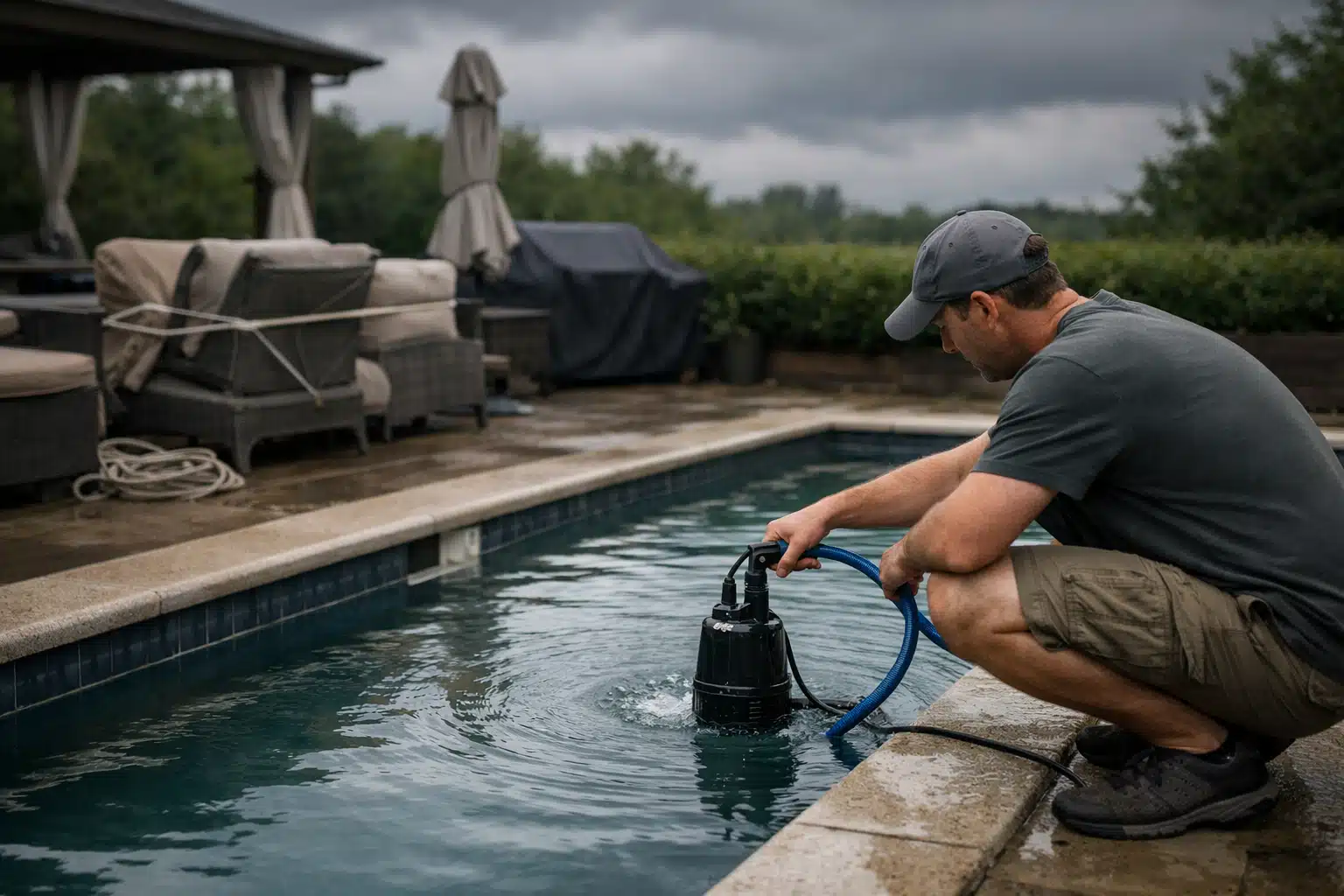
Use the pool’s drain setting or a submersible pump for precise control. Stop once you hit the right mark.
2. Balance Your Chemistry in Advance
Add a shock treatment and raise chlorine slightly the day before expected rain. Rainwater is acidic and will lower pH and chlorine fast.
Running an algaecide beforehand helps too. A storm-stressed pool with low chlorine turns green within 48 hours.
3. Shut Down and Protect Equipment
Turn off power to the pump, heater, and filter at the breaker. Running equipment during a lightning storm risks surge damage.
If flooding is likely, disconnect the pump motor and move it to higher ground. Wrap it in a waterproof tarp if it cannot be moved.
4. Clear the Deck, Not the Pool
Toss loose items into the water rather than the shed. Patio chairs, small tables, and toys become projectiles in high wind.
Submerged furniture stays put and avoids damaging your liner or tile. Remove and store umbrellas, which act like sails.
5. Leave the Cover Off
Do not install a standard pool cover before a storm. Debris and rainwater weigh it down and can tear the cover or snap anchors.
A safety cover rated for heavy loads is the exception. Check the manufacturer rating before deciding.
Protecting the Rest of Your Outdoor Area
Outdoor area safety during a storm depends on removing anything that can lift, roll, or shatter. Wind does not need to be hurricane-strength to turn a grill into a hazard.
Secure or Store Loose Items
- Bring in cushions, rugs, and lightweight decor.
- Move the grill against a wall and close the lid, or store it inside.
- Lay down tall planters that cannot be moved.
- Fold and secure outdoor umbrellas and shade sails.
- Stow garden tools, hoses, and children’s toys.
Clear Drainage Paths
Clean gutters and yard drains before the storm arrives. Clogged drains send water pooling against your foundation and pool deck.
Check that downspouts direct water away from the pool, not into it. A single blocked drain can flood a patio in minutes.
Trim Hazard Branches
Remove dead or overhanging limbs near the pool and seating areas. Late summer storms snap weakened branches that have carried a full season of leaf weight.
After the Storm: What to Check First
Inspect your pool and yard before running any equipment. Turning on a flooded pump can destroy the motor and create a shock hazard.
- Water level and clarity — skim debris before it sinks and stains.
- Equipment pad — confirm it is dry before restoring power.
- Chemistry — retest pH, chlorine, and alkalinity, then rebalance.
- Deck and coping — look for cracks, lifted tiles, or shifted stone.
- Liner and shell — check for tears or new staining.
Run the filter continuously for 24 to 48 hours once power is safe. Backwash often as debris loads the filter.
When Storm Damage Needs a Restoration Pro
Some damage goes beyond skimming leaves and rebalancing water. Call a restoration specialist when you see structural or water intrusion problems.
Signs you need help include:
- Standing water inside the pool equipment room or garage.
- A cracked or shifted pool shell after heavy rain.
- Electrical equipment that got submerged.
- Flooding that reached the home’s foundation or basement.
- Mold growth on decking, fencing, or nearby structures.
How to Find the Right Provider
RestorationLocator.com lets you match the problem to the right specialist fast. Use the directory to compare providers by what they handle.
- Sort by location to find crews that can reach you quickly after a regional storm.
- Filter listings by water damage or storm cleanup specialty.
- Check reviews from other homeowners who dealt with flooding.
- Confirm the provider handles both outdoor and structural water damage.
Acting within the first 24 to 48 hours limits mold growth and secondary damage. Standing water around pool equipment and foundations gets worse the longer it sits.
A Quick Pre-Storm Checklist for Pool Owners
- Lower water 1 to 2 inches below the skimmer.
- Shock and balance chemistry a day ahead.
- Cut power to pump, heater, and filter.
- Move or tarp the pump if flooding is likely.
- Sink patio furniture in the pool.
- Leave standard covers off.
- Clear gutters and yard drains.
- Trim overhanging branches.
Conclusion
Pool storm protection means lowering water slightly, balancing chemistry early, and cutting power to equipment before the storm. Keeping furniture out of the wind and drainage paths clear protects the rest of your outdoor area. When flooding or structural damage appears, fast action within 48 hours makes the difference.
Browse Disaster Cleanup & Restoration listings at RestorationLocator.com to find a storm damage specialist near you. Start your search today.