
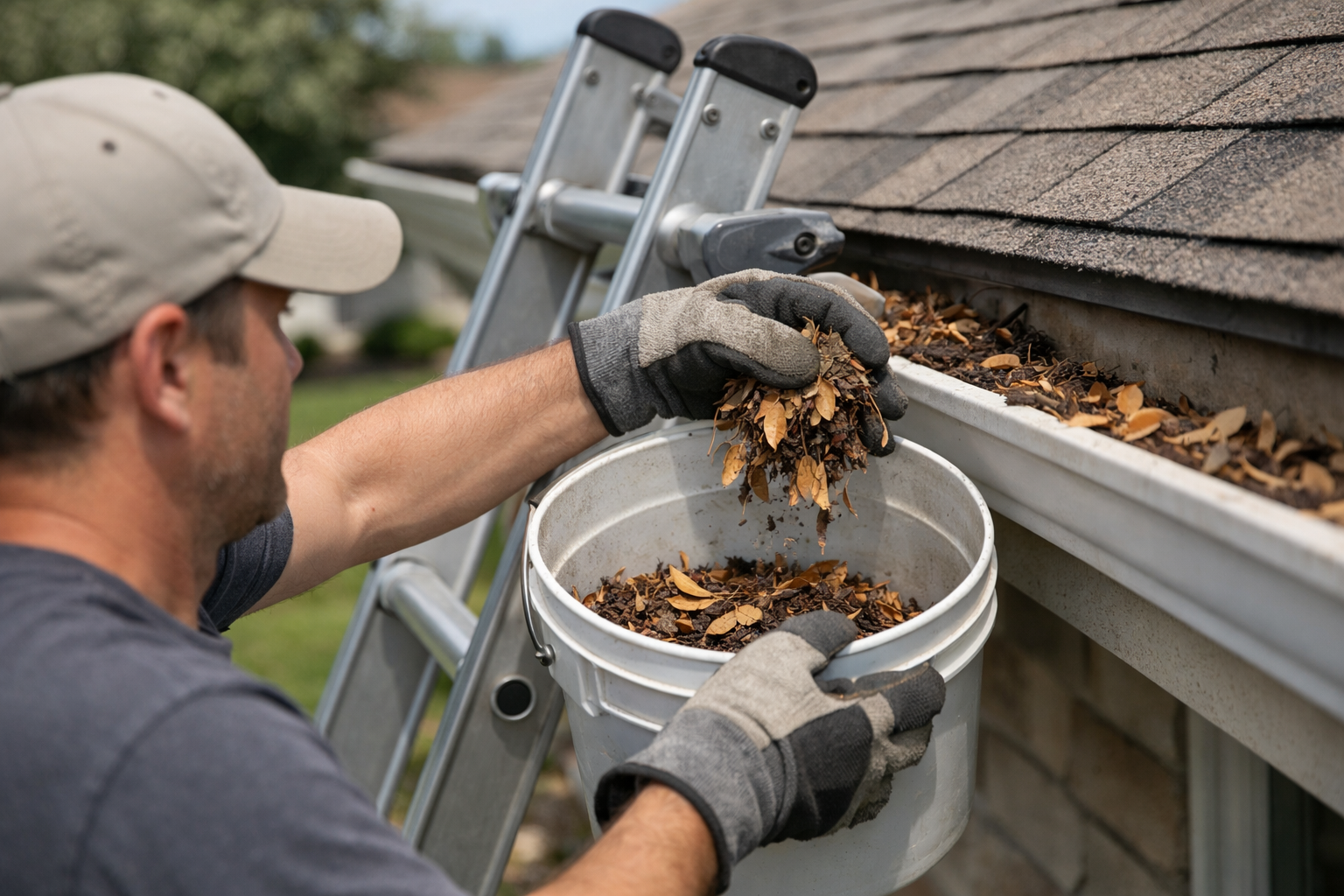
A single summer thunderstorm can dump two inches of rain on your roof in under an hour. When your gutters are packed with spring debris, that water has nowhere to go but down your walls and into your foundation. Learning to prevent clogged gutters before storm season is the cheapest water-damage insurance you own.
This post walks you through the exact steps to clear, test, and protect your gutter system before July hits. You will learn what causes summer-specific clogs, how to spot early warning signs, and when a repair calls for outside help.
Why Summer Storms Clog Gutters Faster Than Any Other Season
Summer clogs form differently than the wet-leaf jams of autumn. Late spring drops seed pods, maple helicopters, and oak catkins into your troughs. Then the first heavy rain compacts that mess into a dense, sludgy plug.
Pollen and shingle grit add to the problem. As asphalt shingles age, they shed granules that settle in gutter bottoms. Mixed with rainwater, granules turn into a gritty paste that slows drainage.
Add fast-growing summer plant matter and you get overflow at the worst moment. Overflowing gutters during a storm push water toward your fascia, soffits, and foundation — the three most expensive things to repair.
The Cost of Ignoring It
A blocked downspout during a 30-minute downpour can send hundreds of gallons against your foundation wall. Water pools, seeps into basement cracks, and invites mold within 48 hours. Fixing a wet basement costs far more than an afternoon of gutter work.
How to Prevent Clogged Gutters Before Storm Season
The best time to clear your gutters is late spring, after seed drop but before summer storms arrive. Follow this sequence for a full seasonal reset.
- Wait for a dry spell. Debris scoops out cleaner when it is not soaked and glued down.
- Set your ladder on flat ground. Use a stabilizer arm so the ladder rests on the roof edge, not the gutter itself.
- Scoop by hand. Wear thick gloves and remove clumps into a bucket clipped to the ladder.
- Flush with a hose. Run water toward each downspout to confirm free flow.
- Watch each downspout outlet. A trickle at the bottom means a blockage inside the pipe.
- Clear stuck downspouts. Tap the pipe, then feed the hose up from the bottom to break the plug loose.
Do this twice before summer if you have oak or pine trees within 20 feet of the roof. Those two species drop the most gutter-clogging debris in June.
Test Water Flow With a Five-Gallon Bucket
After cleaning, pour a full five-gallon bucket into the gutter at the far end from a downspout. Time how long the water takes to drain fully. A healthy run empties in under 15 seconds. Slower than that signals a sag or partial clog you missed.
Check and Install Gutter Guards the Right Way
Gutter guards are mesh, foam, or metal covers that block debris but let water pass. They reduce cleaning frequency but do not eliminate it. Fine pollen and shingle grit still slip past most guards.
Match the guard to your debris type:
- Micro-mesh guards handle pine needles and small seed pods best.
- Reverse-curve guards shed heavy leaf loads but can overshoot in hard rain.
- Foam inserts cost the least but degrade in two to three summers.
- Brush guards catch shingle grit and clog faster in high-debris zones.
Inspect existing guards each spring. Lift a section and check for debris built up underneath. Guards that trap water underneath cause the same overflow they were meant to stop.
Fix the Slope and Fasteners That Cause Standing Water
Gutters need a slight downward pitch toward each downspout. The target is a quarter-inch drop for every 10 feet of run. Without that slope, water pools and breeds mosquitoes and algae.
Check pitch by looking for standing water a day after rain. Puddles mean a sagging section. Tighten loose hangers or add a new bracket every 24 inches for support.
Watch for Loose Seams and Rust
Seams and end caps loosen under summer heat expansion. Run your hose along the gutter and look for drips at joints. Seal small gaps with gutter-grade silicone rated for outdoor temperature swings.
Redirect Downspout Water Away From Your Foundation
Clean gutters still fail if water dumps next to the house. Extend each downspout at least four feet from the foundation. Use a splash block or a flexible extension aimed toward a slope.
This single move prevents most storm-related basement seepage. During a hard summer storm, that four-foot buffer keeps hundreds of gallons off your foundation wall.
Summer Storm Preparation Checklist
Run this quick check before every forecasted storm to catch problems early. Summer storm preparation takes 20 minutes and saves thousands in water damage.
- Visually scan gutters for new debris after windy days.
- Confirm downspouts are clear and extensions are attached.
- Look for overflow stains on the fascia from past storms.
- Trim tree branches hanging over the roofline.
- Check that splash blocks sit level and point away from the house.
When to Call a Restoration Professional
Some situations need trained help, not a ladder and a hose. Call for outside support when you spot any of the following:
- Water stains spreading across interior ceilings or walls.
- A musty smell in the basement after storms.
- Rotted fascia or soffit wood behind the gutters.
- Standing water in the basement or crawl space.
Storm overflow that already caused interior damage calls for water extraction and drying within 48 hours. Waiting invites mold growth behind walls and under flooring.
How to Find the Right Provider on Restoration Locator
Restoration Locator lets you match a company to your exact problem fast. Use the site to act before minor seepage becomes a major repair.
- Sort by location to find crews near your ZIP code for faster response.
- Filter listings by water damage and storm cleanup specialties.
- Check reviews to see how each company handled past storm calls.
- Compare providers side by side before you commit.
Key Takeaways
Clean your gutters in late spring, test the flow with a bucket, and extend downspouts four feet from the foundation. Match gutter guards to your debris type and run a 20-minute check before each forecasted storm. Proactive gutter care costs an afternoon; storm water damage costs thousands.
When overflow has already reached your walls or basement, move quickly. Browse Disaster Cleanup & Restoration listings now at https://restorationlocator.com and start your search today.
Sources
- FEMA – Protect Your Property From Flooding
- CDC – About Mold
- National Weather Service – Thunderstorm Safety