
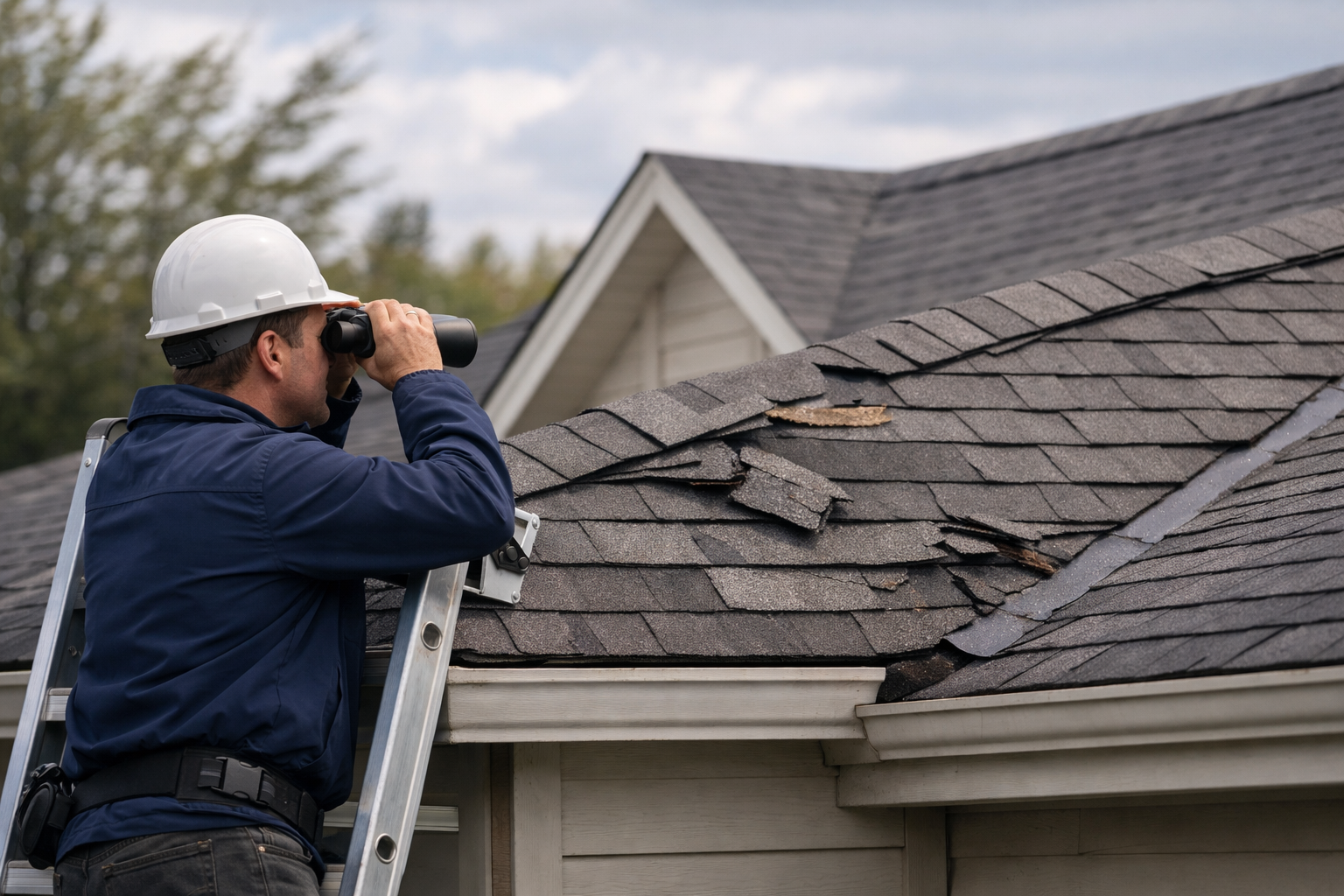
Wind speeds of just 45 to 57 mph can lift asphalt shingles and break their seals, even when nothing looks wrong from the ground. Roof wind damage rarely announces itself with a dramatic hole. It shows up as slow leaks, curled edges, and torn underlayment weeks after the storm passes.
This article covers how wind attacks a roof, where damage hides, and the exact checks that catch it early. You will learn how to document damage for insurance and how to find a qualified repair pro.
How Roof Wind Damage Actually Happens
Wind does not hit a roof evenly. It creates uplift pressure at the edges, corners, and ridge lines first. These pressure zones peel shingles from the inside out.
The leading edge of your roof takes the worst of it. On a gable-end home facing an open field or a coastline, that edge sees the highest suction forces during a storm.
The Three Ways Wind Breaks a Roof
- Direct lifting — Wind gets under a shingle tab and folds it back, snapping the adhesive strip.
- Seal fatigue — Repeated gusts loosen the thermal seal between shingle layers without visible movement.
- Debris impact — Branches, gravel, and neighboring roof material strike and puncture the surface.
Seal fatigue causes the most missed claims. A shingle can look flat and intact but no longer bond to the row below it. The next rainstorm drives water underneath.
Where to Look After a Windstorm
Most wind damage sits in five predictable spots. Check each one before assuming your roof survived intact. Do this from the ground with binoculars first for safety.
- Roof edges and rakes — Look for lifted or missing shingles along every perimeter line.
- Ridge caps — The peak shingles are exposed to the highest wind loads and tear off first.
- Flashing around chimneys and vents — Wind pulls metal flashing loose and creates entry points.
- Valleys — Where two roof planes meet, wind-driven debris collects and abrades the surface.
- The ground and gutters — Granule piles and shingle fragments confirm damage above.
A pile of black sand-like granules in your downspout splash zone is a red flag. It means the protective mineral coating is stripping off, which shortens shingle life fast.
Interior Signs You Should Not Ignore
Wind damage often shows up inside before the roof visibly fails. Water stains on ceilings, damp attic insulation, and daylight visible through roof boards all point to breaches.
Check the attic on a bright day after a storm. Any pinpoint of light means an opening that wind has widened.
Running Integrity Checks on Your Roof
Integrity checks are systematic inspections that confirm each roof component still holds its weather seal. They go beyond a glance and test bonding, fastening, and flashing.
Here is a practical sequence a roofer follows during a post-storm assessment:
- Lift test — Gently push up on shingle edges. Ones that flex freely have lost their seal.
- Fastener check — Look for exposed or backed-out nails, a sign of wind loosening.
- Flashing pull — Inspect metal joints for gaps and lifted corners.
- Moisture scan — Use a moisture meter on decking to find hidden saturation.
- Documentation — Photograph every finding with a reference marker for scale.
These integrity checks matter most for insurance. Adjusters accept photo evidence tied to a dated inspection far more readily than a verbal report.
What Wind Damage Costs to Address
Repair scope drives cost more than roof size. A few lifted shingles differ sharply from a compromised deck.
- Shingle replacement (small area) — Spot repairs run a few hundred dollars.
- Section reseal and re-nail — Mid-range, when many shingles lost their bond.
- Full slope replacement — Required when uplift damaged underlayment and decking.
- Emergency tarping — A stopgap before repairs to halt active leaks.
Matching new shingles to weathered ones is harder than most homeowners expect. Sun-faded shingles rarely match fresh stock, which pushes larger repairs toward full-slope work.
How to Address Roof Wind Damage the Right Way
Act within days, not weeks. Wind damage worsens with every follow-up rain, and delays complicate insurance claims.
Step-by-Step Response Plan
- Document first — Photograph all visible damage before touching anything.
- Stop active water — Cover breaches with a tarp if rain threatens.
- Call your insurer — File the claim with your dated photos attached.
- Get a written assessment — Have a roofer run full integrity checks and itemize findings.
- Compare repair scopes — Match each estimate against the same damage list.
Watch for storm-chasing contractors who knock on doors after a big wind event. Ask for a local address and verifiable reviews before signing anything.
Finding a Qualified Wind Damage Repair Pro
The right contractor knows how to spot seal fatigue, not just missing shingles. Restoration Locator helps you shortlist providers who handle storm and wind roof work.
Use the directory to narrow your search efficiently:
- Filter listings by location to find crews already working in your area after the storm.
- Check reviews for mentions of insurance claim support and wind repair specifically.
- Sort by service type to focus on storm damage and roofing restoration.
- Compare multiple providers so you never rely on a single estimate.
Prioritize contractors who offer a written integrity report. That document protects you during the claim and confirms the repair addressed every breach.
Preventing Future Wind Damage
Some upgrades cut future risk during your next repair. Ask your roofer about these when the work happens anyway.
- Six-nail fastening instead of the standard four per shingle.
- Wind-rated shingles tested to 110 to 130 mph uplift.
- Sealed ridge and starter strips that lock down the most exposed edges.
- Reinforced flashing at chimneys, vents, and valleys.
These choices add little cost during a re-roof but change how your home handles the next big blow.
Key Takeaways
Roof wind damage hides in seal fatigue and lifted edges long before it becomes a visible leak. Run integrity checks on edges, ridges, and flashing, then document everything for your insurer. Match repair estimates against the same damage list and favor pros who provide written reports.
Browse Disaster Cleanup & Restoration listings at https://restorationlocator.com to find a wind damage repair pro near you. Start your search today.