
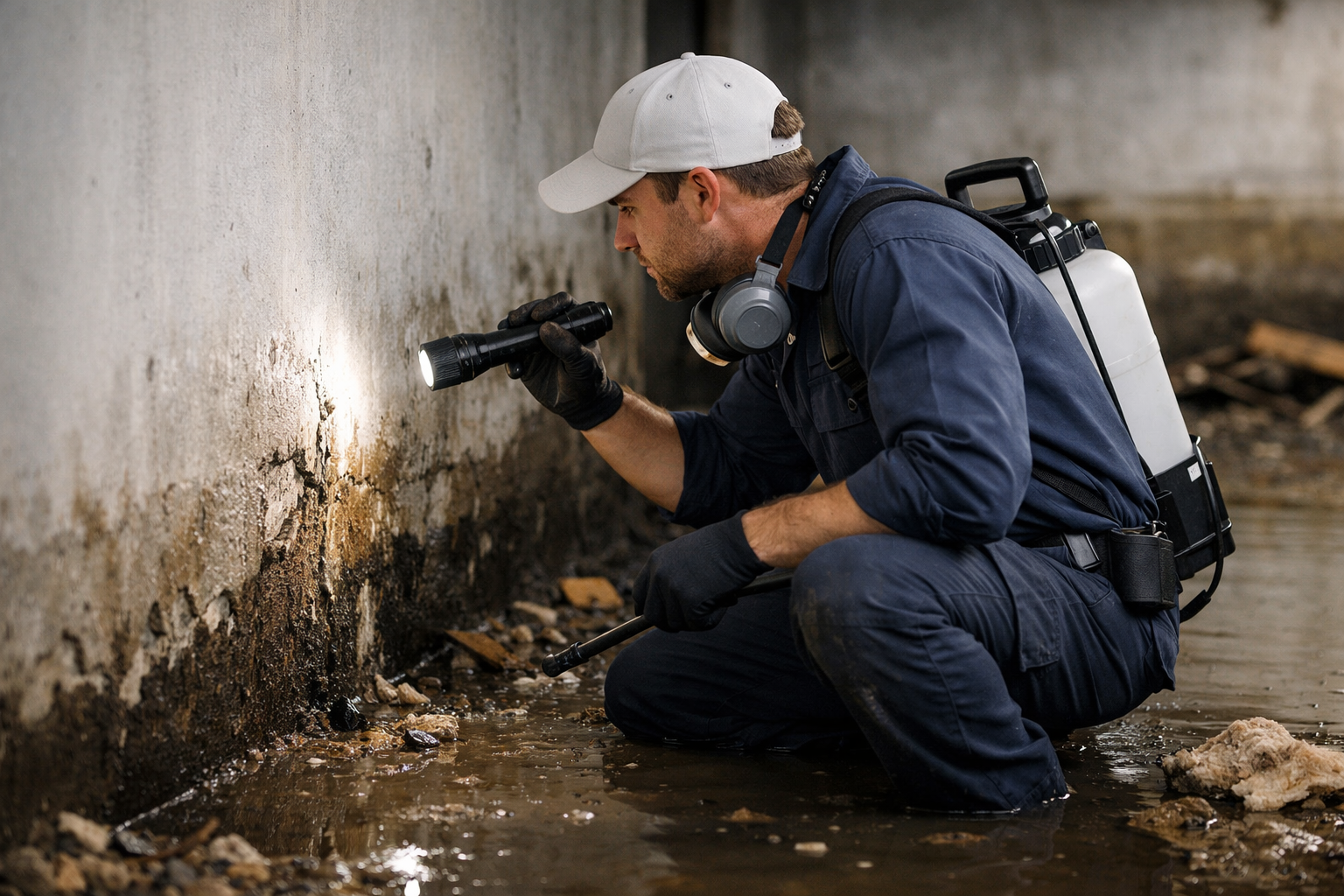
Standing water after a flood becomes a breeding ground within 48 hours, and mosquitoes are the first to arrive. Pest control post-flood demands a different skill set than routine extermination, because floodwater displaces rodents, attracts wood-destroying insects, and creates conditions termites and cockroaches favor.
This post shows you how to pick a pest control provider who understands water-damaged structures. You will learn which pests appear after flooding, what questions to ask, and how to filter listings on Restoration Locator to match your situation.
Why Flooding Triggers a Surge in Pest Activity
Floodwater changes pest behavior in ways dry-weather infestations never do. Rising water forces underground and ground-level pests to seek higher, drier shelter, and your home becomes that shelter.
The three-phase pest timeline after a flood looks like this:
- Days 1-3: Mosquitoes lay eggs in standing water. A single container of stagnant water can produce hundreds of larvae.
- Days 3-14: Displaced rodents move into wall cavities, attics, and crawlspaces above the waterline.
- Weeks 2-8: Moisture-loving termites, carpenter ants, and cockroaches colonize damp wood and saturated drywall.
A provider who treats only the visible mosquitoes misses the rodents and termites arriving later. Match your provider to the phase you are in.
Pests Most Common After Flooding
Mosquitoes breed in any water that sits for more than four days. Clogged gutters, buckets, and tire ruts count.
Rodents chew wiring and nest in insulation soaked by floodwater. Mice can enter gaps as small as a dime.
Subterranean termites follow soil moisture. Saturated foundations give them the humidity they need to expand galleries.
Cockroaches thrive in damp organic debris. Flooded kitchens and bathrooms give them food and shelter at once.
What Pest Control Post-Flood Should Include
Pest control post-flood is targeted treatment that addresses water-driven infestations alongside the moisture that causes them. A qualified provider inspects the structure, identifies active pests, and coordinates with drying and remediation work.
Ask any candidate whether their scope covers these five items:
- Moisture assessment. Pests return if damp wood and wet insulation stay in place. The provider should flag areas needing removal.
- Standing water treatment. Larvicide for mosquito breeding sites should be part of the first visit.
- Rodent exclusion. Sealing entry points matters more than trapping alone.
- Termite inspection. A moisture reading near the foundation reveals termite risk early.
- Follow-up scheduling. Post-flood pests appear in waves, so one visit rarely settles the problem.
How to Evaluate Providers on Restoration Locator
Restoration Locator lists Disaster Cleanup & Restoration providers, and many handle pest work as part of water damage recovery. Use the directory filters to match a provider to your flood scenario.
Filter by Location and Service Type
Sort listings by location first. A local provider knows which pests dominate your region after storms.
Filter by service type to find companies that combine drying and pest treatment. One coordinated team reduces gaps between remediation and extermination.
Check Reviews for Flood-Specific Work
Read reviews on each listing for mentions of flood or water damage. A five-star rating for routine ant control tells you little about storm response.
Look for review language describing rodent exclusion, mosquito treatment, or termite inspections after flooding. That signals hands-on flood pest prevention knowledge.
Compare Response Time
Because mosquito eggs hatch within days, response time carries real weight. Sort candidates by how quickly they schedule an initial inspection.
A provider who books you two weeks out lets the second pest wave establish itself. Prioritize those who inspect within 72 hours.
Questions to Ask Before Hiring
The right questions separate a general exterminator from a flood-aware provider. Ask each candidate the following:
- Do you inspect for moisture behind walls before treating? A yes shows they understand root causes.
- How do you handle rodent entry points, not just live rodents? Exclusion prevents re-entry.
- Will you coordinate with my water remediation team? Overlapping schedules avoid re-infestation.
- What is your follow-up plan for the second and third pest waves? One visit is rarely enough.
- Are your treatments safe around damp, occupied spaces? Flooded homes need products rated for wet conditions.
Write down each answer. Compare responses side by side before you decide.
Flood Pest Prevention Steps You Can Take Now
Flood pest prevention starts before a provider arrives. These actions cut down breeding sites and slow infestations while you wait for treatment.
- Drain standing water within 48 hours. Empty buckets, flowerpots, and blocked drains.
- Remove soaked drywall and insulation. Wet cellulose feeds termites and cockroaches.
- Seal obvious gaps. Steel wool in dime-sized holes blocks mice temporarily.
- Run dehumidifiers. Lower humidity discourages termites and roaches.
- Bag and remove wet food waste. Damp organic matter draws roaches within hours.
These steps reduce the load a provider inherits. They also lower the risk of a large infestation taking hold.
Coordinating Pest Control With Water Remediation
Pest treatment and water remediation should run on overlapping timelines. Treating pests before drywall dries wastes effort, because damp materials keep attracting them.
Ask whether your restoration provider handles pest work in-house. If not, choose a pest company willing to sequence its visits around the drying schedule.
Directory listings on Restoration Locator often note whether a company offers both drying and pest treatment. Filter for that overlap to keep one point of contact.
Red Flags to Avoid
Some providers treat every job the same, flood or not. Watch for these warning signs:
- No mention of moisture inspection during the quote.
- A single visit promised as a complete fix.
- No plan for rodent entry sealing.
- Reluctance to coordinate with your remediation team.
- Vague answers about product safety in wet conditions.
Any one of these suggests a provider unprepared for flood conditions. Move to the next listing.
Conclusion
Flooding drives mosquitoes, rodents, termites, and cockroaches into your home in predictable waves, and pest control post-flood must address moisture, not just insects. Choose a provider who inspects for water damage, seals rodent entry points, and coordinates with your remediation team across multiple visits.
Use location filters, flood-specific reviews, and response time to compare candidates. Browse Disaster Cleanup & Restoration listings on https://restorationlocator.com and start your search now.
Sources
- Centers for Disease Control and Prevention – Reentering Your Flooded Home
- U.S. Environmental Protection Agency – Mosquito Control
- Ready.gov – Floods