
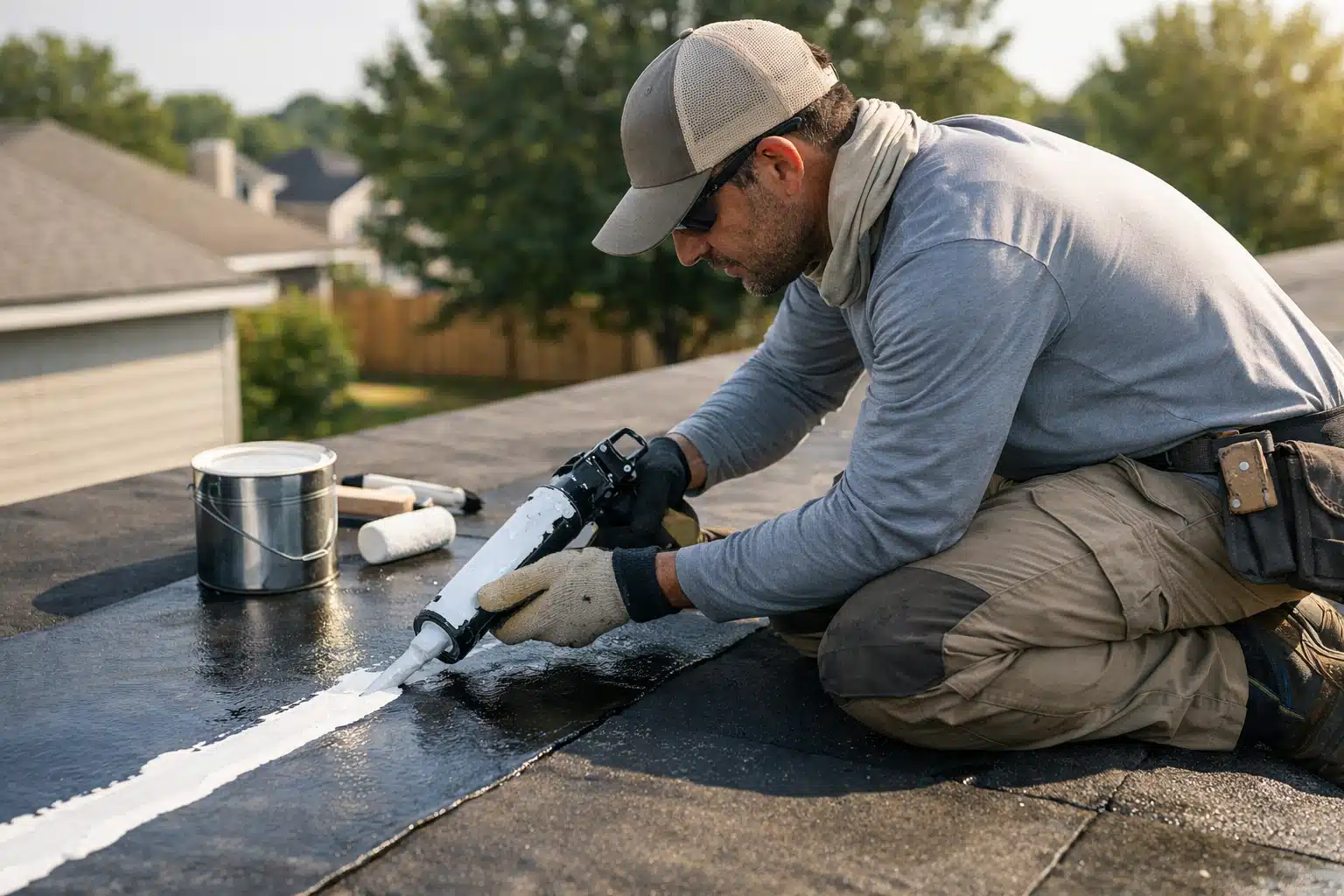
Late summer punishes repair work in ways spring and fall never do. High humidity slows drying times, afternoon storms soak fresh materials, and roof temperatures can hit 160°F on dark shingles. Picking the wrong summer restoration materials during this window means callbacks, mold, and warped installs by October.
This post breaks down which materials hold up in August and September conditions. You will learn how heat and moisture change material behavior, what to buy for specific repairs, and how to vet contractors who understand seasonal timing.
Why Late Summer Changes Material Selection
Material performance shifts with temperature and moisture. A caulk that cures in six hours during May might skin over in 45 minutes during a 95°F August afternoon. That fast skinning traps solvents and weakens the bond.
Late summer brings three conditions that damage standard repairs:
- Sustained heat above 90°F speeds adhesive cure and reduces working time.
- Relative humidity above 60% slows evaporation-based drying, extending timelines for paint and drywall mud.
- Afternoon thunderstorms introduce sudden moisture onto uncured surfaces.
Gulf Coast and Southeast crews plan around these factors daily. A contractor in Houston knows a 7 a.m. exterior seal beats a 2 p.m. one. That timing knowledge separates lasting repairs from redo jobs.
Choosing Summer Restoration Materials by Repair Type
Different repairs demand different heat and moisture tolerances. Match the material to both the job and the season.
Roofing Repairs
Asphalt shingle sealant strips activate with heat, which helps summer installs bond fast. That same heat can make shingles soft and easy to scuff or dent underfoot.
For late summer roof disaster repair, favor these picks:
- Modified bitumen or peel-and-stick underlayment for flat and low-slope sections. It bonds well in heat.
- Polyurethane roof sealants over silicone for storm-prone weeks, since they cure with moisture present.
- Class 4 impact-rated shingles in hail-active regions like Texas and Colorado.
Avoid pouring hot asphalt during peak afternoon heat. The blistering risk climbs when substrate temps exceed 140°F.
Drywall and Interior Repairs
Humidity is the enemy of interior finishing. Joint compound that dries in one day during winter can take three days in a humid August basement.
For interior work in humid weeks, use:
- Setting-type joint compound (hot mud) that cures chemically, not by air drying.
- Mold-resistant drywall for bathrooms, laundry rooms, and flood-damaged walls.
- Low-VOC acrylic primer rated for high-humidity application.
Run a dehumidifier before mudding. Pulling the room below 50% humidity cuts drying time in half.
Exterior Paint and Coatings
Paint failure spikes in late summer because crews apply it in wrong conditions. Direct sun on a hot wall flash-dries the surface before the coat levels.
Better material and timing choices include:
- Pick 100% acrylic latex rated for application up to 90°F.
- Follow the sun. Paint east walls in afternoon, west walls in morning.
- Check the label for a maximum surface temperature, not just air temperature.
Surface temperature matters more than air readings. A west-facing wall at 3 p.m. can be 30°F hotter than the shaded thermometer.
Flooring and Subfloor Materials After Water Damage
Water-damaged floors are a summer staple after storm flooding. The mistake most homeowners make is reinstalling too soon.
Subfloor moisture content must drop below 12% before new flooring goes down. In humid climates, that can take a week longer than expected.
Material picks that handle residual moisture better:
- Luxury vinyl plank (LVP) tolerates minor moisture and installs over slightly damp slabs when moisture barriers are used.
- Engineered hardwood resists cupping better than solid wood in humid air.
- Porcelain tile is the strongest choice for repeated flood zones.
Skip solid hardwood in flood-prone rooms. It expands and cups when moisture cycles through the seasons.
How to Read Material Labels for Seasonal Fit
Labels tell you whether a material fits late summer conditions. Most people never check them.
Scan for these three specs before buying:
- Application temperature range. Confirm the top number exceeds your local highs.
- Cure or dry time at high humidity. Some labels list adjusted times for 70%+ humidity.
- Moisture cure vs. air cure. Moisture-cure products actually benefit from humid air.
A polyurethane sealant labeled “moisture-cure” is your friend during a wet week. An air-cure product may never harden right.
Finding Contractors Who Match Materials to the Season
The material only works if installed at the right time by someone who knows the window. Seasonal timing is where local knowledge pays off.
Use Restoration Locator to filter and compare providers who understand these conditions:
- Filter listings by location to find crews familiar with your regional humidity and storm patterns.
- Check reviews for mentions of summer or storm-season repairs that held up.
- Sort by service type to match roofing, water damage, or full disaster repair specialists.
Ask any contractor two questions before hiring. First, what surface temperature do they cap application at? Second, how do they handle afternoon storm risk on multi-day jobs?
A crew with real answers has done this in August before. A vague answer signals a spring-schedule mindset applied to summer work.
Quick Reference: Summer Material Do’s and Don’ts
Keep these paired choices handy when buying summer restoration materials:
- Do pick moisture-cure sealants. Don’t use air-cure caulk before a rainy stretch.
- Do use setting-type joint compound. Don’t rely on air-drying mud in humid rooms.
- Do verify subfloor moisture below 12%. Don’t reinstall flooring on a rushed schedule.
- Do check surface temperature. Don’t trust the air thermometer alone.
Final Takeaways
Late summer heat and humidity reward materials built for those exact conditions. Moisture-cure sealants, setting-type compound, and moisture-tolerant flooring outlast standard picks in August and September. The right installer, working the right hours, makes the difference between a clean repair and a fall callback.
Browse Disaster Cleanup & Restoration listings on https://restorationlocator.com and find a crew that matches materials to your season. Start your search today.