
August and September bring the driest fuels of the year across much of the West. Grasses that greened up in spring have turned to tinder, and one spark can move faster than you can pack a car. Late summer wildfire preparation demands different tactics than early-season readiness.
This post covers what changes in late summer, how to harden your home against wind-driven embers, and what to have ready before an evacuation order lands. You will learn concrete steps you can finish in a weekend.
You will also learn how to line up restoration help early, since crews book solid the moment a fire is contained.
Why Late Summer Fire Risks Differ From Spring
Summer fire risks peak in late season because of cumulative dryness, not a single hot day. Fuel moisture in dead grass and brush drops below 10% by late August in states like California, Arizona, and Colorado. At that point, fire spreads through fine fuels almost as fast as wind can carry it.
Three conditions stack up in late summer:
- Cured vegetation: Annual grasses that were green in June are fully dead by September.
- Sustained heat: Weeks of high temperatures drive down moisture in logs and stumps that hold water longer.
- Wind events: Diablo, Santa Ana, and downslope winds arrive in late summer and early fall, pushing embers a mile or more ahead of a flame front.
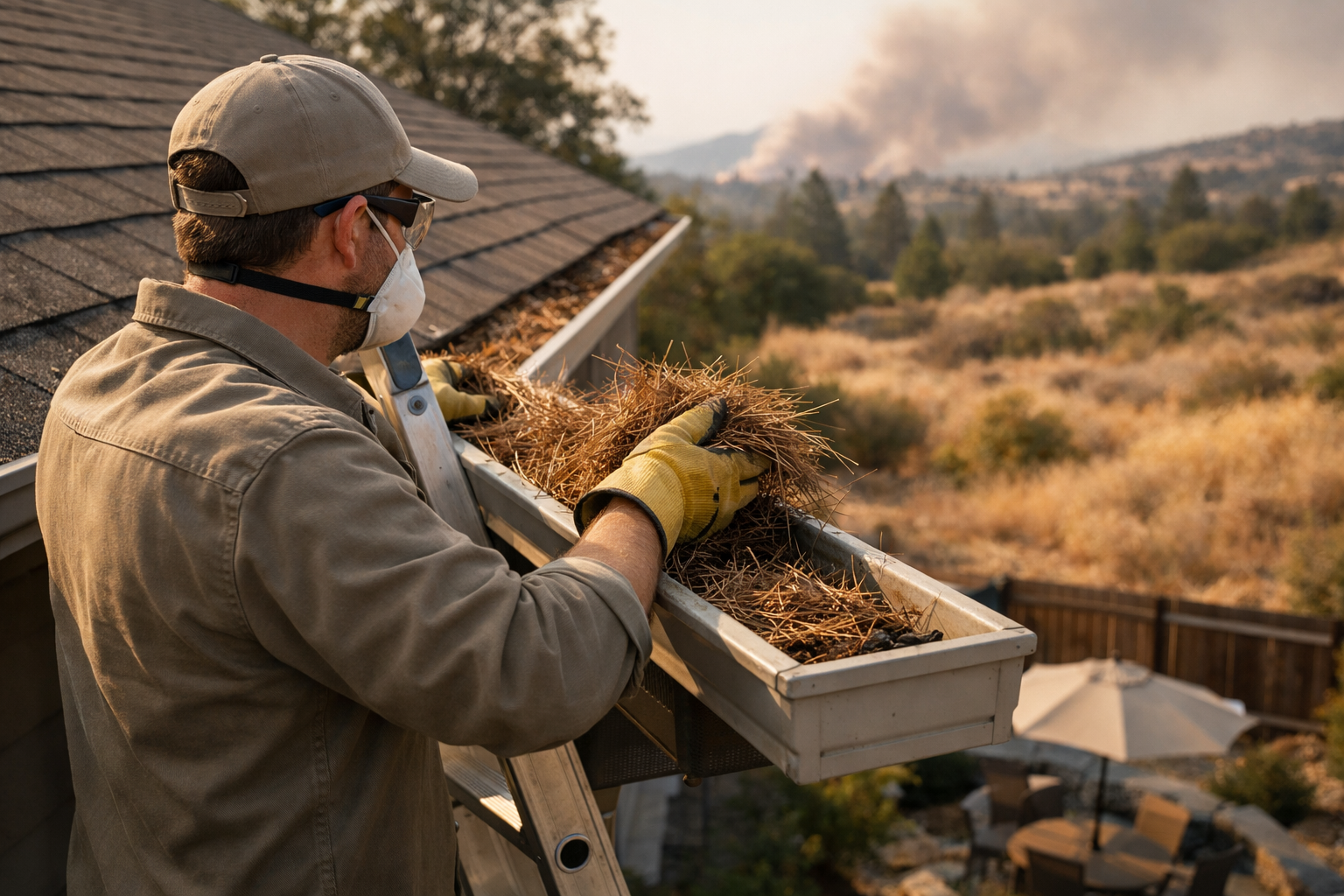
Ember cast causes most home losses, not direct flame contact. A house can ignite from embers landing in a gutter full of dry pine needles long before fire reaches the property line.
Harden Your Home Against Wind-Driven Embers
Home hardening means closing the small gaps where embers enter and land. Most ignitions start at the roof, vents, and the first five feet around the foundation. Fix those zones first.
The Roof and Gutters
Clear pine needles and leaves from your roof valleys and gutters. Dry debris in a gutter is a wick that carries flame to your fascia board. Metal gutter guards cut this risk by keeping needles out.
Replace missing or cracked roof tiles. A single gap under a Spanish tile lets embers reach the wood decking below.
Vents and Openings
Cover attic and foundation vents with 1/8-inch metal mesh. Standard vent screens let embers pass straight into your attic. This one fix stops a common ignition path that homeowners never see coming.
Seal gaps under garage doors with weather stripping rated for high heat. Wind pushes embers under the door and into a space full of cardboard boxes and paint cans.
The First Five Feet
Clear the zone touching your home of anything that burns. This means:
- Move firewood stacks at least 30 feet from any structure.
- Replace bark mulch beside the foundation with gravel or stone.
- Trim shrubs so no branch sits within five feet of a wall or window.
- Remove dead leaves from under decks and porches.
Create Defensible Space in Dry Conditions
Defensible space is the buffer of managed vegetation around your home that slows an approaching fire. Late summer changes how you manage this zone because green plants have dried out.
Work in two zones:
- Zone 1 (0-30 feet): Keep grass mowed to four inches or less. Space trees so crowns sit 10 feet apart. Remove dead branches within six feet of the ground.
- Zone 2 (30-100 feet): Cut back tall dry grass and thin dense brush. Break up continuous fuel so fire cannot run unbroken toward the house.
Mow early in the morning during late summer. A mower blade striking a rock in dry afternoon grass has started fires in California and Oregon. Check your local red flag warning before any outdoor work with power tools.
Build a Late Summer Go-Bag and Evacuation Plan
Late summer evacuations happen with little warning because fast winds push fire faster than crews can respond. Pack your go-bag now, not when smoke fills the sky. Keep it by the door you use most.
Each person in the home needs a bag with:
- Three days of medications and a copy of prescriptions
- Copies of insurance policies, deeds, and ID in a waterproof pouch
- N95 masks for smoke, one per person
- Phone chargers and a battery pack
- Cash in small bills, since power outages disable card readers
- Pet food, leashes, and carriers
Plan Two Exit Routes
Map two ways out of your neighborhood. Late summer fires have blocked single-road canyon communities, trapping residents. Drive both routes once so you know them in the dark and smoke.
Sign up for your county’s emergency alert system before fire season. Alerts reach your phone when an evacuation zone changes status.
Prepare for Smoke and Air Quality Damage
Smoke damages homes that never catch fire. Late summer smoke settles for weeks, coating walls, HVAC systems, and fabrics with acrid particulate. This residue needs specialized cleaning, not a wipe with a rag.
Before smoke arrives:
- Set your HVAC to recirculate and install a MERV 13 filter.
- Seal window gaps with painter’s tape if smoke is heavy.
- Run a portable air cleaner in the room where you sleep.
If smoke infiltrates your home, document it with photos and dated notes. Insurers pay for smoke remediation, and early records support your claim.
Line Up Restoration Help Before Fire Season Peaks
Restoration crews book out within hours after a wildfire is contained. Homeowners who research providers early get on the schedule first. Waiting until damage happens puts you at the back of a long line.
Use Restoration Locator to shortlist providers before you need one:
- Sort by location to find crews near your fire-prone area.
- Filter listings for smoke and fire damage cleanup specialists.
- Check reviews from homeowners who dealt with wildfire aftermath.
Save two or three names now. When an evacuation order lifts and you return to smoke residue or fire damage, you already know who to call.
A Quick Late Summer Readiness Checklist
Run through this list by early August:
- Clear roof and gutters of dry debris.
- Screen all vents with 1/8-inch metal mesh.
- Remove flammable material from the first five feet around the home.
- Mow and thin defensible space zones.
- Pack a go-bag for every family member and pet.
- Map and drive two evacuation routes.
- Enroll in county emergency alerts.
- Shortlist restoration providers on Restoration Locator.
Conclusion
Late summer wildfire preparation comes down to closing ember entry points, clearing dry fuel near your home, and packing an evacuation kit before winds arrive. The homes that survive are the ones hardened weeks ahead of the first spark. Smoke and fire damage need fast cleanup, and the crews fill up quickly once a fire ends.
Start your search today. Browse Disaster Cleanup & Restoration listings at https://restorationlocator.com and save your shortlist before fire season peaks.