
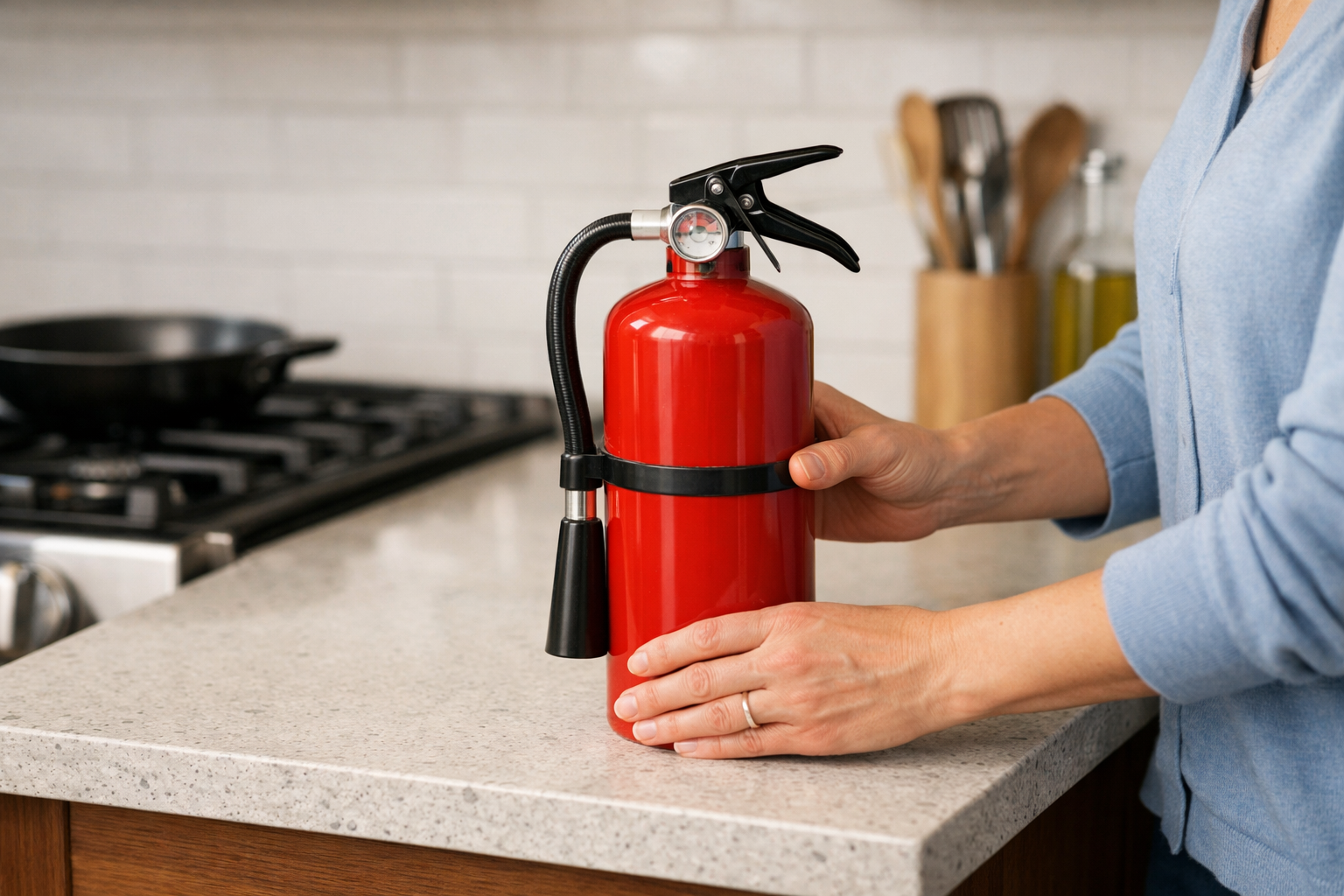
A grease fire on your stovetop and a smoldering laptop battery need two different responses. Grabbing the wrong fire extinguisher can spread flames or leave you exposed. Matching the extinguisher class to the fire type is the difference between a scorched pan and a gutted kitchen.
This post breaks down each extinguisher class, matches it to specific rooms in your house, and explains the ratings printed on the label. You will know exactly what to buy for the kitchen, garage, and bedroom by the end.
Fire Extinguisher Classes Explained
A fire extinguisher class tells you which fuels it can put out. Using the wrong class wastes seconds and can worsen the fire. Every unit carries a letter rating on its label.
- Class A — Ordinary combustibles: wood, paper, cloth, trash.
- Class B — Flammable liquids: gasoline, oil, paint, solvents.
- Class C — Live electrical equipment: wiring, appliances, outlets.
- Class D — Combustible metals: magnesium, titanium (rare in homes).
- Class K — Cooking oils and fats in commercial kitchens.
Most homes need a unit rated ABC. It covers the three fire types you are likely to face at home. Class D and K units serve workshops and restaurants, not standard households.
Reading the Number Ratings
Class A and B ratings include a number, like 3-A:40-B:C. The A number shows water-equivalent capacity in gallons. The B number shows square feet of flammable liquid coverage.
A 3-A rating equals about 3.75 gallons of water. A 40-B rating covers roughly 40 square feet. Higher numbers mean more firefighting power per unit.
Which Fire Extinguisher Fits Each Room
Different rooms carry different fire risks. Placing the right unit near each hazard cuts your response time. Here is where each type earns its spot.
Kitchen
Keep a wet chemical (Class K) or a small ABC unit within reach of the stove, but not directly above it. Reaching over flames to grab an extinguisher risks burns. Grease fires spread fast, so a Class K unit smothers cooking oil better than dry chemical.
For most home cooks, a compact ABC dry chemical extinguisher handles stovetop flare-ups. Never throw water on a grease fire. Water scatters burning oil and can trigger a flash.
Garage and Workshop
Store a larger ABC unit rated at least 3-A:40-B:C in the garage. Gasoline, paint thinner, and stored solvents create Class B risks here. A 5-pound or 10-pound unit gives you more discharge time for larger fires.
Mount it near the door, not deep inside. You want a clear path to the extinguisher and an exit behind you.
Bedrooms and Living Areas
A compact ABC extinguisher works for bedrooms, hallways, and living rooms. Electrical fires from space heaters, chargers, and lamps fall under Class C. A 2-pound unit stored in a closet handles small flare-ups.
Place one on each floor. Fires that start upstairs at night need a fast, nearby response.
Laundry Room and Utility Areas
Dryer lint fires are a documented cause of home structure fires. Keep an ABC unit near the washer and dryer. Clean the lint trap after every load to reduce the risk.
Dry Chemical vs. Other Extinguishing Agents
Dry chemical is the default agent in home extinguishers. Other agents fit specific needs. Here is how they compare.
- Monoammonium phosphate (ABC dry chemical) — Coats fuel and smothers flames. Leaves a corrosive yellow residue that damages electronics.
- Carbon dioxide (CO2) — Displaces oxygen, leaves no residue. Good for electronics and small Class B/C fires. Poor on Class A materials.
- Wet chemical (Class K) — Reacts with cooking oil to form a foam layer. Best for kitchen grease.
- Clean agent (halon replacement) — No residue, safe around servers and electronics. Costs more.
For a home office with expensive equipment, a small CO2 or clean agent unit avoids the residue mess. A dry chemical blast can ruin a computer even if it kills the fire.
How to Size and Position Your Extinguishers
The National Fire Protection Association recommends at least one extinguisher per floor. Placement matters as much as the unit itself. Follow these steps.
- Mount units on wall brackets between 3.5 and 5 feet off the floor.
- Position near exits, not in dead-end corners.
- Keep a 5-pound or larger unit in the garage and basement.
- Store compact 2-pound units in bedrooms and near the kitchen.
- Check the pressure gauge monthly; the needle should sit in the green zone.
Replace or service any extinguisher with a low gauge or a manufacture date over 12 years old. Rechargeable models can be serviced. Disposable units get replaced.
When an Extinguisher Is Not Enough
A home extinguisher stops a small, contained fire in its first 30 seconds. If flames reach the ceiling or spread past one object, leave the building. Call emergency services from outside.
Even a fire you put out yourself leaves damage behind. Smoke, soot, and dry chemical residue coat walls and belongings. Water and heat compromise drywall and framing.
This is where cleanup matters for lasting home safety. Soot is acidic and etches surfaces within hours. Professional restoration crews neutralize residue and prevent secondary damage.
Finding Fire Damage Restoration Help
After a fire, fast cleanup limits permanent loss. Restoration Locator lists fire and smoke damage providers by service area. Use the directory to compare crews near you.
- Filter listings by location to find crews in your county.
- Check reviews to see how past clients rated response time.
- Sort by service type for smoke, soot, and structural cleanup.
Acting within the first 24 to 48 hours reduces soot etching and odor absorption. A listed provider can assess damage the same day in many areas.
Key Takeaways
An ABC fire extinguisher covers most home fire risks, with a Class K or wet chemical unit adding protection in the kitchen. Match the size and agent to each room, keep one per floor, and check gauges monthly. Sound home safety pairs the right extinguisher with a plan for cleanup after the flames are out.
If fire or smoke has already damaged your home, browse Disaster Cleanup & Restoration listings now at https://restorationlocator.com and connect with a provider near you.