
Soot damage starts corroding surfaces within hours of a fire, long before most people finish talking to their insurer. That black residue is acidic, and it etches glass, discolors metal, and works into fabric fibers if left alone. This post breaks down how soot behaves and what to do about it, step by step.
You will learn how to identify different soot types, what to clean yourself, and what needs specialized equipment. The focus here is narrow on purpose: soot management, not general fire recovery.
What Soot Damage Actually Is
Soot is the fine black or brown powder left behind when materials burn incompletely. It is made of carbon particles, oils, and chemical residues that vary by what fuel fed the fire.
The type of soot matters more than most homeowners realize. It determines the cleaning method, and using the wrong one can smear residue permanently into a surface.
The Three Soot Types You Will Encounter
- Dry soot comes from fast-burning paper and wood fires. It is powdery and easier to remove with dry sponges.
- Wet soot results from smoldering, low-heat fires involving plastics or rubber. It is sticky, smeary, and has a strong odor.
- Protein soot forms from burned food, common in kitchen fires. It is nearly invisible but leaves a yellowish film and a stubborn smell.
A grease fire on a stovetop leaves protein residue that wipes clear but returns as odor. That single detail changes your entire cleaning plan.
First Steps Before You Touch Anything
Do not start wiping surfaces the moment the fire department leaves. Handling soot wrong can push acidic particles deeper into porous materials.
Follow this order in the first 24 hours:
- Confirm the structure is safe to enter. Wait for clearance from fire officials.
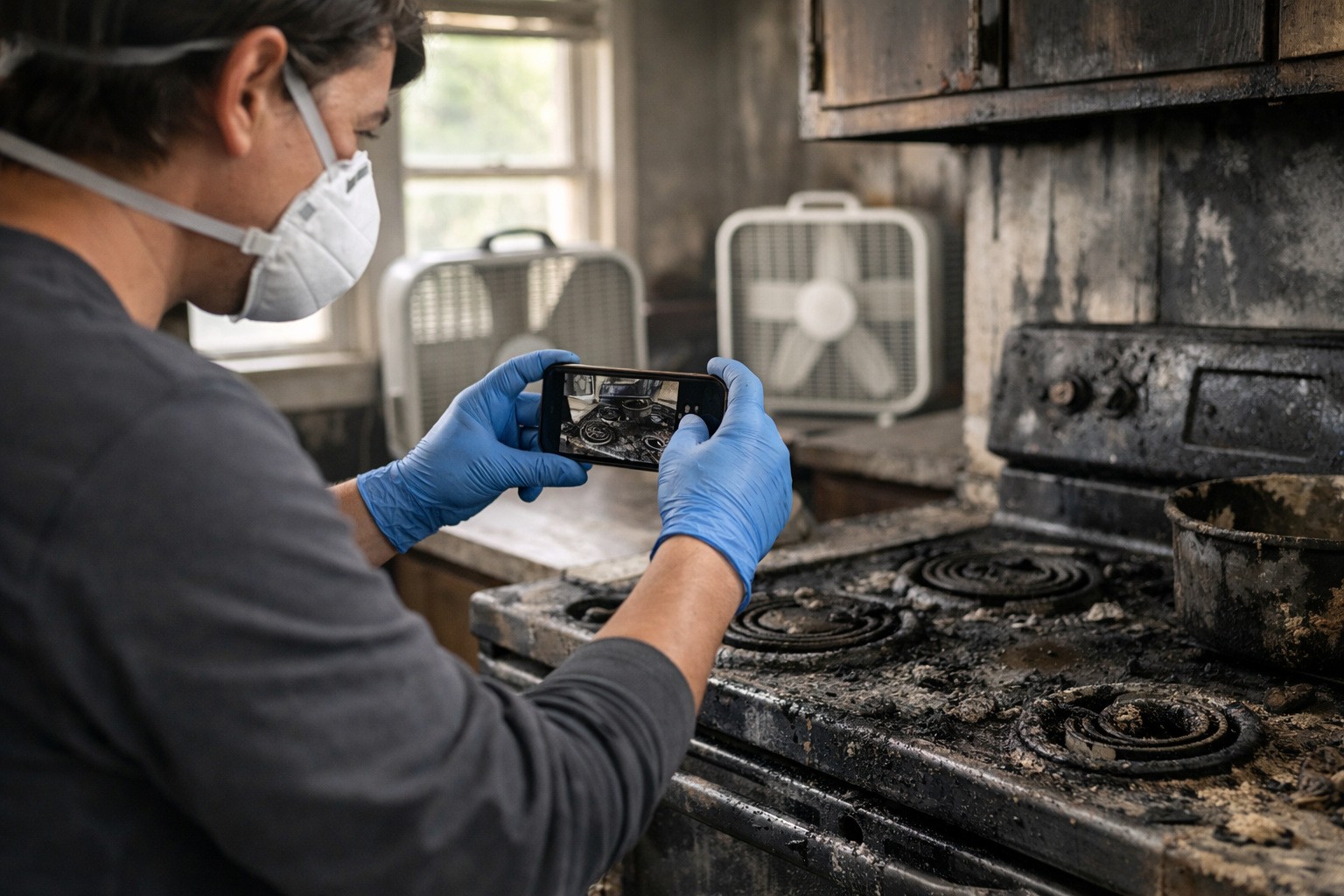
- Ventilate the space. Open windows and run box fans pointed outward to pull airborne soot out.
- Protect yourself. Wear an N95 respirator, nitrile gloves, and long sleeves. Soot particles are small enough to enter your lungs.
- Photograph everything. Document soot patterns on walls, ceilings, and belongings for your insurance claim.
- Turn off the HVAC system. Running it circulates soot into ductwork and clean rooms.
That last point trips up many homeowners. One running furnace can spread soot across an entire home in an afternoon.
How to Clean Soot Damage by Surface
Soot cleanup depends on the material underneath. A method that saves a painted wall can ruin unsealed brick.
Walls and Ceilings
Start with a chemical dry sponge, also called a soot sponge. Wipe in one direction without water first.
Water turns dry soot into a paste that stains. Only move to a mild degreaser after the loose residue is gone.
For protein soot on kitchen walls, a warm water and trisodium phosphate mix cuts the film. Test a small patch before treating the full surface.
Fabrics and Upholstery
Vacuum soot off fabric using a nozzle held slightly above the surface. Do not press the vacuum head down, since that grinds particles into fibers.
Curtains and clothing respond to a dry-cleaning approach better than a home washing machine. Washing wet soot in a machine can set stains across a whole load.
Metal and Glass
Metal fixtures corrode fast under acidic soot. Wipe them within the first day and coat with a light oil to stop pitting.
Glass and mirrors show etching from prolonged soot contact. A vinegar solution removes fresh film before it bonds.
The Odor Problem Most People Underestimate
Removing visible soot does not remove smoke odor. The smell lives in porous materials that surface cleaning cannot reach.
Odor molecules embed in drywall, insulation, and subflooring. This is where do-it-yourself efforts usually stall.
- Thermal fogging recreates the penetration path of smoke to neutralize trapped odor.
- Hydroxyl generators break down odor compounds while people occupy the space.
- Ozone treatment works fast but requires an empty, sealed room.
These require equipment homeowners rarely own. A lingering smell weeks after cleaning signals a deeper problem in the walls.
When Soot Damage Requires a Restoration Contractor
Some soot situations move past a weekend cleaning job. Call a contractor when any of the following apply.
- Soot spread into HVAC ductwork or reached multiple rooms.
- Wet or protein soot covers large areas.
- Odor persists after your cleaning attempts.
- Electronics or valuable items carry visible residue.
- Your insurance policy requires documented restoration work.
Electronics deserve special mention. Soot inside a device conducts electricity and corrodes circuit boards, so power stays off until a specialist inspects it.
What to Check Before Hiring
Not every fire cleanup company handles soot with the same care. Vet a contractor before signing anything.
- Verify IICRC certification in fire and smoke restoration.
- Ask about their soot testing method. A good crew identifies soot type before cleaning.
- Confirm insurance billing familiarity. Direct billing reduces your paperwork.
- Read recent reviews for comments on odor removal, not just visible cleanup.
On Restoration Locator, you can filter listings by location and sort by reviews to compare fire cleanup providers near you.
A Realistic Timeline for Soot Cleanup
Speed protects your property. Acidic residue does measurable harm on a predictable schedule.
- Within hours: Plastics and appliances yellow. Metal begins discoloring.
- Within days: Walls stain permanently. Metal pits and corrodes.
- Within weeks: Etching sets in glass and metal. Odor bonds into structural materials.
This timeline is why insurers push for quick action. A three-day delay can move a repairable item into the replacement column.
Mistakes That Make Soot Damage Worse
Certain instincts backfire during soot cleanup. Avoid these common errors.
- Wiping with a wet rag first. This smears dry soot into a stain.
- Running the air conditioner. It spreads particles through the whole home.
- Vacuuming with a standard household vacuum. It blows fine soot back into the air. Use a HEPA-filter unit.
- Painting over soot-stained walls. Residue bleeds through paint within weeks.
The paint mistake costs the most money. A sealing primer must go down first, or the stain returns.
Key Takeaways
Soot is acidic and time-sensitive, and its type dictates every cleaning decision you make. Handle dry soot with dry methods first, protect porous materials, and treat odor as a separate problem from visible residue.
For anything beyond a small, contained mess, a certified contractor saves both property and money. Browse Disaster Cleanup & Restoration listings and compare fire cleanup providers now at Restoration Locator.