
Wildfire smoke seeps into houses hours before flames get anywhere close. It travels miles on wind, sliding under doors and around window frames while you sleep. Stopping it starts long before the first evacuation alert.
This post covers the specific weak points where smoke enters, the filtration setup that keeps indoor air breathable, and the prep checklist that pays off during fire season. You will learn what to do now, not during a panic.
Where Wildfire Smoke Actually Gets Into Your Home
Smoke enters buildings faster than most people assume. Fine particles measure 2.5 microns or smaller, small enough to pass through gaps you cannot see. Sealing the biggest openings first cuts infiltration the most.
The most common entry points, in order of impact:
- HVAC intake vents pulling outdoor air directly inside
- Attic and crawlspace vents that pressurize the whole structure
- Recessed lighting and ceiling penetrations connecting to unsealed attics
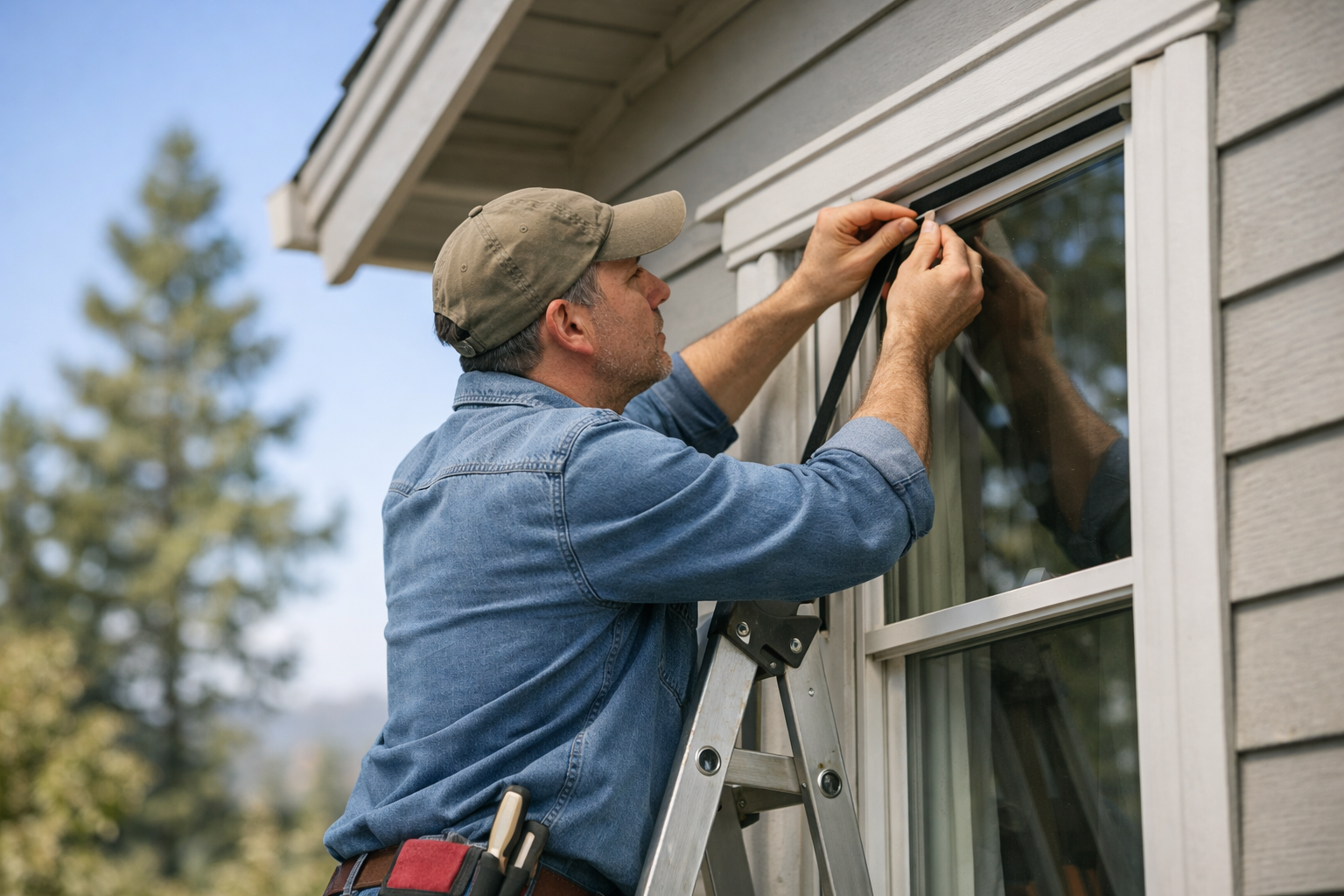
- Door thresholds and window sashes with worn weatherstripping
- Bathroom and kitchen exhaust fans with open dampers
- Electrical outlets and plumbing penetrations on exterior walls
A house built before 1990 leaks roughly twice as much air as newer construction. Older homes need more attention at the framing gaps and recessed fixtures.
Test Your Home for Leaks Before Fire Season
Run a smoke pencil or incense stick along window edges and door frames on a breezy day. Watch where the smoke stream bends. That movement marks the exact gap you need to seal.
Check exterior wall outlets by holding your hand near the plate. A draft there means the electrical box lacks a foam gasket. These cost under a dollar each and install in seconds.
Sealing Steps That Block Smoke Infiltration
Air sealing is the single most effective proactive measure against wildfire smoke. It reduces particle entry more than any filter alone. Work through these steps in order:
- Replace worn weatherstripping on all exterior doors and windows.
- Install foam gaskets behind outlet and switch plates on exterior walls.
- Add door sweeps to close the gap under entry doors.
- Caulk stationary window frames where siding meets glass casing.
- Cover unused fireplace flues with an inflatable chimney balloon.
- Seal attic access hatches with self-adhesive foam tape.
During an active smoke event, tape plastic sheeting over the least-used windows. Painter’s tape avoids leaving residue on frames. This buys hours of cleaner air in a room you can retreat to.
Set Your HVAC System to Recirculate
Switch your thermostat fan to recirculate mode, not fresh-air intake. This stops the system from pulling smoke indoors. Close any manual outdoor-air dampers on the return duct.
Upgrade the furnace filter to a MERV 13 rating. This captures fine smoke particles that standard MERV 8 filters miss. Confirm your blower motor can handle the added resistance first.
Air Filtration That Keeps Indoor Air Breathable
A portable HEPA air purifier removes 99.97% of particles at 0.3 microns. Size it to the room. Match the purifier’s clean air delivery rate to the square footage you want protected.
A cheaper option works when purifiers sell out during fire season. Build a Corsi-Rosenthal box from a box fan and four MERV 13 filters taped into a cube. It moves more air than most retail units at a fraction of the cost.
Designate one clean room for the household. Pick an interior bedroom with few windows. Run the purifier there continuously and keep the door closed.
Monitor Your Indoor Air Quality
A low-cost PM2.5 monitor tells you whether your sealing is working. Watch the number climb outdoors and stay low inside. If indoor readings rise, you have a leak to find.
Track outdoor conditions on the AirNow fire and smoke map. Readings above 150 AQI signal it is time to close everything and run filtration. Above 300, limit any outdoor exposure entirely.
Protecting the Structure Around Your Home
Home protection against smoke also means reducing what burns nearby. Embers landing on your property produce the thickest smoke and the highest damage risk. Clear the zone within five feet of your walls.
Practical steps that reduce ember and smoke load:
- Remove dry leaves from gutters and roof valleys
- Clear mulch and dead plants against the foundation
- Install 1/8-inch metal mesh over attic and crawlspace vents
- Move firewood stacks at least 30 feet from the house
- Trim tree limbs hanging over the roofline
Metal vent mesh blocks embers while still allowing airflow. It costs little and prevents the worst-case indoor smoke source: fire entering the attic itself.
What to Do After Wildfire Smoke Reaches Your Home
Smoke residue settles on surfaces and inside soft materials. It carries an acidic film that etches glass and corrodes metal over weeks. Fast action limits permanent damage.
Immediate steps once air clears:
- Replace the HVAC filter that ran during the event
- Wipe hard surfaces with a dry sponge before wet cleaning
- Launder or dry-clean textiles that absorbed odor
- Wash windows and metal fixtures to stop etching
- Document damage with photos for insurance
Heavy smoke intrusion, lingering odor, or visible soot inside walls calls for a restoration contractor. They use thermal fogging and ozone treatment to remove odor at the particle level. Household cleaning rarely reaches embedded smoke.
Finding Smoke Damage Cleanup Help
Restoration Locator lists disaster cleanup and restoration providers by service area. Filter listings by location to find companies near your ZIP code. Check reviews on each listing before you call.
Sort by the type of damage handled, including smoke and soot remediation. Compare providers side by side so you reach the right one during a high-demand fire season.
Key Takeaways
Blocking wildfire smoke comes down to sealing air leaks, running HEPA filtration, and setting HVAC to recirculate before smoke arrives. Clearing flammable material near your walls cuts the smoke load at its source. Fast cleanup after an event prevents permanent etching and odor.
Start your prep now, before the next red-flag warning. If smoke has already reached your home, browse Disaster Cleanup & Restoration listings at https://restorationlocator.com and find a provider in your area.