
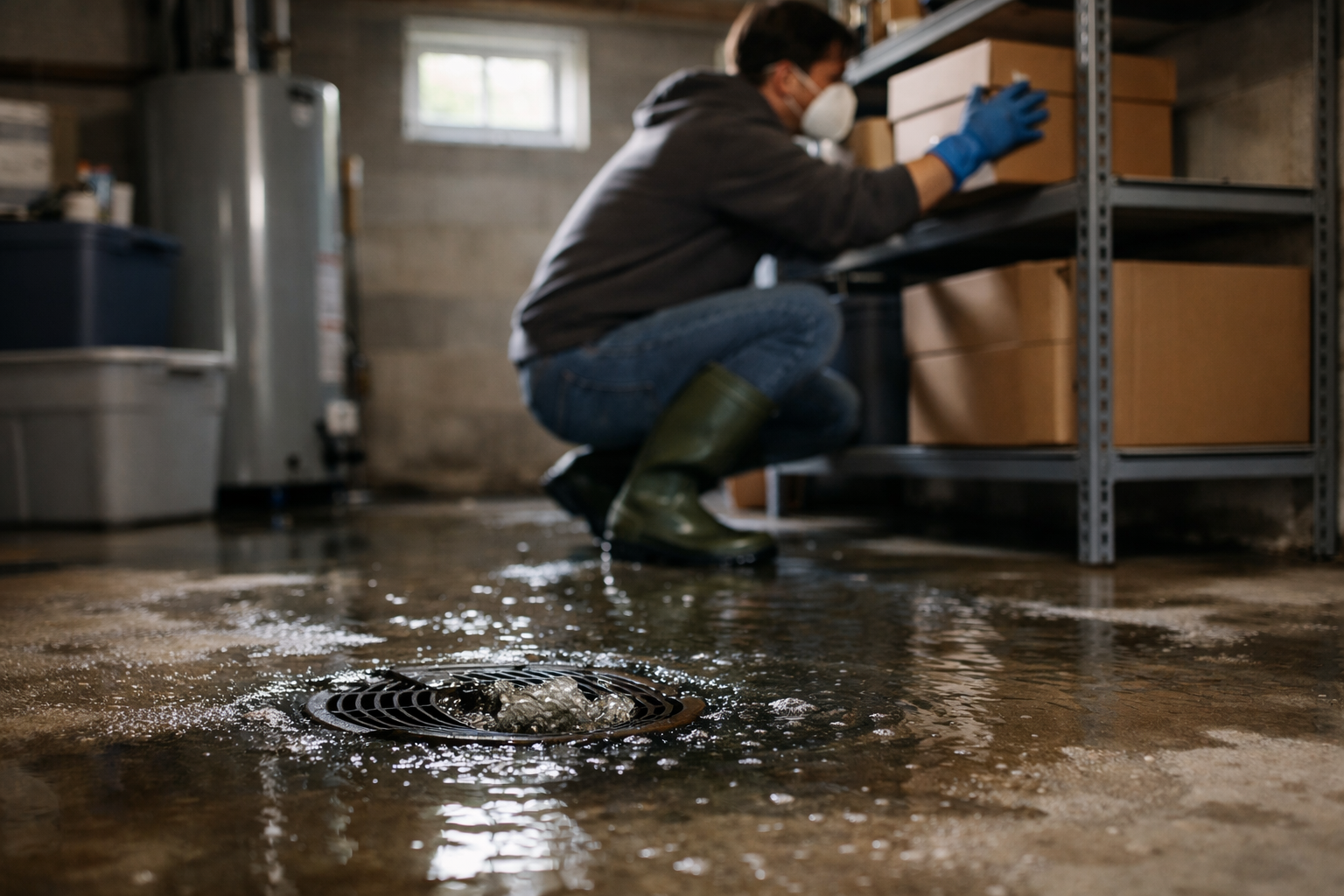
A sewer backup can push contaminated water into your basement within minutes, ruining floors, drywall, and belongings. The waste carries bacteria, viruses, and parasites that make cleanup a health hazard, not a weekend chore.
This post covers the exact steps to take in the first hour, how to protect your family, and how to stop it from happening again.
What a Sewer Backup Actually Is
A sewer backup is wastewater flowing in reverse, escaping drains, toilets, or floor grates instead of leaving your home. It usually starts at the lowest fixture, often a basement floor drain or a first-floor toilet.
The water is classified as Category 3 “black water” by the restoration field. It contains raw sewage and requires disposal, not just drying.
Common Warning Signs Before It Overflows
- Multiple drains gurgling at once when you flush
- A toilet backing up when you run the washing machine
- Sewage odor near basement floor drains
- Water pooling around the lowest drain in the house
If two or more fixtures act up together, the blockage sits in your main line, not a single pipe. That distinction changes how you respond.
Immediate Actions During a Sewer Backup
Stop using water first. Every flush, shower, or sink drain adds volume to the backup and spreads contamination further.
Follow these steps in order:
- Shut off water use. Tell everyone to stop flushing toilets and running taps immediately.
- Cut the power to affected areas. If water is near outlets or appliances, kill the breaker before entering.
- Protect yourself. Wear rubber boots, waterproof gloves, and an N95 mask before going near the water.
- Open windows. Sewer gas contains hydrogen sulfide, which is toxic in enclosed spaces.
- Move valuables up. Lift furniture, boxes, and electronics onto dry, higher surfaces if you can do it safely.
- Photograph everything. Document the water line, damaged items, and standing water for your insurance claim.
- Call your municipality. If the blockage is in the city main, the cleanup may fall to them.
Do not try to snake a main-line clog yourself during an active backup. Pressure can force more sewage into the home.
What Not to Touch
Porous items soaked in black water rarely survive. Carpet padding, mattresses, and upholstered furniture soaked in sewage are usually discarded, per health standards.
Do not run a shop vac on sewage without proper containment. Spraying aerosolized waste into the air spreads pathogens across the room.
Why Home Cleanup After Sewage Needs Specialized Handling
Home cleanup after a sewer backup is not the same as mopping a spill. The area needs extraction, disinfection, drying, and verification that bacteria levels are safe.
A cleanup crew follows a defined sequence:
- Water extraction using pumps rated for solids and sludge
- Removal of contaminated materials like drywall below the water line
- Cleaning and antimicrobial treatment of all salvageable surfaces
- Structural drying with air movers and dehumidifiers over several days
- Moisture and bacteria testing before rebuilding begins
Skipping the drying and testing steps invites mold, which appears within 24 to 48 hours in damp organic material.
How to Choose a Restoration Provider
Not every water damage company handles Category 3 sewage. Verify the provider works with black water before you sign anything.
On restorationlocator.com, use these filters to narrow your search:
- Filter by location to find crews that can arrive within hours, not days
- Check reviews for mentions of sewage or biohazard jobs
- Sort by certification and confirm IICRC training for water damage
- Read listings for 24/7 emergency availability
Ask any candidate if they carry biohazard disposal and if they document moisture readings. A crew that measures and records data protects your insurance claim.
Handling the Insurance Side
Standard homeowners policies frequently exclude sewer backup unless you add a specific rider. Check your declarations page for “sewer and drain backup” coverage.
Typical backup riders cost around $40 to $250 per year and cap payouts between $5,000 and $25,000. If you had a finished basement flooded, that cap matters.
File your claim the same day. Give the adjuster your photos, the timeline, and the cleanup company’s moisture logs.
Long-Term Prevention That Actually Works
The best defense against a repeat backup is a backwater valve. This one-way valve installed in your main sewer line lets waste flow out but blocks it from flowing back in.
Installation runs roughly $1,500 to $3,000, and many cities offer rebates for it. For a home that flooded once, the math favors installing one.
Other Steps That Reduce Risk
- Never pour grease down drains. Cooled fat hardens and narrows your line over time.
- Replace clay or Orangeburg pipe. Homes built before 1980 frequently have pipe that tree roots crack.
- Schedule a camera inspection every few years. A plumber scopes the line and spots root intrusion early.
- Disconnect downspouts from the sewer line. Rainwater overloading the system triggers backups during storms.
- Flush only waste and toilet paper. “Flushable” wipes do not break down and snag on rough pipe joints.
Root Intrusion Is the Silent Cause
Tree roots seek moisture and enter pipe joints as hairline cracks. Over a few seasons, a root mass can fill the entire pipe diameter.
If your yard has mature maples, willows, or elms near the sewer path, camera inspection every two years is a smart habit. Catching roots early costs far less than an emergency dig-up.
When to Handle It Yourself vs. Call a Pro
A clean-water overflow of one toilet, caught in minutes, may be within your ability to clean. Anything involving raw sewage across a floor is a biohazard job.
Use this quick test:
- Under 10 square feet, clean water, caught fast — you can likely manage it with disinfectant and drying
- Any sewage, any square footage over a floor — call a certified crew
- Water touching drywall, insulation, or subfloor — call a certified crew
- Odor lingering after cleaning — hidden moisture remains, call a certified crew
The cost of a full cleanup ranges from $2,000 to $10,000 depending on square footage and materials lost. Acting within the first hour keeps that number down.
Key Takeaways
Stop water use, protect yourself, document damage, and get sewage extracted fast to limit health risk and cost. Prevent repeats with a backwater valve, camera inspections, and smarter drain habits.
Find a certified crew that handles Category 3 sewage on restorationlocator.com. Start your search today and filter by location, reviews, and emergency availability.
Sources
- U.S. Environmental Protection Agency – Sewage and Basement Flooding Guidance
- Centers for Disease Control and Prevention – Cleanup of Flood Water and Standing Water
- Insurance Information Institute – Water Backup Coverage