
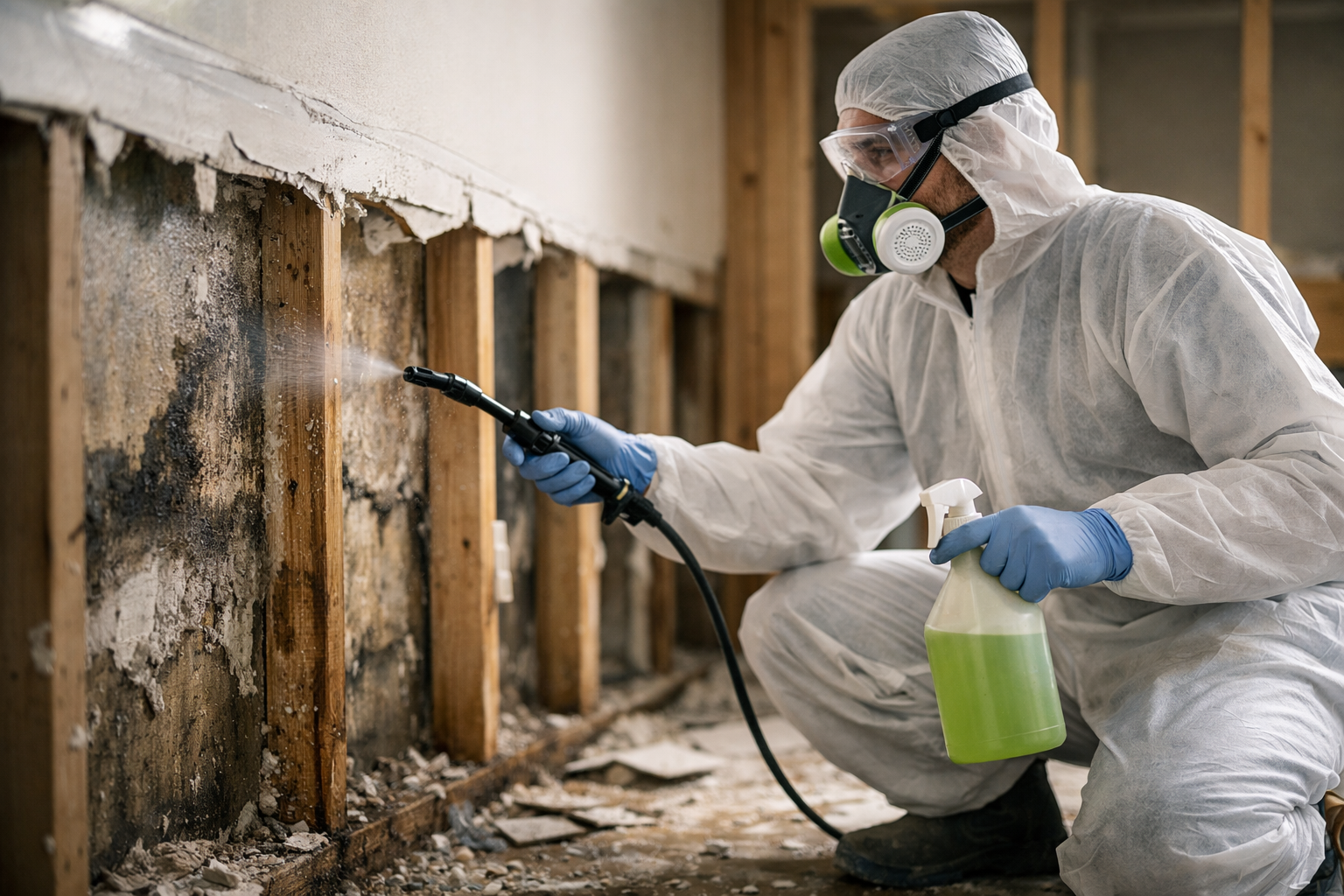
Green cleaning agents removed 99% of surface mold in a 2019 EPA-referenced lab test, matching some chlorine-based products. That number matters when your home floods or a fire leaves smoke residue on every wall. Eco-friendly restoration has moved past marketing claims into measurable performance.
This post shows you how to judge green products on results, not labels. You will learn which product types work, what certifications mean, and how to find contractors who use them.
What Eco-Friendly Restoration Products Actually Are
Eco-friendly restoration products are cleaning and remediation agents that reduce chemical toxicity, volatile organic compounds, and water pollution during disaster recovery. They replace harsh solvents, chlorine bleach, and petroleum-based sealants.
The category covers four main product types:
- Antimicrobials — plant-based or hydrogen peroxide agents that kill mold and bacteria
- Deodorizers — enzyme and citrus compounds that break down smoke and sewage odors
- Surface cleaners — low-VOC degreasers for soot and water stains
- Sealants and coatings — water-based encapsulants that lock in residual spores
The difference from conventional products is chemistry, not weakness. Hydrogen peroxide breaks down into water and oxygen. Chlorine bleach leaves chlorinated byproducts in your drains and soil.
How Effective Are Green Products Against Real Damage?
Green products handle most residential restoration jobs at performance levels near their chemical counterparts. Their success depends on the damage type and how they are applied.
Mold Remediation
Botanical antimicrobials using thymol (thyme oil) are EPA-registered to kill mold on hard surfaces. They work on drywall, tile, and framing lumber. A 2020 remediation project in a flooded Houston duplex used thymol-based products and passed post-clearance air testing.
The limit is porous material. No product, green or chemical, saves saturated drywall that sat wet for 72 hours. That material gets removed regardless of what you spray on it.
Smoke and Fire Odor
Enzyme deodorizers digest the organic compounds that cause smoke smell. They outperform masking agents that only cover odor temporarily. For protein fires — grease and kitchen fires — enzyme products break the molecular chain that causes lingering rancid smells.
Thermal fogging with water-based deodorizers reaches the same wall cavities as solvent foggers. The recovery time is longer because green products need dwell time to react.
Water Damage and Sewage
Category 3 water — sewage backups — demands strong disinfection. Hydrogen peroxide and quaternary compounds derived from plant sources meet the disinfection standard for gray and black water. They kill E. coli and other pathogens found in sewage.
The trade-off is dwell time. A chlorine product may act in 60 seconds. A peroxide product may need 10 minutes of wet contact to reach the same kill rate.
The Environmental Benefits That Change the Job Site
Green products reduce three specific harms during restoration work. The benefits reach the occupants, the crew, and the neighborhood water system.
- Indoor air quality — Low-VOC products keep the air breathable during work. Families with asthma or chemical sensitivity can reoccupy sooner.
- Water discharge safety — Rinse water from green cleaners does not carry chlorinated compounds into storm drains and groundwater.
- Crew health — Technicians avoid respiratory irritation from prolonged bleach and solvent exposure across daily jobs.
A restoration crew running six jobs a week faces far more chemical exposure than any single homeowner. Green products lower that cumulative dose across a career.
How to Evaluate a Green Product’s Real Performance
Judge eco-friendly products by evidence, not green packaging. Marketing terms like “earth-friendly” carry no legal definition. Use these checks before trusting a product or a contractor’s claim.
Check the EPA Registration
Any product claiming to kill mold, bacteria, or viruses must carry an EPA registration number. That number confirms lab-tested efficacy. Ask the contractor which registered products they use on antimicrobial work.
Look for Third-Party Certifications
Independent certifications separate real green products from vague claims. Two carry weight:
- Green Seal — verifies reduced toxicity and environmental impact
- EPA Safer Choice — confirms each ingredient meets safety criteria
Match the Product to the Damage Class
Confirm the product rating fits the job. A general surface cleaner cannot disinfect sewage. Ask for the product’s kill claims and dwell times in writing before work starts.
Green Products Versus Conventional: A Direct Comparison
Here is how the two categories stack up on the metrics that decide a restoration job.
- Kill rate on mold and bacteria — Green matches conventional when EPA-registered
- Speed of action — Conventional acts faster; green needs longer dwell time
- Indoor air impact — Green wins; far lower VOC and fume load
- Water discharge safety — Green wins; no chlorinated runoff
- Cost per job — Roughly equal; green premium has narrowed
- Reoccupancy time — Green allows faster return for sensitive occupants
The pattern is clear. Green products cost a little time on the clock but return cleaner air and safer discharge.
Finding Contractors Who Use Eco-Friendly Restoration Products
Not every contractor stocks green products. Use the directory to identify ones who do before you call.
On RestorationLocator.com, take these steps:
- Filter listings by location to find contractors near your damage site
- Check reviews for mentions of green products or low-odor work
- Sort by service type to match mold, fire, or water specialists
- Read provider profiles for stated certifications like Green Seal or Safer Choice
Ask two questions when you call. Which EPA-registered green products do you use? Can you provide dwell times and kill claims for my damage type?
When Green Products Are the Wrong Choice
Green products fit most jobs, but not every one. Honesty about limits builds trust.
- Heavy petroleum contamination may require solvent-based degreasers
- Extreme time pressure in commercial settings may favor faster-acting agents
- Certain industrial biohazards have narrow approved product lists
A good contractor tells you when a green product cannot meet the standard. Push back on anyone who claims one product does everything.
Key Takeaways
Eco-friendly restoration products match conventional performance on most residential mold, fire, and water jobs when they carry EPA registration. They trade slightly longer dwell times for cleaner indoor air and safer water discharge. Verify claims with EPA numbers and third-party certifications before trusting any provider.
Ready to find a contractor who uses green products? Browse Disaster Cleanup & Restoration listings now at RestorationLocator.com and filter by your location and service type.