
Why the Right Mold Remediation Questions Matter
Asking the right mold remediation questions before hiring a specialist can mean the difference between effective removal and recurring contamination. Mold issues require trained professionals who understand containment, removal techniques, and safety protocols.
The wrong contractor might spread spores to uncontaminated areas or fail to address the underlying moisture problem. This guide provides the exact questions to ask before making your decision.
Essential Licensing and Certification Questions
Start your evaluation by verifying the contractor’s credentials and legal standing in your area.
Are You Licensed and Insured?
Mold remediation licensing requirements vary by state, but legitimate specialists carry proper credentials. Ask to see their license number and verify it with your state’s licensing board.
Insurance coverage protects you from liability if damage occurs during the remediation process. Request proof of both general liability and professional liability insurance.
What Certifications Do Your Technicians Hold?
Look for certifications from recognized organizations like the Institute of Inspection, Cleaning and Restoration Certification (IICRC) or the National Association of Mold Remediators and Inspectors (NAMRI). These programs train technicians in proper removal techniques and safety protocols.
Certified technicians understand how to contain work areas, use protective equipment, and dispose of contaminated materials safely.
Critical Mold Remediation Questions About Process and Safety
Understanding the contractor’s approach reveals their expertise and commitment to safe practices.
How Do You Contain the Work Area?
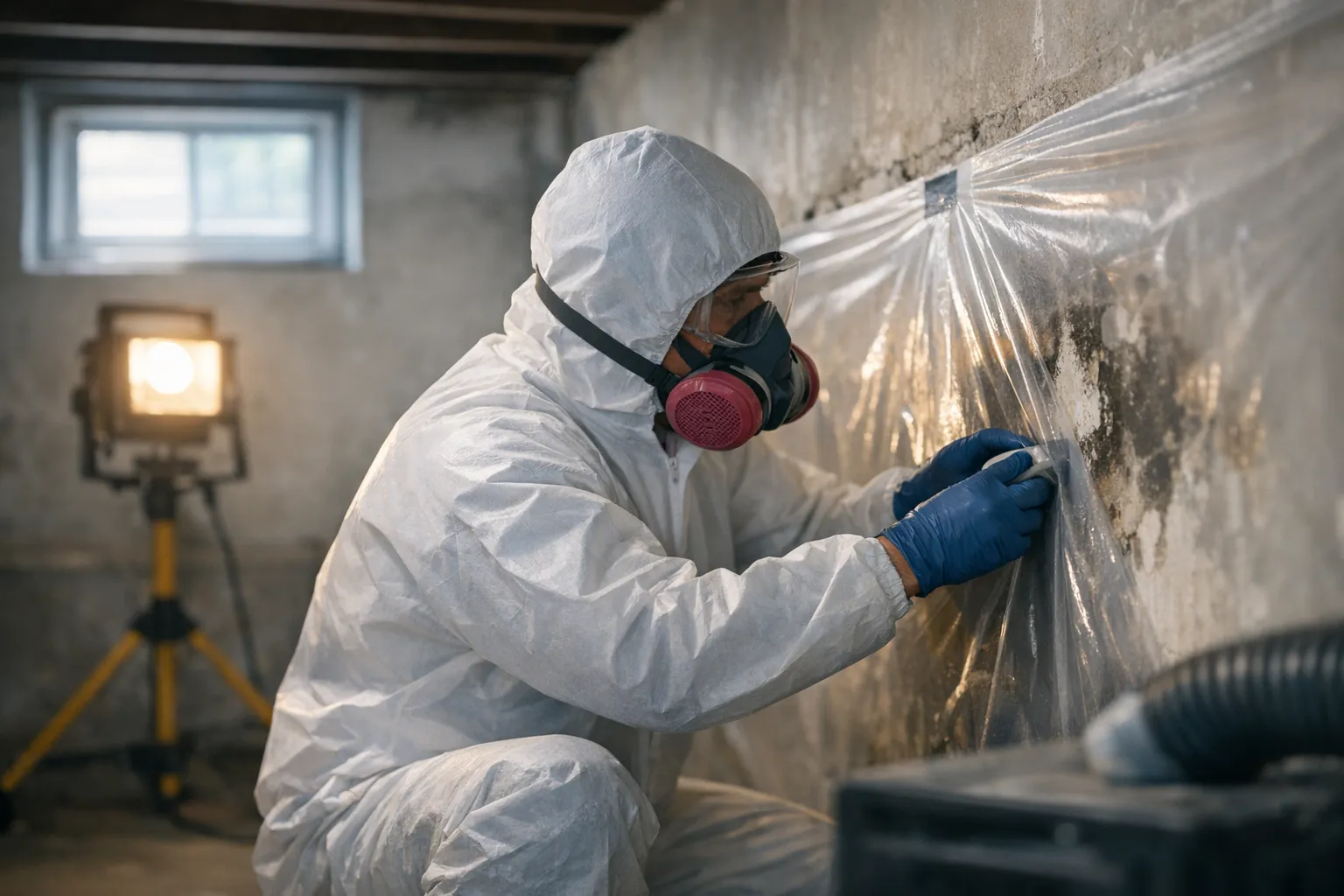
Proper containment prevents mold spores from spreading to clean areas during removal. Professional contractors use plastic sheeting, negative air pressure, and sealed entry points.
The specialist should explain their containment strategy based on your specific situation. Small areas might need simple barriers, while extensive contamination requires full containment with air filtration systems.
What Safety Equipment Do You Use?
Mold removal exposes workers to harmful spores and cleaning chemicals. Ask about respiratory protection, protective clothing, and air filtration equipment.
Professional teams wear N95 or P100 respirators, disposable coveralls, gloves, and eye protection. They also use HEPA air scrubbers to filter airborne particles during work.
How Will You Address the Moisture Source?
Removing visible mold without fixing the underlying moisture problem guarantees the contamination will return. The contractor should identify and recommend solutions for water intrusion, humidity issues, or ventilation problems.
This might involve coordinating with plumbers, roofers, or HVAC technicians to address structural issues that created the mold-friendly environment.
Testing and Assessment Questions
Professional mold remediation begins with proper assessment and includes post-removal verification.
Will You Perform Pre-Remediation Testing?
Some contractors conduct initial testing to identify mold types and contamination levels. Others rely on visual inspection and moisture readings.
While testing isn’t always necessary for visible mold, it can help determine the extent of hidden contamination and guide the remediation approach.
How Do You Verify Complete Removal?
Post-remediation verification ensures the work was successful. This might include visual inspection, moisture testing, or air sampling.
The contractor should explain their verification process and provide documentation showing the area meets acceptable standards for reoccupation.
Cost and Timeline Questions
Understanding project scope and pricing helps you make informed decisions and avoid surprises.
What Does Your Estimate Include?
Detailed estimates break down labor, materials, disposal fees, and any additional services. Ask for written estimates that specify:
- Square footage of affected areas
- Removal and disposal of contaminated materials
- Cleaning and disinfection procedures
- Protective equipment and containment setup
- Post-remediation verification
How Long Will the Project Take?
Timeline depends on contamination extent, access to affected areas, and drying requirements. Small projects might take 1-3 days, while extensive remediation can require weeks.
Ask about factors that could extend the timeline, such as hidden contamination discovery or weather delays for drying equipment.
What If You Discover Additional Contamination?
Mold often hides behind walls, under flooring, or in HVAC systems. Establish how the contractor handles scope changes and additional costs before work begins.
Request written approval procedures for any work beyond the original estimate.
Important Questions About Materials and Methods
Different situations require different removal approaches and cleaning products.
Which Materials Will You Remove Versus Clean?
Porous materials like drywall, insulation, and carpet typically require removal when heavily contaminated. Non-porous surfaces like metal, glass, and sealed wood can often be cleaned and disinfected.
The contractor should explain their decision-making process for each material type and contamination level.
What Cleaning Products Do You Use?
Professional mold remediation uses EPA-registered antimicrobial products designed for mold removal. Avoid contractors who rely solely on bleach or household cleaners.
Ask about product safety, ventilation requirements, and any precautions needed for pets or family members with sensitivities.
Red Flags to Watch For
Certain responses should raise concerns about a contractor’s qualifications or intentions.
Avoid contractors who cannot provide licensing information, refuse to put estimates in writing, or pressure you to sign contracts immediately. Door-to-door solicitors offering mold services often lack proper credentials.
Be wary of extremely low bids that seem too good to be true. Quality mold remediation requires specialized equipment, safety measures, and proper disposal procedures that cost money.
Documentation and Warranty Questions
Professional contractors provide documentation and stand behind their work.
What Documentation Will You Provide?
Request before and after photos, moisture readings, air quality test results, and certificates of completion. This documentation may be required for insurance claims or future property sales.
The contractor should also provide material disposal receipts showing contaminated materials were handled according to local regulations.
Do You Offer Any Warranty on Your Work?
Reputable contractors offer limited warranties on their remediation work, typically covering mold regrowth in treated areas for 6-12 months.
Understand warranty terms and exclusions, such as new water intrusion or failure to maintain proper humidity levels.
Making Your Final Decision
Compare responses from multiple contractors to these mold remediation questions before making your choice. Look for detailed answers, professional credentials, and comprehensive approaches to both removal and prevention.
The best value comes from contractors who address underlying causes, not just visible contamination. Their expertise protects your health and prevents costly recurring problems.
Find qualified mold remediation specialists in your area at https://restorationlocator.com. Browse verified contractors, read reviews, and compare services to make an informed hiring decision.