
Water carved the Grand Canyon over millions of years. It can hollow out the soil under your foundation in a single wet season. Foundation erosion protection means controlling where water flows around your home before it undermines the concrete holding everything up.
Climate shifts have made this problem worse. Heavier rain events, longer droughts, and freeze-thaw cycles now stress foundations built for milder conditions. This post covers how those changes attack your foundation and what you can do about each threat.
How Environmental Changes Attack Your Foundation
Soil erosion around a foundation happens when moving water strips away the earth that supports and surrounds your footings. Once that soil disappears, the foundation loses its lateral bracing. Cracks, settling, and bowing walls follow.
Different climate patterns cause different damage. Knowing which one you face changes your fix.
Intense Rain Bursts
A single inch of rain on a 1,500-square-foot roof sheds roughly 900 gallons of water. When downspouts dump that near the foundation, it saturates and washes soil away. Storm events that used to arrive once a decade now hit some regions every few years.
Drought Then Deluge
Clay soils shrink during long dry spells and pull away from foundation walls. When rain returns, water rushes into those gaps and expands the clay. This shrink-swell cycle cracks footings and loosens surrounding soil.
Freeze-Thaw Heaving
In cold regions, water in the soil freezes and expands about 9 percent. Repeated freezing lifts and drops the ground against your foundation. Each cycle erodes the tight contact between soil and concrete.
Foundation Erosion Protection: The Grading Fix First
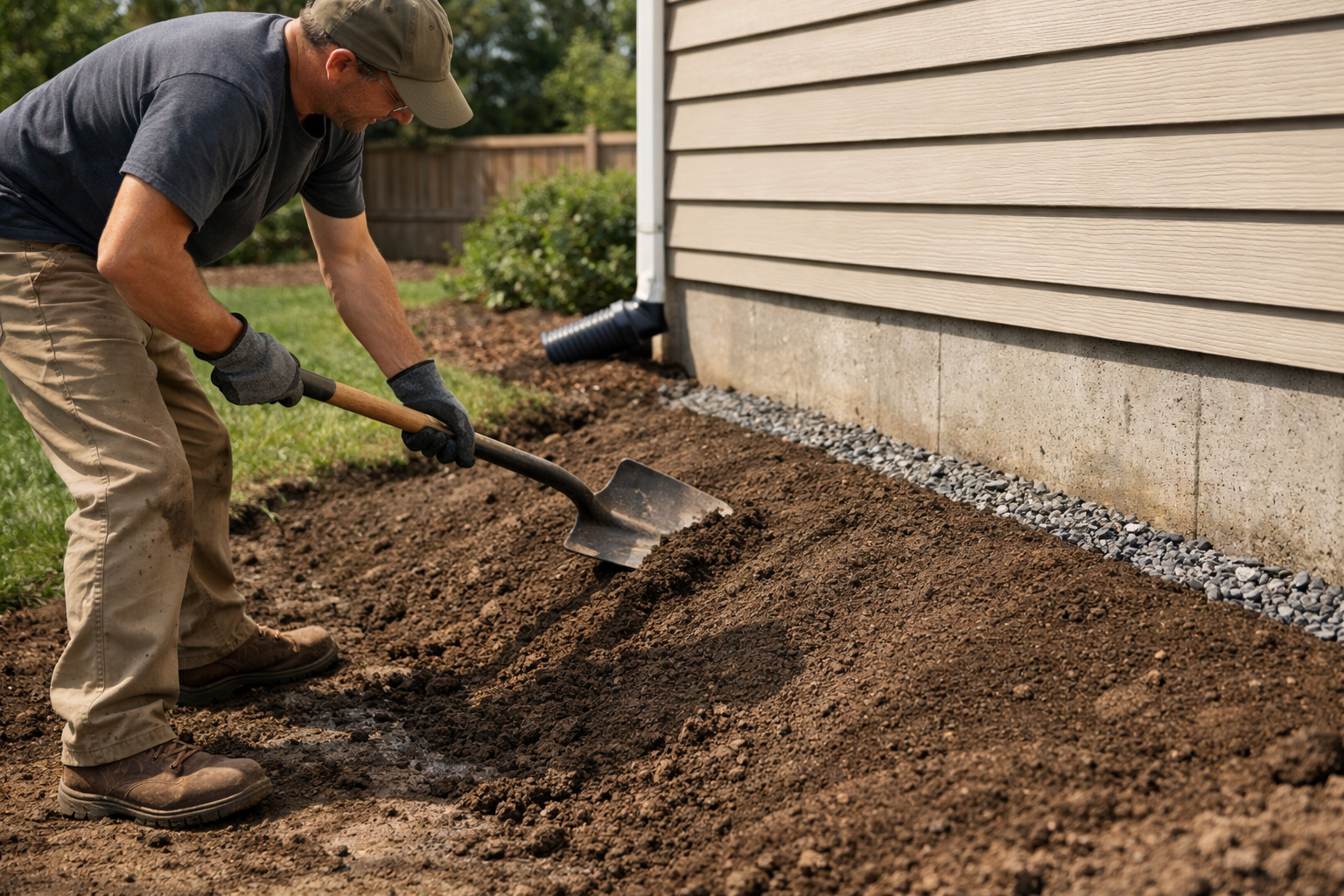
Proper grading is the single most effective foundation erosion protection step. The ground should slope away from your home at least 6 inches over the first 10 feet.
Flat or reverse-sloped yards send water straight into the foundation. Check yours with a simple test.
- Set a stake at the foundation wall and another 10 feet out.
- Tie a level string between them and measure the drop.
- Add clean fill soil near the wall if the drop is under 6 inches.
- Tamp and slope the fill away, keeping it 6 inches below siding.
Use clay-rich fill near the wall, not sandy topsoil. Sand drains fast and pulls water toward the footing.
Managing Roof Runoff and Downspouts
Gutters that overflow or dump water at the base of the wall cause most erosion I see on inspections. Fixing them costs little and stops a lot of damage.
- Extend downspouts at least 6 feet from the foundation.
- Add splash blocks or buried drain lines to move water further.
- Clean gutters twice a year so they carry water instead of spilling it.
- Check for pooling after storms and mark low spots to regrade.
A buried 4-inch corrugated pipe can carry roof water to a daylight point downhill. This keeps runoff from ever touching the foundation soil.
Drainage Systems That Stop Soil Loss
When grading and gutters are not enough, engineered drainage handles the rest. Two systems do most of the work.
French Drains
A French drain is a gravel-filled trench with a perforated pipe that redirects water away from the foundation. It intercepts groundwater before it reaches your footings. Install it on the uphill side where water enters your yard.
Swales and Berms
A swale is a shallow, planted channel that guides surface water around your home. A berm is a raised mound that blocks it. Both slow the water and cut its power to carry soil.
Using Plants to Anchor Soil
Deep-rooted vegetation holds soil in place better than mulch or rock alone. Roots create a living net that resists washout during heavy rain.
- Native grasses like little bluestem send roots 5 feet deep.
- Ground covers such as creeping juniper hold sloped soil.
- Shrubs planted 5 feet from the wall anchor soil without root pressure on concrete.
Keep large trees at a distance equal to their mature height. Their roots draw moisture from clay and worsen shrink-swell movement near footings.
Retaining Walls for Sloped Lots
Homes on hillsides face constant downhill soil pressure. A retaining wall holds that soil back and creates level, drainable ground near the foundation.
Any wall over 4 feet tall usually needs an engineer and a permit. Build in weep holes and gravel backfill so water drains instead of building pressure behind it.
Warning Signs You Already Have Erosion Damage
Catch these early and repairs stay affordable. Ignore them and you risk structural work costing tens of thousands.
- Diagonal cracks above doors and windows.
- Gaps between the foundation and the surrounding soil.
- Doors and windows that stick or will not latch.
- Exposed footings where soil has washed away.
- Standing water against the wall after rain.
If you see two or more of these, water has already moved soil. Act before the next storm season.
When to Call a Restoration Provider
Some erosion damage goes past DIY fixes. Basement flooding, visible foundation movement, or soil washout after a storm needs trained help fast.
A restoration provider can pump water, dry the structure, stabilize soil, and repair the affected foundation. On Restoration Locator, you can search by location to find providers near you. Filter listings by service type and check reviews before you contact anyone.
Use these steps to pick the right one:
- Sort by location to find providers who know your local soil.
- Filter by service for water damage or foundation work.
- Read reviews from homeowners with similar erosion problems.
- Compare listings before requesting an assessment.
Conclusion
Foundation erosion protection comes down to controlling water: grade the ground away, move roof runoff off-site, add drainage where needed, and anchor soil with deep roots. Watch for cracks and gaps that signal damage already underway. As storms grow heavier and dry spells longer, these steps matter more each year.
If erosion has reached your foundation, start your search on Restoration Locator to find qualified help near you.