
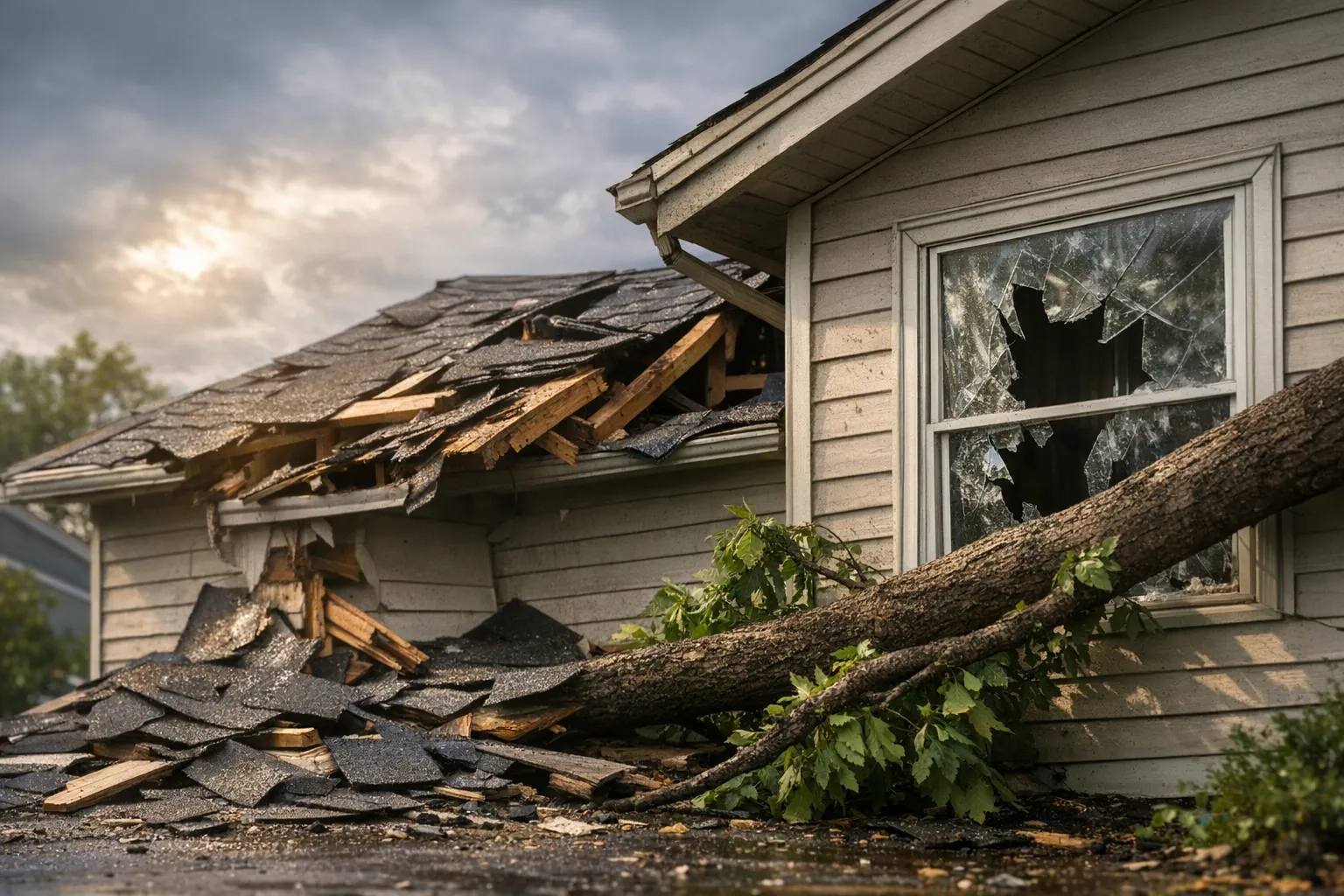
Spring storms strike with little warning, leaving behind damaged roofs, flooded basements, and shattered windows. The first 24-48 hours after storm damage occurs are critical for preventing secondary damage and beginning the recovery process.
Taking the right immediate steps can mean the difference between minor repairs and major reconstruction. This guide walks you through the essential actions to protect your property and family after spring storm damage strikes.
Immediate Safety Assessment After Storm Damage
Safety comes first when dealing with any type of storm damage. Never enter a damaged building until you’ve assessed potential hazards from the outside.
Look for these immediate dangers before entering:
- Downed power lines touching the structure
- Gas leaks (smell of natural gas or propane)
- Structural damage like sagging rooflines or cracked foundations
- Broken glass or debris blocking exits
- Standing water that could be electrically charged
Call emergency services immediately if you detect gas leaks or see downed power lines. Wait for professionals to clear these hazards before proceeding.
When to Stay Out Completely
Some damage requires immediate evacuation and professional assessment. Stay out if you notice major structural shifts, large cracks in walls or foundations, or if the building feels unstable when you walk inside.
Document Everything for Insurance Claims
Documentation begins the moment you can safely access your property. Insurance companies require detailed evidence of all storm damage to process claims effectively.
Take photos and videos of:
- Exterior damage from multiple angles
- Interior damage including water intrusion
- Damaged personal belongings
- Serial numbers and model information for damaged appliances
- Any temporary repairs you make
Date stamp all photos if possible. Many smartphones automatically include this information in photo metadata.
Create a Detailed Inventory
Write down everything damaged, including approximate ages and purchase prices. This inventory becomes invaluable during insurance negotiations.
Essential Post-Storm Steps for Water Damage
Water damage from spring storms can cause mold growth within 24-48 hours. Swift action prevents minor water intrusion from becoming a major remediation project.
Remove standing water immediately using pumps, wet vacuums, or buckets. The longer water sits, the more damage it causes to flooring, walls, and personal belongings.
Salvage What You Can
Move wet items to dry areas as quickly as possible. Furniture, electronics, and documents may be salvageable if dried within the first day.
Priority items for immediate drying include:
- Important documents and photographs
- Electronics (remove batteries and don’t power on until completely dry)
- Furniture with sentimental or high monetary value
- Clothing and textiles
Promote Air Circulation
Open windows and doors if weather permits. Set up fans to move air through affected areas. Dehumidifiers help remove moisture from the air and building materials.
Securing Your Property Against Further Damage
Temporary repairs prevent additional damage while you wait for professional restoration services. These post-storm steps protect your investment and may be required by your insurance policy.
Common temporary repairs include:
- Tarping damaged roofs with heavy-duty plastic sheeting
- Boarding up broken windows with plywood
- Sealing small leaks with roofing cement or waterproof tape
- Covering damaged siding to prevent water intrusion
Keep all receipts for temporary repair materials. Most insurance policies reimburse reasonable costs for preventing further damage.
Professional vs. DIY Temporary Repairs
Handle only simple, ground-level repairs yourself. Roof work, electrical issues, and structural damage require professional attention for safety and insurance purposes.
Contacting Insurance and Restoration Professionals
Report storm damage to your insurance company within 24 hours when possible. Many insurers have 24-hour claim reporting hotlines and mobile apps for faster processing.
Your insurance adjuster will need to inspect the damage before major repairs begin. However, you can start the restoration process with emergency services like water extraction and temporary weatherproofing.
Choosing Restoration Contractors
Storm damage restoration requires specialized equipment and expertise. Look for contractors with proper licensing, insurance, and experience with your specific type of damage.
Verify credentials by checking:
- State licensing requirements
- Better Business Bureau ratings
- References from recent similar projects
- Certifications from industry organizations
Special Considerations for Different Types of Spring Storm Damage
Different storms create unique challenges requiring specific response strategies. Understanding these differences helps you prioritize your recovery efforts.
Hail Damage Response
Hail primarily damages roofs, siding, and vehicles. Inspect gutters for dents and check attics for new light coming through the roof.
Hail damage may not cause immediate leaks but can compromise your roof’s integrity. Schedule professional inspections even if you don’t see obvious damage.
Wind Damage Assessment
High winds can cause structural damage that isn’t immediately visible. Check for loose or missing shingles, damaged flashing, and shifted building components.
Trees and large branches pose ongoing hazards after windstorms. Have damaged trees assessed by certified arborists to prevent future property damage.
Tornado Recovery Priorities
Tornado damage often requires complete reconstruction rather than repair. Focus on immediate safety, securing important documents, and finding temporary housing.
FEMA and local emergency services provide disaster relief resources for tornado victims. Register for assistance as soon as possible after the event.
Working with Your Insurance Company
Insurance adjusters typically arrive within 2-7 days after you file a claim. Prepare for their visit by organizing your documentation and creating a list of questions.
Common insurance questions include coverage limits, deductible amounts, and approval processes for restoration contractors. Get all agreements in writing.
Understanding Coverage Limitations
Standard homeowner’s policies cover most storm damage but may exclude certain types of water damage or require additional flood insurance. Review your policy details carefully.
Some policies require you to use preferred contractors from their network. Others allow you to choose your own restoration professionals.
Long-term Recovery Planning
Recovery from significant storm damage can take weeks or months. Create a timeline with your restoration contractor and insurance adjuster to set realistic expectations.
Consider upgrading damaged systems during reconstruction. Impact-resistant roofing, improved drainage, and reinforced structures can reduce future storm damage.
The immediate steps you take after storm damage determine how quickly and completely your property recovers. Quick action prevents secondary damage, preserves insurance coverage, and gets your life back to normal faster. Professional restoration contractors have the expertise and equipment to handle complex damage safely and effectively.
Start your search for qualified disaster cleanup and restoration professionals today at https://restorationlocator.com.