
The Cost of Believing Mold Myths
Common mold myths prevent homeowners from taking swift action when they discover fungal growth. These misconceptions can turn a manageable problem into extensive property damage and health concerns.
The reality about mold differs dramatically from popular beliefs. Understanding the truth helps you make informed decisions about remediation and when to call professionals.
Myth #1: All Mold Is Dangerous
The truth: Not all mold species pose serious health risks. Thousands of mold types exist in nature, and many are harmless to humans.
However, certain species like Stachybotrys chartarum (black mold) can produce mycotoxins. These compounds may cause respiratory issues, headaches, and other health problems in sensitive individuals.
The key factors that determine mold’s impact include:
- Species type and toxin production
- Amount of exposure
- Individual sensitivity levels
- Duration of contact
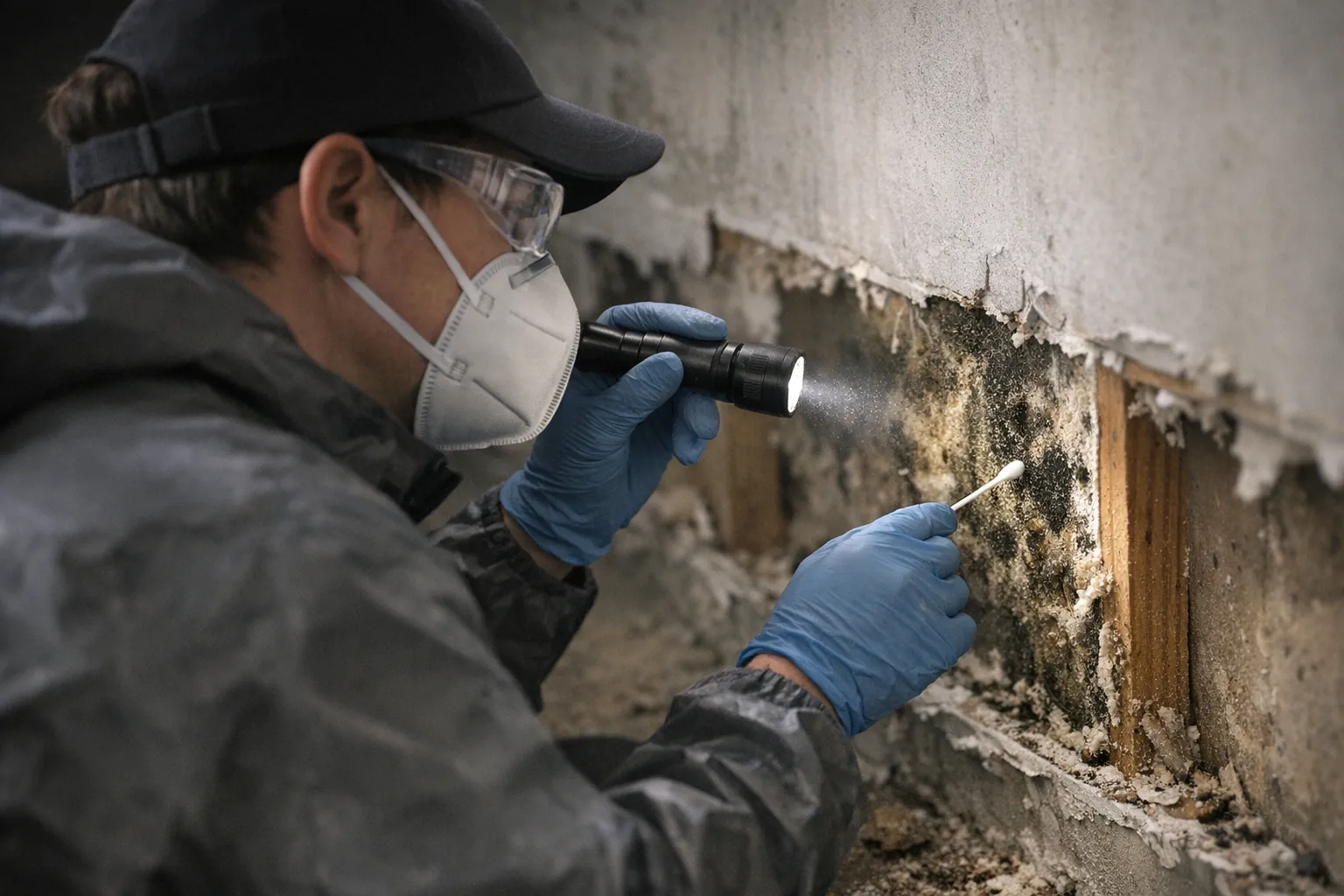
Professional mold inspectors can identify specific species through testing. This information guides appropriate remediation strategies.
Myth #2: Bleach Kills All Mold Permanently
Bleach removes visible mold from non-porous surfaces but fails as a complete solution. The chemical cannot penetrate porous materials like drywall or wood where mold roots extend.
Bleach also breaks down quickly when exposed to organic matter. Within hours, treated areas may show new growth if moisture conditions persist.
More effective approaches include:
- Removing moisture sources
- Using EPA-registered fungicides
- Replacing contaminated porous materials
- Installing proper ventilation systems
Why Professional Treatment Works Better
Certified remediation specialists use industrial-grade equipment and antimicrobial treatments. They address both visible growth and hidden contamination behind walls or under flooring.
Myth #3: You Can See All Home Mold Growth
Visible mold represents only part of the problem in most contaminated homes. Fungal growth often begins in hidden areas with poor ventilation and persistent moisture.
Common hidden locations include:
- Inside wall cavities near plumbing
- Under flooring materials
- Behind appliances and furniture
- In HVAC ductwork
- Attic spaces with roof leaks
Musty odors frequently indicate hidden mold before visual signs appear. Professional inspections use moisture meters and thermal cameras to locate problem areas.
Early Detection Saves Money
Finding mold early reduces remediation costs significantly. Small infestations may require only localized treatment, while advanced growth often demands extensive reconstruction.
Myth #4: Mold Only Grows in Dirty Homes
Cleanliness has minimal impact on mold development. The fungus requires only moisture, organic material, and moderate temperatures to thrive.
Even spotless homes develop mold when these conditions exist:
- High humidity levels above 60%
- Water leaks from pipes or roofs
- Poor ventilation in bathrooms or basements
- Flooding or water damage
Mold spores exist everywhere in the environment. They enter homes through open doors, windows, HVAC systems, and on clothing or pets.
Prevention Focuses on Moisture Control
Effective mold prevention targets humidity and water sources rather than surface cleaning. Maintaining indoor humidity below 50% prevents most growth regardless of cleanliness levels.
Myth #5: Small Amounts of Mold Aren’t Worth Addressing
Small visible patches often indicate larger hidden problems throughout the structure. Mold colonies release thousands of spores that spread to new locations quickly.
The EPA recommends professional remediation for areas larger than 10 square feet. However, any growth near HVAC systems or in occupied spaces deserves immediate attention.
Delaying treatment allows:
- Structural damage to building materials
- Spread to uncontaminated areas
- Increased remediation costs
- Prolonged health exposure risks
Myth #6: New Homes Don’t Get Mold Problems
Modern construction materials and building techniques can actually increase mold risks. Tight building envelopes trap moisture, while synthetic materials provide food sources for fungal growth.
New home mold issues often stem from:
- Construction moisture trapped in materials
- Inadequate ventilation design
- Installation defects in plumbing or roofing
- Improper grading causing foundation moisture
Many new homes experience mold problems within the first few years. Builder warranties typically don’t cover mold damage, making prevention crucial.
Quality Construction Reduces Risk
Proper moisture management during construction prevents most new home mold issues. This includes adequate drying time for concrete and lumber before closing the structure.
Debunking Mold Myths Through Professional Assessment
Believing common mold myths can delay necessary remediation and worsen property damage. Professional mold specialists provide accurate assessment and effective treatment plans.
Qualified contractors offer services including:
- Comprehensive mold inspections
- Species identification testing
- Moisture source detection
- Safe remediation protocols
- Prevention recommendations
Choosing the Right Professional
Look for certified mold remediation contractors with proper licensing and insurance. Experienced professionals follow industry standards and use appropriate safety equipment.
Review contractor credentials and customer feedback before making decisions. Multiple quotes help ensure fair pricing for remediation services.
When to Call Mold Professionals
Contact mold specialists immediately when you discover growth larger than a few square feet. Also seek professional help for recurring mold problems or growth near HVAC systems.
Other situations requiring professional intervention include:
- Mold growth after flooding
- Contamination in multiple rooms
- Health symptoms in occupants
- Suspected hidden mold problems
- Insurance claims requiring documentation
DIY Limitations
Homeowner mold removal works only for small surface areas on non-porous materials. Attempting large-scale remediation without proper equipment often spreads contamination throughout the home.
Making Informed Mold Decisions
Understanding the facts about home mold helps you respond appropriately to fungal problems. Quick action based on accurate information prevents minor issues from becoming major disasters.
Professional mold remediation provides the expertise and equipment needed for safe, effective treatment. Don’t let common misconceptions delay the help your home needs.
Browse qualified disaster cleanup and restoration professionals on https://restorationlocator.com to find certified mold specialists in your area.