How Restoration Technology Transforms Property Recovery
Restoration technology has revolutionized how professionals respond to water damage, fire damage, and mold contamination. Advanced tools and digital systems now enable faster detection, more precise treatment, and better documentation than ever before.
Today’s restoration companies use sophisticated equipment that can detect hidden moisture, map damage patterns, and monitor drying progress in real-time. This technology-driven approach reduces restoration time by up to 40% compared to traditional methods.
Detection and Assessment Technologies
Modern damage assessment begins with precision instruments that reveal problems invisible to the naked eye. These tools provide restoration professionals with detailed data to create targeted treatment plans.
Thermal Imaging Cameras
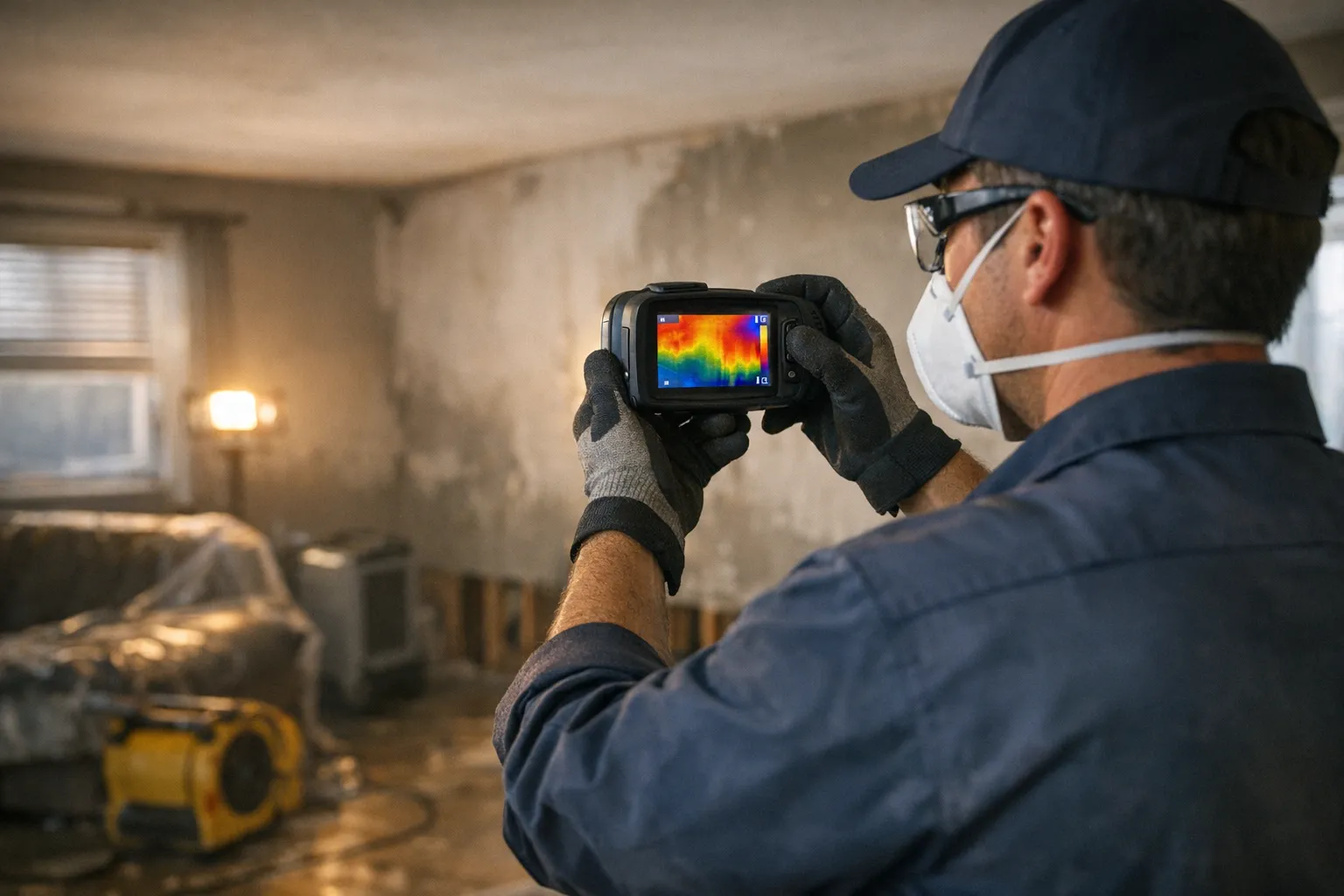
Thermal imaging cameras detect temperature variations that indicate moisture intrusion behind walls, under flooring, and in ceiling cavities. The cameras display heat signatures in different colors, making wet areas clearly visible.
This technology prevents costly demolition by pinpointing exact damage locations. Restoration teams can access only the affected areas, preserving unaffected materials and reducing overall project costs.
Moisture Detection Equipment
Digital moisture meters provide precise readings of water content in various materials. Pin-type meters penetrate surfaces for deep readings, while pinless meters scan large areas quickly.
Advanced moisture mapping systems create detailed reports showing water distribution patterns. These reports help insurance adjusters understand damage scope and support coverage decisions.
Air Quality Monitoring Systems
Real-time air quality monitors detect mold spores, volatile organic compounds, and other airborne contaminants. These devices provide continuous data during restoration work to track improvement progress.
The monitors alert teams when containment barriers fail or when air scrubbing equipment needs adjustment. This immediate feedback prevents cross-contamination between affected and clean areas.
Water Damage Restoration Technology
Water extraction and drying represent the most technology-intensive aspects of property restoration. Modern equipment operates with precision controls and automated monitoring systems.
Advanced Extraction Systems
Truck-mounted extraction units generate powerful suction that removes standing water from carpets, padding, and subflooring. These systems extract water faster and more completely than portable units.
Specialized extraction tools include:
- Weighted extraction tools that compress carpets during water removal
- Hardwood floor drying systems that inject dry air beneath flooring
- Wall cavity extraction equipment that removes water from inside walls
Drying and Dehumidification Equipment
Low grain refrigerant (LGR) dehumidifiers remove moisture from air more efficiently than conventional units. These machines operate effectively even in low-humidity conditions, speeding the drying process.
Air movers create controlled airflow patterns that maximize evaporation rates. Restoration professionals position these units based on psychrometric calculations to optimize drying efficiency.
Desiccant dehumidifiers handle extreme moisture conditions where refrigerant units become less effective. These systems work by absorbing moisture through chemical processes rather than condensation.
Fire and Smoke Damage Restoration Technology
Fire restoration requires specialized equipment to remove soot, neutralize odors, and clean damaged surfaces. Modern techniques combine chemical treatments with advanced cleaning systems.
Ultrasonic Cleaning Systems
Ultrasonic cleaners use high-frequency sound waves to remove soot and residue from delicate items. The vibrations create microscopic bubbles that lift contamination without damaging surfaces.
These systems clean electronics, jewelry, and decorative items that cannot withstand traditional cleaning methods. The process restores items that previously would have been considered total losses.
Ozone and Hydroxyl Generators
Ozone generators break down odor-causing molecules at the molecular level. These machines require empty buildings during operation due to ozone toxicity, but they eliminate odors that penetrate deep into materials.
Hydroxyl generators provide odor elimination that works safely around people and pets. These units produce hydroxyl radicals that neutralize odors and airborne contaminants without creating toxic byproducts.
Mold Remediation Technology
Mold remediation relies on containment systems and air filtration equipment to prevent spore spread during removal work. Technology improvements have made containment more effective and less disruptive.
HEPA Filtration Systems
High-efficiency particulate air (HEPA) filters capture 99.97% of particles 0.3 microns or larger. These filtration systems create negative air pressure in work areas to prevent mold spore migration.
Portable air scrubbers with HEPA filters clean air continuously during mold removal. The units cycle room air multiple times per hour to maintain safe working conditions.
Antimicrobial Application Systems
Electrostatic sprayers apply antimicrobial treatments with uniform coverage and minimal waste. The electrical charge causes treatment particles to wrap around surfaces for complete protection.
ULV (ultra-low volume) foggers distribute antimicrobial agents as fine mists that penetrate cracks and crevices. This application method reaches areas that conventional spraying cannot access.
Digital Documentation and Project Management
Digital systems streamline project documentation, communication, and progress tracking. These platforms connect field crews, project managers, and property owners in real-time.
Mobile Documentation Apps
Field crews use tablets and smartphones to capture photos, record measurements, and update project status instantly. These apps sync data to cloud platforms for immediate access by all team members.
Digital moisture logs track drying progress automatically when connected to monitoring equipment. This automation reduces paperwork and provides more accurate records for insurance claims.
3D Imaging and Mapping
3D laser scanners create precise property models that document pre-loss conditions and damage extent. These scans support accurate estimates and help prevent disputes during restoration work.
Drone surveys assess roof damage and other hard-to-reach areas safely and efficiently. The aerial imagery provides detailed documentation for insurance adjusters and restoration planning.
IoT and Remote Monitoring Systems
Internet of Things (IoT) sensors provide continuous monitoring of temperature, humidity, and equipment performance during restoration projects. This data helps teams respond quickly to changing conditions.
Remote monitoring systems alert restoration managers when equipment malfunctions or when environmental conditions fall outside target ranges. These notifications prevent delays and ensure consistent progress.
Property owners can access real-time dashboards showing restoration progress and environmental conditions. This transparency builds trust and reduces the need for frequent site visits.
Benefits of Advanced Restoration Technology
Technology adoption delivers measurable improvements in restoration outcomes and customer satisfaction. Modern equipment and systems provide advantages for both restoration companies and property owners.
Faster Project Completion
Automated monitoring systems and efficient equipment reduce restoration timeframes significantly. Properties return to normal use weeks earlier than with traditional methods.
Rapid moisture detection prevents secondary damage that extends project timelines. Early intervention stops mold growth and structural deterioration that complicate restoration work.
Improved Accuracy and Quality
Digital measurements eliminate guesswork and provide objective data for treatment decisions. This precision reduces the risk of incomplete drying or missed damage areas.
Real-time monitoring ensures consistent environmental conditions throughout the restoration process. Stable conditions produce better outcomes and reduce the likelihood of recurring problems.
Better Documentation and Communication
Digital records provide complete project histories that support insurance claims and warranty work. Detailed documentation protects both restoration companies and property owners.
Mobile apps and web portals keep all stakeholders informed of project progress. Clear communication reduces misunderstandings and builds confidence in the restoration process.
Choosing Technology-Equipped Restoration Providers
Property owners should evaluate restoration companies based on their technology capabilities and equipment quality. Modern tools indicate a commitment to efficient, high-quality service.
Look for companies that use thermal imaging for damage assessment, digital moisture monitoring for drying projects, and mobile apps for project communication. These technologies demonstrate professional capabilities.
Ask potential providers about their equipment maintenance schedules and staff training programs. Well-maintained equipment and trained operators produce better results than outdated tools and inexperienced crews.
The Future of Restoration Technology
Artificial intelligence and machine learning will further improve damage assessment accuracy and treatment planning. These systems will analyze historical data to predict optimal restoration strategies.
Robotic systems may handle routine cleaning and debris removal tasks in hazardous environments. This automation will improve worker safety and reduce labor costs for large-scale projects.
Advanced materials and treatment methods will enable restoration of items previously considered unsalvageable. These innovations will reduce replacement costs and preserve items with sentimental value.
Restoration technology continues advancing rapidly, with new capabilities emerging regularly. Companies that invest in the latest equipment and training provide superior service and better outcomes for property owners.
When disaster strikes your property, choose restoration professionals equipped with modern tools and digital systems. Browse certified restoration providers who use advanced technology to deliver faster, more effective property recovery. Start your search today.