Understanding Water Damage Restoration Service Categories
Water damage restoration services fall into four main categories: emergency mitigation, structural drying, content restoration, and mold remediation. Each addresses specific aspects of water damage recovery, from immediate response to long-term prevention.
The right service combination depends on your damage extent, water source, and timeline. Some situations need just one service type, while others require coordinated efforts across multiple categories.
Emergency Water Mitigation Services
Emergency mitigation stops ongoing water damage within the first 24-48 hours. These teams focus on source control and immediate stabilization rather than full restoration.
Emergency services include:
- Water source identification and stoppage
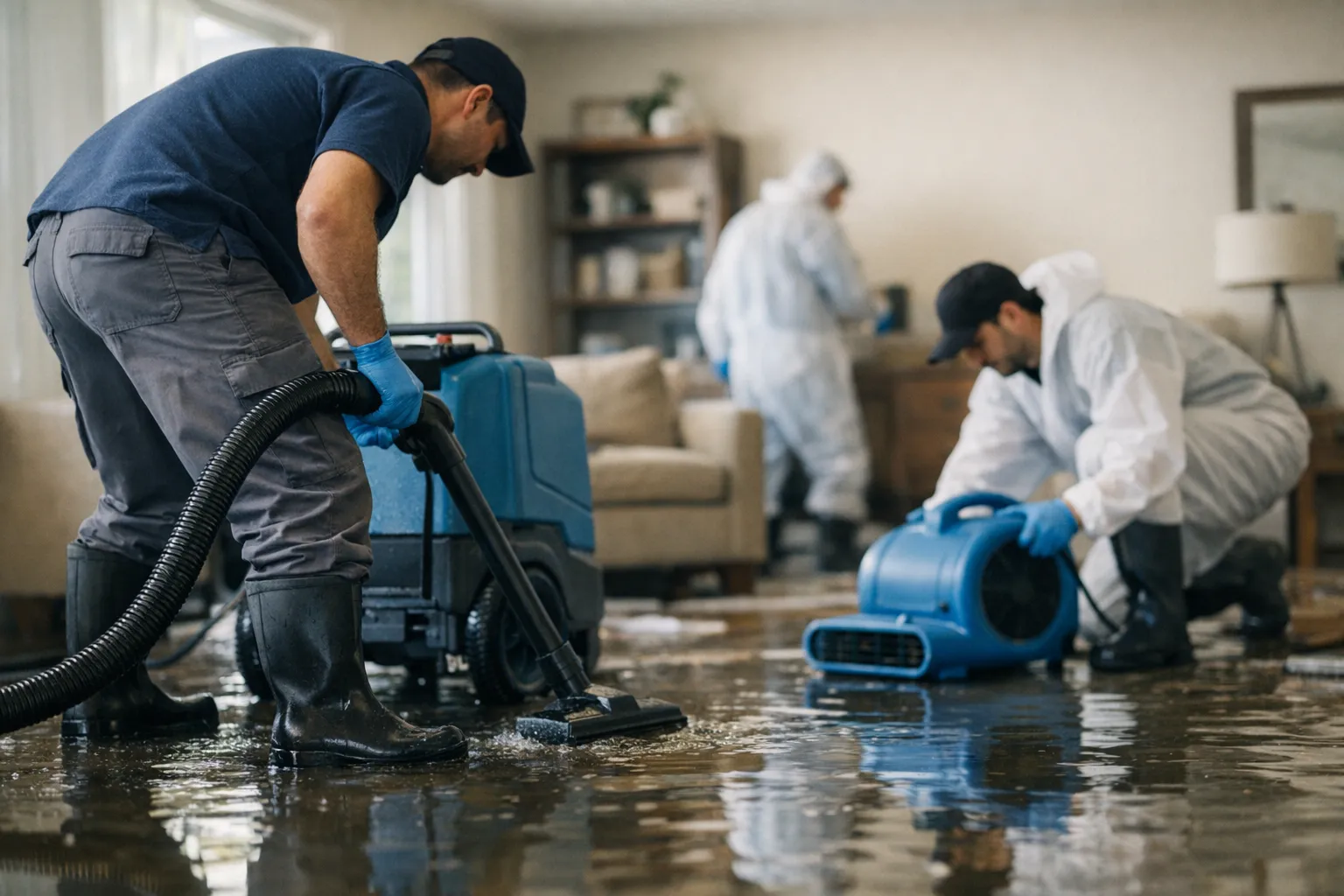
- Standing water extraction
- Initial moisture assessment
- Temporary structural protection
- Content pack-out for safety
Choose emergency mitigation when water is still entering your property or when damage occurred within the last 48 hours. These teams work around the clock and arrive quickly, but they may not handle full restoration.
When Emergency Services Are Your First Call
Call emergency mitigation for burst pipes, active roof leaks, or appliance failures. They excel at crisis management but typically hand off restoration work to specialized teams.
Many emergency providers partner with restoration companies for seamless transitions. Ask about their restoration network before signing contracts.
Structural Drying and Dehumidification
Structural drying removes moisture from building materials like wood framing, drywall, and insulation. This process prevents secondary damage and mold growth in affected areas.
Professional drying takes 3-5 days on average but varies based on materials and moisture levels. Teams use industrial equipment and monitor progress with moisture meters.
Structural drying equipment includes:
- High-capacity dehumidifiers
- Air movers and circulation fans
- Heat injection systems
- Moisture monitoring devices
Choosing Between Air Drying and Heat Systems
Standard air drying works for most residential water damage using dehumidifiers and fans. Heat injection systems speed drying in thick materials like hardwood floors or dense insulation.
Heat drying costs more but reduces overall restoration time. Consider this option for valuable hardwood floors or when quick occupancy is critical.
Content Cleaning and Restoration Services
Content restoration salvages personal belongings, furniture, and business inventory affected by water damage. These specialists handle items that general contractors cannot restore.
Content teams evaluate each item for restoration potential versus replacement cost. They provide detailed inventories and work with insurance adjusters on coverage decisions.
Types of Content Restoration
Soft goods cleaning handles clothing, bedding, and upholstered furniture through specialized washing and drying processes. Success rates vary by fabric type and contamination level.
Hard goods restoration covers electronics, artwork, and furniture using ultrasonic cleaning, freeze-drying, and other advanced techniques. These services often cost less than replacement.
Document recovery salvages important papers, photographs, and books through vacuum freeze-drying. This specialized service requires immediate action for best results.
Mold Remediation and Prevention Services
Mold remediation removes existing mold growth and prevents future contamination. This service becomes necessary when water damage sits untreated for 48+ hours.
Mold teams follow strict containment protocols and use specialized equipment. They also identify moisture sources that support mold growth beyond the original water damage.
Mold remediation steps include:
- Air quality testing and assessment
- Containment barrier installation
- Contaminated material removal
- Surface cleaning and disinfection
- Post-remediation verification testing
Preventive vs. Corrective Mold Services
Preventive mold services apply antimicrobial treatments during initial water cleanup. Corrective services address established mold colonies requiring full remediation protocols.
Preventive treatments cost significantly less than full remediation. Request these during initial water damage restoration to avoid future problems.
Reconstruction and Rebuild Services
Reconstruction services rebuild structures damaged beyond drying and cleaning. These teams handle everything from drywall replacement to complete room reconstruction.
Some restoration companies offer reconstruction, while others focus solely on mitigation and drying. Full-service companies provide continuity but may cost more than specialized contractors.
Choosing Restoration vs. General Contractors
Restoration companies understand moisture issues and insurance processes better than general contractors. General contractors may offer lower prices but lack restoration expertise.
Consider restoration companies for water-damaged areas and general contractors for unaffected renovation work. This approach balances expertise with cost control.
Specialty Water Damage Services
Some water damage requires specialized approaches beyond standard restoration methods. These situations need teams with specific equipment and training.
Sewage and contaminated water cleanup follows strict health protocols and requires hazmat training. Standard water damage teams cannot handle category 3 contamination safely.
Commercial and industrial restoration involves larger equipment, business continuity planning, and specialized materials. Residential teams may lack the capacity for commercial projects.
Historic building restoration requires knowledge of traditional materials and preservation techniques. Standard methods can damage irreplaceable architectural elements.
How to Match Services to Your Specific Needs
Start by identifying your water source and contamination level. Clean water from supply lines needs different treatment than sewage backups or storm flooding.
Document the affected areas and materials before calling restoration teams. This information helps providers recommend appropriate service combinations and avoid unnecessary work.
Consider your timeline and budget constraints when choosing between service options. Emergency work costs more than scheduled restoration, but delays increase overall damage costs.
Questions to Ask Restoration Providers
Ask providers which specific services they offer in-house versus subcontracting. Direct service provision typically means better coordination and accountability.
Request detailed explanations of their process and expected timelines. Reputable companies provide written protocols and realistic completion estimates.
Verify their insurance relationships and claims assistance. Companies experienced with insurance work streamline approval processes and documentation requirements.
Water damage restoration requires matching the right service types to your specific situation and needs. Emergency mitigation, structural drying, content restoration, and mold remediation each serve distinct purposes in the recovery process. Understanding these differences helps you choose appropriate providers and avoid paying for unnecessary work.
Start your search for qualified restoration providers by browsing verified listings at https://restorationlocator.com to compare service offerings and credentials in your area.