
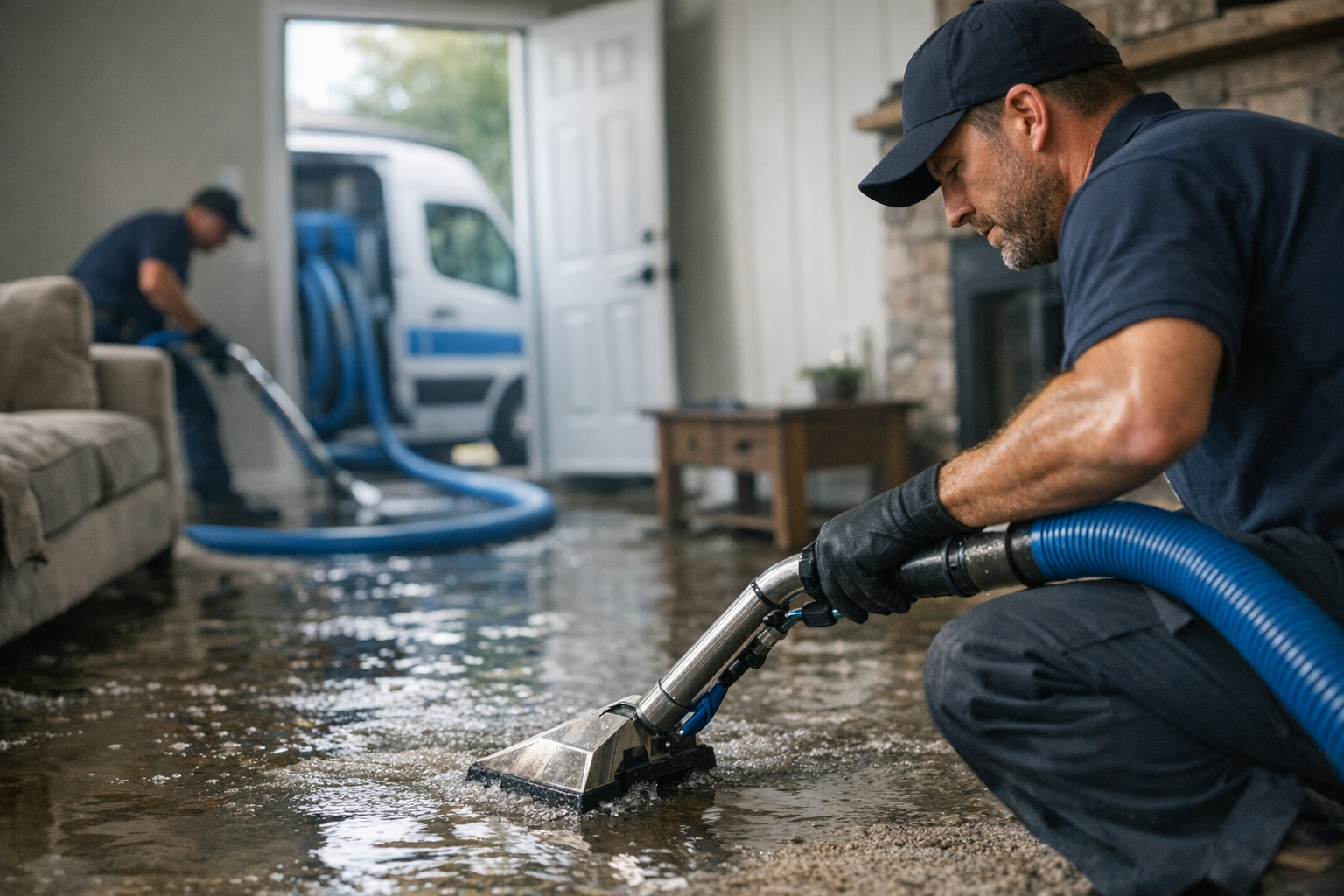
Every minute counts after flood waters invade your property. The window for effective water extraction closes rapidly, and waiting even one extra day can mean the difference between manageable restoration costs and complete structural replacement.
Property owners face a race against time when flood waters recede. The first 24-48 hours determine whether your property suffers minor water damage or catastrophic structural failure.
Why Water Extraction Speed Determines Recovery Success
Water extraction becomes exponentially more difficult as time passes. Standing water doesn’t just sit idle – it actively penetrates deeper into materials every hour.
Within the first 24 hours, water moves from surface flooding into subflooring, wall cavities, and insulation. By hour 48, moisture reaches structural lumber and begins weakening load-bearing elements.
The physics work against property owners. Water wicks upward through drywall at approximately one inch per hour under normal conditions.
The 24-Hour Critical Window for Water Damage Prevention
Restoration specialists measure water damage in hours, not days. Each phase of water penetration requires different extraction methods and equipment.
Hours 1-6: Surface Water Removal
Truck-mounted extractors can remove standing water efficiently. Carpet padding remains salvageable if extraction begins immediately.
Hardwood floors can survive submersion if professionals start extraction within six hours. After this window, cupping and warping become irreversible.
Hours 6-24: Deep Material Extraction
Water moves into wall cavities and beneath flooring systems. Specialized injection extraction equipment becomes necessary.
Drywall begins losing structural integrity. The paper backing starts separating from the gypsum core.
Hours 24-48: Emergency Structural Assessment
Load-bearing elements may require inspection. Insulation becomes waterlogged and loses R-value permanently.
Mold spores begin activating in ideal moisture conditions. Prevention becomes impossible after 48 hours in most climates.
Equipment Requirements Change With Delayed Water Extraction
Professional water extraction requires different tools depending on response timing. Early intervention uses standard equipment, while delayed response demands specialized machinery.
Immediate response equipment includes:
- Truck-mounted extractors (500+ CFM capacity)
- Portable extraction units for tight spaces
- Moisture meters for baseline measurements
- Air movers for surface drying
Delayed response scenarios require advanced equipment. Injection systems pull moisture from inside wall cavities. Thermal imaging cameras locate hidden moisture pockets that standard meters miss.
Desiccant dehumidifiers become necessary when relative humidity exceeds 60% for extended periods. Standard refrigerant dehumidifiers cannot handle the moisture load.
Cost Multiplication From Extraction Delays
Water damage costs multiply exponentially with each day of delay. Industry data shows specific cost increases based on response timing.
Same-day water extraction typically costs $3-5 per square foot for basic flood cleanup. This covers water removal, initial drying, and antimicrobial treatment.
48-hour delayed response increases costs to $8-12 per square foot. Additional expenses include wall cavity drying, insulation replacement, and extended dehumidification.
Week-long delays push costs beyond $20 per square foot. Structural drying, mold remediation, and material replacement become unavoidable.
Hidden Cost Factors
Insurance deductibles apply per incident. Delayed extraction can trigger additional claims if mold develops separately from the original water damage.
Secondary damage claims face more scrutiny from adjusters. Quick extraction demonstrates mitigation efforts that protect coverage.
Mold Prevention Depends on Extraction Timing
Mold growth follows predictable timelines after water intrusion. Understanding these phases helps property owners make informed decisions about professional intervention.
Spore activation begins within 24-48 hours in temperatures above 70°F. High humidity accelerates this timeline significantly.
Visible growth appears within 72-96 hours on organic materials. Drywall paper, wood trim, and carpet padding provide ideal growing conditions.
Professional flood cleanup includes antimicrobial application during the extraction phase. This preventive treatment stops mold before colonies establish.
Structural Damage Prevention Through Rapid Response
Building materials react to water exposure in predictable ways. Wood swells, drywall crumbles, and metal components begin corroding.
Engineered lumber used in modern construction fails faster than solid wood. Oriented strand board (OSB) subflooring starts delaminating within 24 hours of saturation.
Laminated veneer lumber (LVL) beams lose load capacity when moisture content exceeds 19%. Professional extraction keeps moisture levels below this threshold.
Foundation and Basement Considerations
Basement flooding requires immediate extraction to prevent hydrostatic pressure buildup. Water trapped against foundation walls can cause structural shifting.
Sump pump systems help during extraction but cannot replace professional equipment for complete moisture removal. Residual dampness in concrete creates long-term problems.
Choosing the Right Restoration Provider
Time constraints make provider selection critical during flooding emergencies. Certain qualifications separate capable contractors from inadequate responders.
IICRC certification demonstrates formal training in water extraction techniques. Water Restoration Technician (WRT) credentials indicate specialized flood cleanup expertise.
Equipment capacity matters during large-scale flooding. Ask about truck-mounted extraction units and industrial dehumidifier availability.
Response time commitments should be specific. “Emergency response” means different things to different companies.
Vetting Providers During Emergencies
Licensing verification takes minutes but prevents major problems. Most states require contractor licenses for water extraction work.
Insurance coverage protects property owners from liability. General liability and workers compensation are minimum requirements.
Local knowledge helps during widespread flooding events. Contractors familiar with regional building codes handle permits efficiently.
Insurance Claims and Documentation Requirements
Quick water extraction improves insurance claim outcomes significantly. Adjusters view rapid response as evidence of responsible property ownership.
Photo documentation before extraction begins protects claim values. Water levels, affected materials, and damage extent must be recorded.
Moisture readings provide objective damage measurements. Professional contractors document these readings throughout the extraction process.
Mitigation efforts reduce claim disputes. Insurance policies require reasonable steps to prevent additional damage after initial loss.
Regional Factors Affecting Extraction Urgency
Climate conditions influence water extraction timelines significantly. Humidity, temperature, and seasonal factors change response requirements.
High-humidity regions like the Southeast require faster response times. Mold activation accelerates when ambient humidity exceeds 70%.
Cold-weather flooding creates unique challenges. Heating systems may be offline, slowing evaporation rates dramatically.
Coastal areas face salt water contamination during storm flooding. Salt accelerates corrosion and requires specialized extraction techniques.
Seasonal Considerations
Spring flooding often overwhelms local restoration capacity. Early contractor contact improves response times.
Winter heating bills increase substantially during extended drying periods. Thermal efficiency drops when air movers run continuously.
Summer heat speeds drying but accelerates mold growth simultaneously. Temperature control becomes part of the extraction strategy.
Water damage restoration success hinges on immediate professional intervention. Every hour of delay multiplies costs and complicates recovery efforts exponentially.
The 24-48 hour window determines whether your property needs basic water extraction or complete reconstruction. Professional restoration specialists have the equipment and expertise to maximize salvageable materials when response time is rapid.
Browse Disaster Cleanup & Restoration listings at https://restorationlocator.com to find certified providers in your area now.