
A soaked carpet that looks dry on top can still hold two gallons of hidden water in the pad beneath it. That gap between what you see and what a moisture meter reads is why water damage drying gets rushed or skipped by the wrong crews. This post breaks down each stage of drying so you know what a competent team should be doing at your property.
You will learn how technicians measure moisture, what equipment does the work, and how long each phase takes. You will also learn how to spot corners being cut before mold sets in.
Why the Drying Stage Decides the Whole Restoration Process
Drying is the stage where mistakes turn into mold, warped floors, and insurance disputes. Extraction removes standing water. Drying removes the water that soaked into materials you cannot wring out.
Water damage drying is the controlled removal of moisture from building materials until they reach a documented dry standard. That standard is measured, not guessed. A wall feels dry to your hand long before its interior reaches a safe moisture content.
Mold begins growing in 24 to 48 hours on wet drywall and framing. A crew that leaves fans running without measuring is gambling with that window. The restoration process depends on hitting dry targets fast and proving it with numbers.
How Technicians Measure Moisture Before Anything Dries
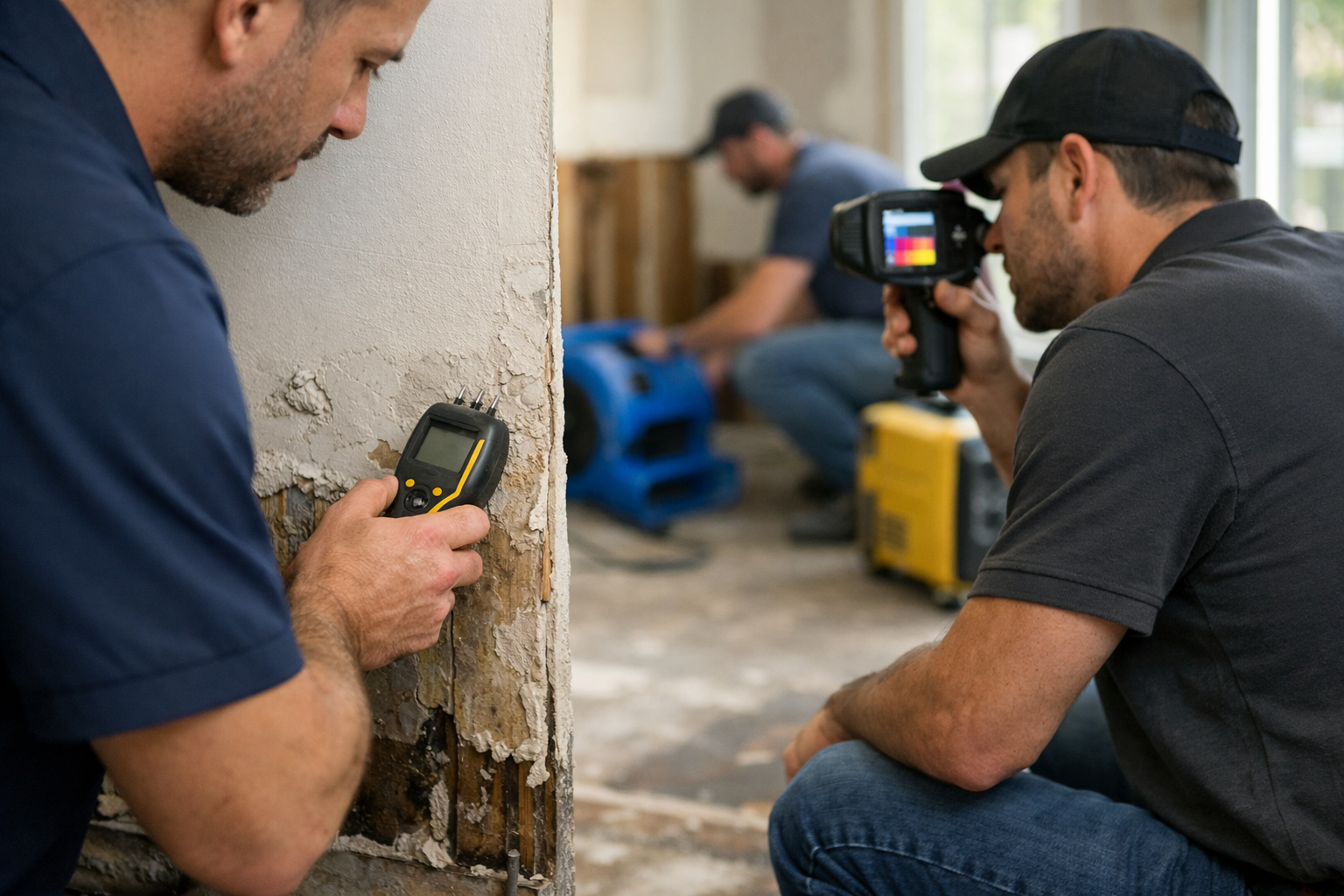
Good crews start with moisture mapping, not equipment placement. They record readings at multiple points and mark wet zones on a floor plan. Without a baseline, no one can tell when drying is finished.
The Tools That Read Hidden Water
- Pin moisture meters use two probes pushed into material to read moisture content directly.
- Pinless meters scan behind surfaces without holes, useful for finished walls.
- Thermal cameras reveal cool wet patches inside walls and ceilings.
- Thermo-hygrometers track temperature and humidity in the air.
A dry standard comes from an unaffected area of the same material. If dry drywall on the second floor reads 12%, the flooded drywall must return to that number. This comparison is how crews avoid stopping early.
The Water Damage Drying Steps in Order
Drying follows a sequence. Each step sets up the next, and skipping one adds days to the timeline.
- Extract remaining water. Truck-mounted units and weighted extraction tools pull water from carpet and pad before air movers start.
- Remove unsalvageable materials. Wet insulation, swollen laminate, and soaked drywall base get cut out and hauled off.
- Set up containment. Plastic sheeting seals the drying zone so equipment works on a smaller air volume.
- Position air movers. Fans point at wet surfaces at an angle to lift moisture into the air.
- Run dehumidifiers. These pull the airborne moisture out so it does not resettle into dry materials.
- Monitor daily. Technicians return each day, record readings, and adjust equipment placement.
- Confirm dry standard. Drying ends when readings match the unaffected baseline for consecutive days.
How Air Movers and Dehumidifiers Work Together
Air movers and dehumidifiers do opposite jobs that depend on each other. Fans push water out of materials into the air. Dehumidifiers capture that airborne water so the room does not stay saturated.
Run fans alone and you spread humidity to dry rooms. Run dehumidifiers alone and surface water evaporates slowly. Both together create the evaporation-and-capture cycle that dries a structure.
Matching Equipment to the Loss
A flooded 400-square-foot basement needs different math than a burst pipe in a bathroom. Restoration standards suggest roughly one air mover per 50 to 70 square feet of affected floor, plus wall coverage. Dehumidifier sizing depends on the pints of water the space holds.
LGR dehumidifiers (low grain refrigerant) pull water in cold, damp conditions where standard units stall. Desiccant units use chemical drying for very low humidity work, like hardwood floors. A crew that shows up with two box fans is not equipped for a real loss.
How Long Water Damage Drying Takes
Most residential drying finishes in 3 to 5 days when equipment is sized correctly. Clean water losses on tile dry fast. Category 3 water in old plaster and hardwood can run past a week.
Variables that stretch the timeline include:
- Material type. Concrete and hardwood release water far slower than drywall.
- Water category. Sewage losses require more removal before drying starts.
- How long water sat. A loss caught in hours dries faster than one found after a vacation.
- Ambient conditions. Cold, humid weather slows evaporation.
Be skeptical of any crew promising a one-day dry-out on a major loss. Fast drying without documentation usually means moisture left behind.
Red Flags That Point to an Incomplete Dry-Out
You can catch a poor job before the equipment leaves. Watch for these warning signs during monitoring visits.
- No moisture readings recorded. A crew with no daily logs cannot prove anything dried.
- Equipment pulled early. Removing fans before readings hit baseline invites hidden mold.
- Musty smell returning. Odor after drying points to trapped moisture.
- Painting over stains fast. Sealing damp walls locks water inside the assembly.
Ask to see the drying log before you sign a completion form. A legitimate crew hands it over without hesitation.
Using Restoration Locator to Find a Qualified Drying Crew
Not every company doing extraction handles structural drying correctly. The directory lets you compare providers on the details that matter for this stage.
- Filter listings by location to reach crews that respond inside the mold window.
- Check reviews for mentions of documentation, daily monitoring, and moisture readings.
- Sort by proximity since faster arrival means shorter drying overall.
- Look for IICRC certification notes in provider profiles, which signal training in drying standards.
Before hiring, ask a provider three questions: Do you document daily moisture readings? What dry standard do you target? How do you size dehumidifiers? Clear answers separate skilled crews from the rest.
Conclusion
Water damage drying is a measured stage that ends with numbers, not guesses, and it decides whether mold shows up weeks later. Correct equipment, daily monitoring, and a documented dry standard are what a capable crew brings to your property. Skipping any of those turns a fixable loss into a repeat problem.
Compare qualified drying crews near you and read verified reviews at https://restorationlocator.com. Start your search now.