Why Proper Disaster Cleanup Comparison Matters
The right disaster cleanup comparison can mean the difference between swift recovery and prolonged damage to your property. Water damage spreads rapidly, mold grows within 24-48 hours, and fire residue continues destroying surfaces until properly removed.
Smart property owners evaluate multiple providers before making decisions. This approach saves money, reduces stress, and improves outcomes when disaster strikes.
The following factors separate reliable restoration companies from inexperienced operators who may cause more harm than good.
Emergency Response Time Requirements
Response speed directly impacts damage severity. Water spreads through walls, floors, and personal belongings every hour cleanup is delayed. Fire damage becomes permanent when soot and smoke residue sit untreated.
Reputable companies arrive within 1-4 hours of your call. They begin damage assessment and emergency mitigation immediately upon arrival.
Ask potential providers these questions:
- What is your average response time for emergency calls?
- Do you operate 24/7, including weekends and holidays?
- How quickly can you begin water extraction or board-up services?
- Can you provide emergency power or temporary climate control?
Document their answers and compare response commitments. Vague promises like “as soon as possible” indicate unreliable service.
Licensing and Insurance Verification
Proper licensing protects you from liability and ensures companies meet professional standards. Unlicensed operators cannot legally perform restoration work in most states.
Verify each provider holds current licenses for your state and local area. Check their general liability insurance covers at least $1 million per occurrence.
Required Documentation
Request copies of the following before work begins:
- Business license and registration
- Professional restoration certifications (IICRC preferred)
- Workers’ compensation insurance
- General liability insurance certificate
- Bonding documentation if required locally
Legitimate companies provide this information immediately. Those who hesitate or make excuses should be eliminated from consideration.
Equipment and Technology Assessment
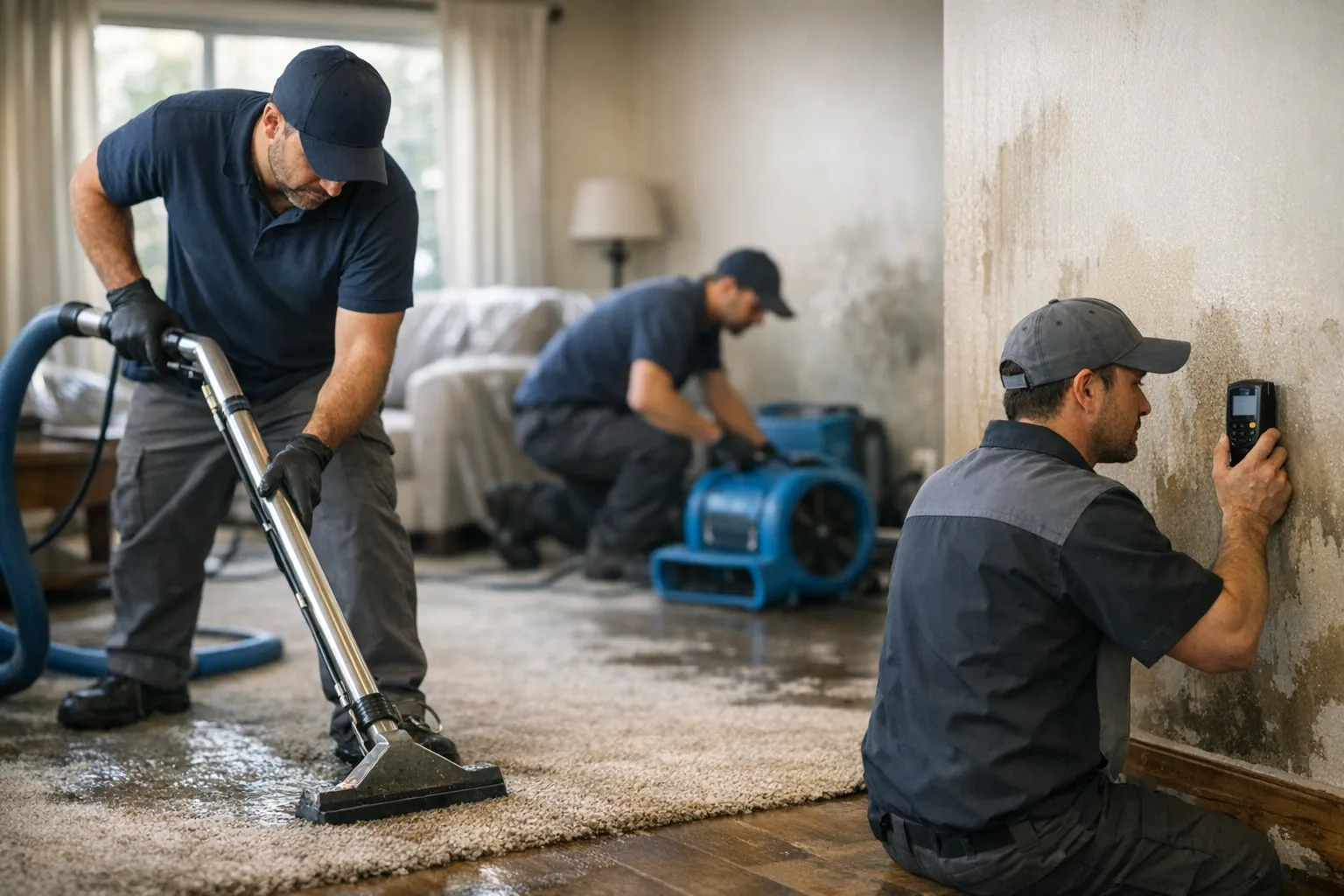
Professional-grade equipment removes moisture and contaminants that standard tools cannot reach. Industrial dehumidifiers, truck-mounted extractors, and thermal imaging cameras identify hidden damage invisible to the naked eye.
Companies using household-grade equipment cannot achieve proper drying or complete contamination removal. This leads to mold growth, structural damage, and failed insurance claims.
Essential Equipment Standards
Quality providers own or have immediate access to:
- Truck-mounted water extraction systems
- Commercial-grade dehumidifiers and air movers
- Moisture meters and thermal imaging cameras
- HEPA air scrubbers for mold and smoke removal
- Antimicrobial treatment systems
- Containment barriers for contaminated areas
Ask to see equipment lists and photos of their fleet. Modern, well-maintained equipment indicates serious commitment to quality outcomes.
Staff Training and Certifications
Restoration requires specialized knowledge of building materials, drying science, and contamination control. Untrained technicians make costly mistakes that extend damage and increase repair bills.
The Institute of Inspection, Cleaning and Restoration Certification (IICRC) sets industry standards for training. Their certifications cover water damage restoration, fire damage cleanup, mold remediation, and other specialties.
Companies with IICRC-certified technicians demonstrate commitment to professional development. They understand proper procedures and stay current with industry best practices.
Insurance Claims Experience
Insurance claim approval depends on proper documentation and following carrier-approved procedures. Experienced companies know what insurers require and help maximize your claim settlement.
Inexperienced providers often submit incomplete documentation or use non-approved methods. This leads to claim denials, payment delays, and out-of-pocket expenses for property owners.
Insurance Partnership Benefits
Look for companies that work regularly with major insurance carriers. These relationships provide several advantages:
- Pre-approved pricing and procedures
- Streamlined claim documentation
- Direct billing arrangements
- Faster claim processing times
- Reduced paperwork for property owners
Ask how many insurance claims each provider handles monthly. Regular claim experience translates to smoother processes for you.
Local vs. National Provider Comparison
Local providers typically offer faster response times and personalized service. They understand regional building codes, common local hazards, and have established relationships with area adjusters.
National franchises bring standardized procedures, extensive resources, and consistent quality controls. They may have more equipment availability during widespread disasters.
Neither option is automatically superior. Evaluate each company individually based on capabilities rather than size or geographic reach.
Customer Reviews and References
Recent customer experiences reveal company reliability, communication quality, and problem resolution abilities. Look for patterns in reviews rather than focusing on individual complaints.
Pay attention to comments about response times, professionalism, and final results. Multiple mentions of the same issues indicate systemic problems.
Reference Check Questions
When contacting references, ask specific questions:
- How quickly did they respond to your emergency call?
- Did they complete work within estimated timeframes?
- Were there any surprise costs or change orders?
- How did they handle insurance claim documentation?
- Would you hire them again for future work?
Honest references provide detailed answers and specific examples. Vague positive responses may indicate coached testimonials.
Cost Estimation and Billing Practices
Transparent pricing prevents surprise bills and budget overruns. Reputable companies provide detailed written estimates that break down labor, materials, and equipment costs.
Beware of estimates that seem too low compared to others. These often include hidden costs, inferior materials, or incomplete scope coverage.
Ask about billing practices, payment schedules, and change order procedures. Clear policies protect both parties and prevent disputes during stressful situations.
Using Directory Features for Effective Comparison
Modern provider directories simplify the disaster cleanup comparison process by organizing key information in searchable formats. Filter listings by location, services offered, and customer ratings to create focused comparison lists.
Check provider profiles for licensing information, insurance coverage, and customer review summaries. Many directories verify credentials and update information regularly.
Sort results by response time commitments or years in business to prioritize providers that meet your specific needs. This saves time during emergencies when quick decisions are required.
Red Flags to Avoid
Certain warning signs indicate companies you should eliminate immediately from consideration. These behaviors often correlate with poor service, incomplete work, or potential fraud.
- Door-to-door solicitation after disasters
- Demands for full payment upfront
- Verbal estimates without written documentation
- High-pressure sales tactics or same-day signing requirements
- Lack of local business address or phone number
- No proof of insurance or licensing when requested
Trust companies that take time to assess damage properly and explain their approach clearly. Rushing important decisions leads to regrettable outcomes.
Making Your Final Selection
Combine all evaluation factors to rank potential providers objectively. The lowest bid is rarely the best choice when property damage is involved.
Choose based on qualifications, reliability, and communication quality rather than price alone. Proper restoration work done once costs less than multiple attempts to fix problems caused by inexperienced providers.
Schedule brief meetings with your top two choices if time permits. Personal interactions reveal communication styles and professionalism levels that phone calls may miss.
Effective disaster cleanup comparison protects your property investment and reduces stress during difficult situations. Take time to evaluate providers thoroughly using these criteria, then make confident decisions based on facts rather than emotions. Browse disaster cleanup and restoration listings at https://restorationlocator.com to start your search today.