
Choosing between mold testing types can save you hundreds of dollars and prevent serious health risks. Five main methods exist, each with different costs, accuracy levels, and use cases.
Home test kits cost $10-50 but miss 60% of airborne spores. Lab-analyzed air sampling runs $300-600 but detects mold concentrations as low as 25 spores per cubic meter.
This comparison breaks down when to use each method and what results mean for your home.
Understanding the Five Main Mold Testing Types
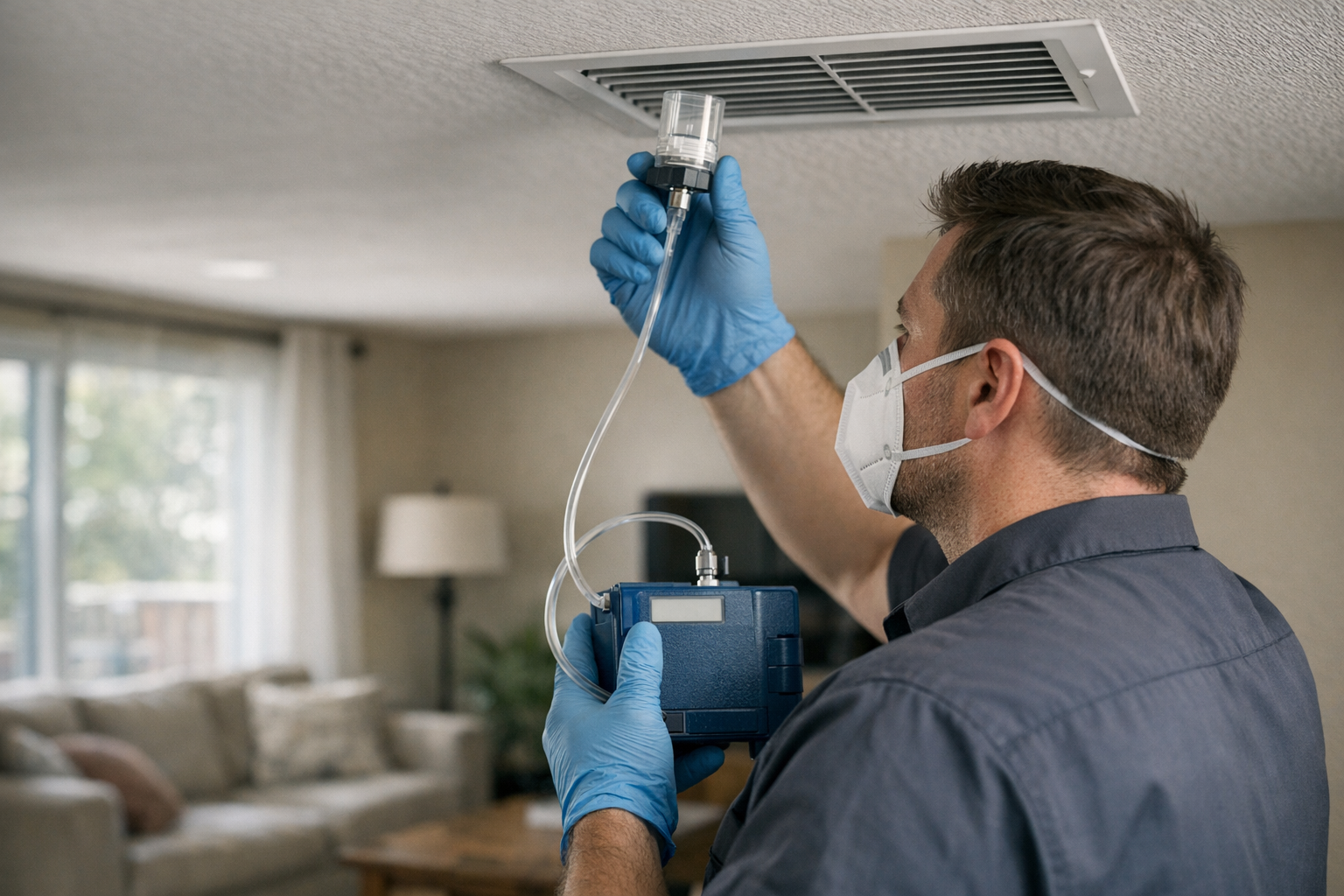
Air sampling captures airborne mold spores using specialized pumps. Technicians collect samples over 5-10 minutes, then send them to labs for analysis.
Surface sampling uses tape or swabs to collect visible mold from walls, floors, or furniture. Labs identify specific mold species and concentration levels.
Bulk sampling involves cutting small pieces of contaminated materials like drywall or carpet. This method reveals deep contamination invisible from surface testing.
Home Test Kits vs Lab Analysis
Store-bought test kits use petri dishes left open for 24-48 hours. Mold grows on the medium, showing color changes after 3-5 days.
Lab-analyzed samples use microscopy and sometimes DNA testing. Results include exact spore counts and species identification.
The accuracy gap is significant. Home kits detect only actively sporulating mold. Lab tests find dormant spores and provide quantitative data.
When to Choose Air Sampling Testing
Air sampling works best for suspected hidden mold or health symptoms without visible growth. This method detects spores from wall cavities, under floors, or inside HVAC systems.
Spore pumps collect 75-150 liters of air per sample. Labs count spores per cubic meter and compare indoor levels to outdoor baselines.
Normal outdoor air contains 200-1,000 mold spores per cubic meter. Indoor levels above 1,500 spores suggest contamination sources.
Air Sampling Limitations
Wind patterns and HVAC operation affect results. Closed windows and running air conditioning can reduce airborne spore detection by 40-70%.
Testing requires specific conditions: windows closed for 12-24 hours and normal HVAC operation. Some inspectors recommend multiple samples from different rooms.
Surface and Bulk Sampling Applications
Surface sampling confirms whether visible discoloration is actually mold. Tape lifting or swab collection takes seconds per sample.
This method works for small areas under 10 square feet. Larger contaminated areas need bulk sampling to determine contamination depth.
Bulk sampling reveals whether mold penetrated into drywall, insulation, or structural materials. Results determine if surface cleaning is sufficient or if removal is necessary.
Sample Collection Techniques
Tape samples preserve spore structure for microscopic identification. Swab samples work better for rough surfaces where tape won’t adhere properly.
Bulk samples require sterile cutting tools and sealed containers. Cross-contamination between samples can invalidate results.
Home Test Kit Reality Check
Petri dish kits cost $15-40 and provide results in 3-7 days. However, they cannot distinguish between outdoor spores that drifted inside and actual contamination.
Every home shows some mold growth on test plates. Normal air circulation brings outdoor spores inside constantly.
Mail-in home kits offer lab analysis for $50-150. These provide species identification but lack the controlled collection methods of certified inspectors.
DIY Testing Problems
- False positives: Outdoor spores create positive results in mold-free homes
- Poor sampling: Incorrect placement misses contamination sources
- No baseline: Results lack outdoor comparison data for context
- Limited scope: Single samples miss contamination in other areas
Cost Comparison Across Testing Methods
Home inspection companies charge $300-600 for air sampling with lab analysis. Surface samples add $75-150 each to the total cost.
Bulk sampling runs $100-200 per sample due to lab processing complexity. Most inspections include 2-4 air samples plus outdoor comparison samples.
Home test kits range from $10 for basic petri dishes to $200 for comprehensive mail-in analysis. However, these lack the controlled conditions needed for accurate results.
Hidden Costs to Consider
Follow-up testing after remediation adds $200-400 to total costs. Some contamination requires multiple rounds of testing and cleanup.
Insurance companies sometimes require certified lab results for coverage decisions. Home test kit results rarely qualify for claims.
Choosing Based on Your Situation
Health symptoms without visible mold warrant air sampling throughout the home. Respiratory issues, headaches, or fatigue may indicate airborne exposure.
Visible growth under 10 square feet needs surface sampling for species identification. Some mold types pose higher health risks than others.
Water damage areas require bulk sampling to check contamination depth. Drywall and insulation often need replacement even when surface mold appears minimal.
When Home Tests Make Sense
Home kits work for general curiosity about indoor air quality. They provide a basic screening before investing in comprehensive testing.
Post-cleanup verification can use home tests if previous lab results established baseline contamination levels.
Reading and Understanding Test Results
Lab reports list spore counts by species and total concentration. Aspergillus and Penicillium species indicate moisture problems when found in high concentrations indoors.
Outdoor comparison samples provide context for indoor readings. Indoor levels 2-3 times higher than outdoor suggest contamination sources.
Surface sample results show whether visible growth is mold and identify the specific species. Some varieties like Stachybotrys (black mold) require immediate remediation.
Red Flag Results
Indoor air samples above 10,000 spores per cubic meter indicate significant contamination. Multiple species detected indoors suggest ongoing moisture problems.
Surface samples showing viable spore counts above 1,000 per square centimeter need immediate attention. These levels create ongoing health exposure risks.
Finding Qualified Testing Providers
Certified mold inspectors complete training through organizations like the American Council for Accredited Certification. Many states require specific licensing for mold assessment.
Remediation companies should not perform testing due to conflicts of interest. Independent inspectors provide unbiased assessments and recommendations.
Lab certifications matter for result accuracy. Look for AIHA, EMLAP, or ISO/IEC 17025 accredited laboratories.
Choosing the right mold testing types depends on your specific situation and budget. Air sampling detects hidden contamination, while surface testing confirms visible growth. Home test kits provide basic screening but lack the accuracy needed for health decisions or insurance claims.
Professional testing costs more upfront but provides actionable data for remediation planning. Browse certified disaster cleanup and restoration specialists on https://restorationlocator.com to find qualified mold testing providers in your area.